









Copyright © 2026 Fluent Conveyors, LLC. All rights reserved.

The Fluent Conveyors logo is a registered trademark of Fluent Conveyors, LLC. Serial Number 97664258 Registered on Dec. 12, 2023


Copyright © 2026 Fluent Conveyors, LLC. All rights reserved.
The Fluent Conveyors logo is a registered trademark of Fluent Conveyors, LLC. Serial Number 97664258 Registered on Dec. 12, 2023
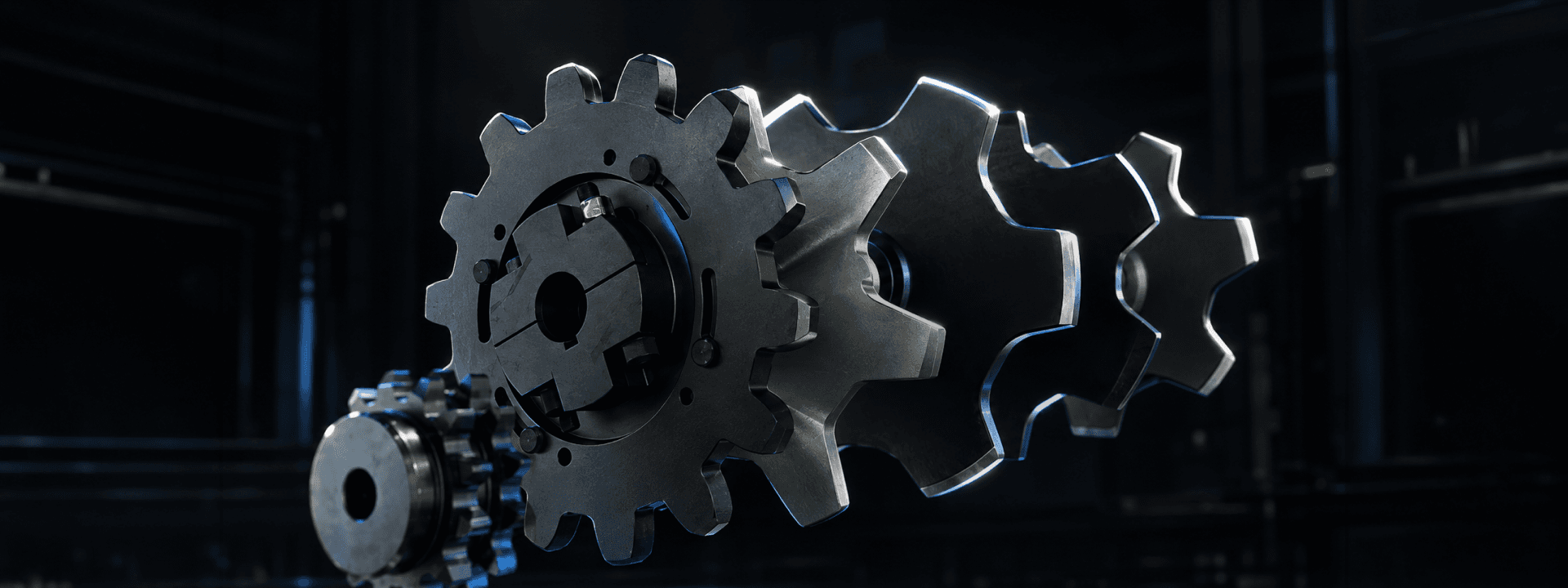
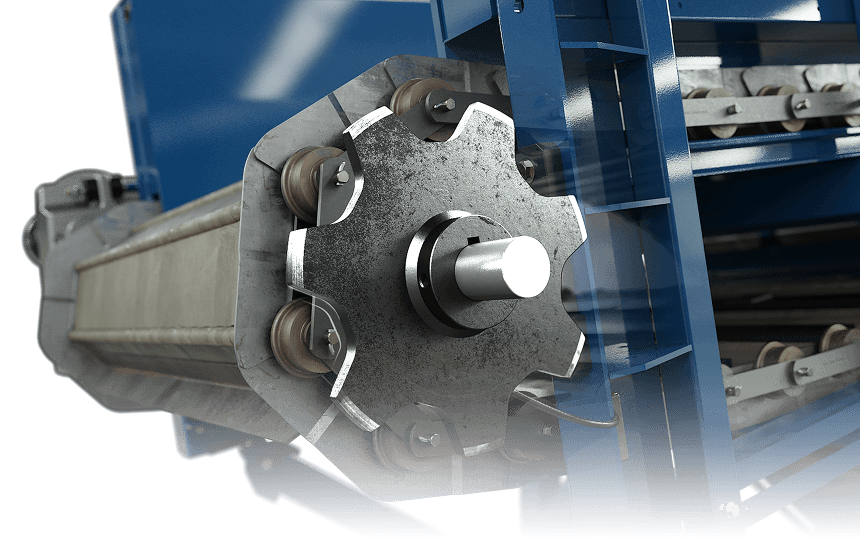
A roller chain sprocket drives the chain that carries the belt on a roller chain conveyor. The sprockets work as a matched pair on the head and tail shafts.

Sprockets are replaced on a scheduled basis or after failure following these general steps:
Below, we cover the wear signals that call for replacement, the root causes to rule out first, how the retention method changes the removal path, the dimensions to capture, the full procedure, paired alignment, and the checks that confirm the repair.
Roller chain sprocket wear is usually visible well before failure. The wear pattern often tells you what caused it, so inspect the sprocket and surrounding drive components together rather than treating the sprocket as an isolated wear part.
Also inspect the opposite sprocket on the head shaft. Sprockets should be replaced in pairs to maintain even load distribution.


Published roller chain maintenance practice puts the first inspection at roughly 50 operating hours, once the drive has settled in. Ordinary drives under normal conditions run to 500-hour intervals after that, while drives seeing heavy shock loading tighten to about 200 hours.
Those figures assume clean operating conditions. Recycling, C&D, scrap, and other abrasive streams generally justify shorter intervals. Facilities running mixed waste or shredded metal should treat the shock-load figure as a starting point rather than a ceiling. How often to replace conveyor parts covers broader wear-component schedules.
Allowable wear varies with chain type, pitch, and duty tier, so this page publishes no universal tooth-wear limit. Use your conveyor drawings for equipment-specific dimensions and tolerances.
Chain manufacturers generally cap useful life at wear elongation somewhere in the 1.5%–4% range, depending on the drive, and Rexnord puts roughly 3% near the point where many roller chain drives can no longer accommodate the change in effective pitch. Past that point, the chain seats badly, concentrates load on a few teeth, and can sharply shorten the life of a new sprocket.
The reverse matters too. A new chain running on a worn sprocket creates the same pitch mismatch from the opposite direction, so replace both when both are near their limits.
Fluent supplies complete roller chain belts as well as individual chain and belt components for partial rebuilds.
Before replacement, identify how the sprocket is held to the shaft. This detail decides what tools are needed, whether the head shaft has to come out, and how much downtime is needed.
Engineering class sprockets come in standard hub configurations: A hub with no projection, B hub with a hub on one side, and C hub with a hub on both sides. Taper-bushed, split, and weld-on variants layer on top. Hub style sets which direction the sprocket pulls and how much shaft has to clear, and it is one of the four things any supplier asks for on a quote alongside pitch, tooth count, and bore.
Split and segmental construction exists because pulling a head shaft on a loaded severe-duty conveyor is a multi-day job. A split sprocket is bored, keyed, and set-screwed like a solid one, then machined into halves and bolted back together, so it separates around the shaft in place. On D4 conveyors, the bolt-on segments come off in five pieces with no welding and no shaft removal.
Identify from the machine drawing or the serial number before disassembly. Your conveyor serial number pulls the original build record, including how the sprockets were mounted.
That record also confirms the drive and take-up shafts underneath (important for damaged keyways).
Record the below specifications while the sprocket is still mounted and measurable.
Dimensional references for Fluent machines are collected in the replacement sprocket dimensions guide.
If your maintenance file is thin, you can request a CAD file of an existing conveyor in DXF or DWG format.
These machines carry enough chain pull to be dangerous to service without training, and your plant's authorized maintenance procedure takes precedence over any general sequence, including this one.
Isolate every energy source before guarding comes off. Two hazards specific to heavy-duty chain-belt conveyors get missed on generic procedures:
Stored energy in a tensioned take-up does not disappear when the motor stops
Gravity on an inclined conveyor is stored energy, and a loaded belt can run back the moment chain tension is released
Guards come off only after isolation and go back on before any test run. Review OSHA conveyor guarding requirements if your guarding was modified during a previous repair.
Broader site practice is covered in how to reduce conveyor hazards.
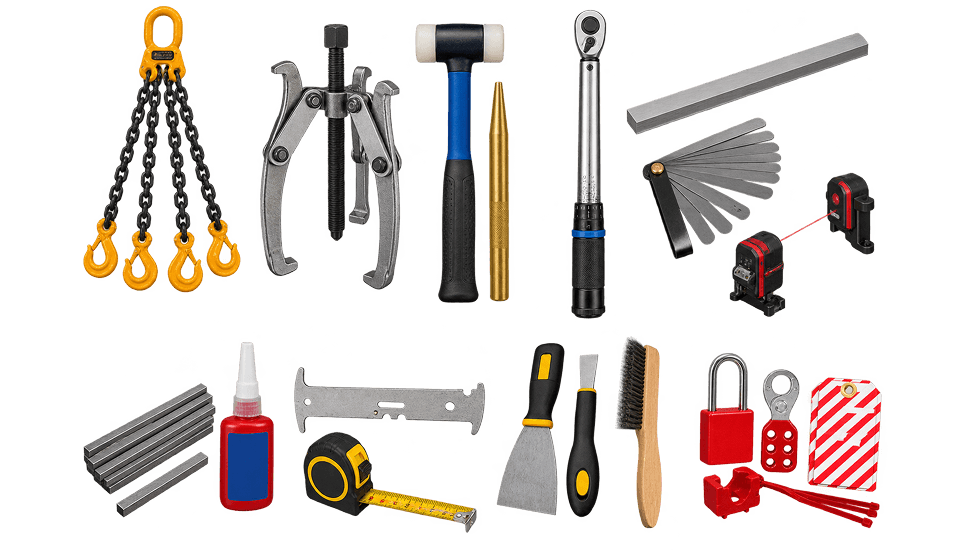
Rated lifting equipment sized to the sprocket
Bearing or gear puller appropriate to the hub
Soft-face hammer and brass drift
Torque wrench
Straightedge and feeler gauges, or a laser alignment tool
Key stock and thread locker
Chain wear gauge or a tape for pitch measurement
Scrapers and a wire brush for pocket cleanout
Lockout devices and tags
This sequence assumes the replacement is on hand and matched to the original.
We left steps 8, 11, and 14 general. Torque values, lift points, keyway fit, and chain tension are machine-specific.
Flor Fluent owners, find your figures in the roller chain belt conveyor owner's manual and the rest of the specs library.
Sprocket alignment gets less attention than it deserves in general maintenance material, but it affects sprocket longevity and conveyor performance. Confirm the following before restarting the conveyor.
The sprocket you just removed also tells you whether alignment was already a problem. Even wear across the tooth faces points to a component at the end of its normal life. Wear concentrated on one side points to a geometry problem that will destroy the new part on the same schedule unless it is corrected now.
Run the machine cold, then under load, confirming each of these before handing it back to production.
Always check chain lubrication after head-section work, since a disturbed or disconnected feed line is easy to overlook. Check delivery at your conveyor oilers before the machine goes back to production.
Confirm the reservoir also holds the correct oil for the ambient conditions the machine actually runs in.
See your conveyor’s documentation for take-up arrangement, chain pitch, geometry, and chain pull.

Fluent can supply or manufacture replacement sprockets for our medium-duty roller chain conveyors, heavy-duty roller chain conveyors, and extreme heavy-duty roller chain conveyors, as well as conveyors built by other manufacturers.
For a Fluent conveyor, send us the serial number, and we can pull the original build record to match the sprocket to the shaft, chain, and opposite side. For other equipment, photographs and dimensions are enough for us to identify or manufacture the correct sprocket.