





Copyright © 2026 Fluent Conveyors, LLC. All rights reserved.

The Fluent Conveyors logo is a registered trademark of Fluent Conveyors, LLC. Serial Number 97664258 Registered on Dec. 12, 2023


Copyright © 2026 Fluent Conveyors, LLC. All rights reserved.
The Fluent Conveyors logo is a registered trademark of Fluent Conveyors, LLC. Serial Number 97664258 Registered on Dec. 12, 2023
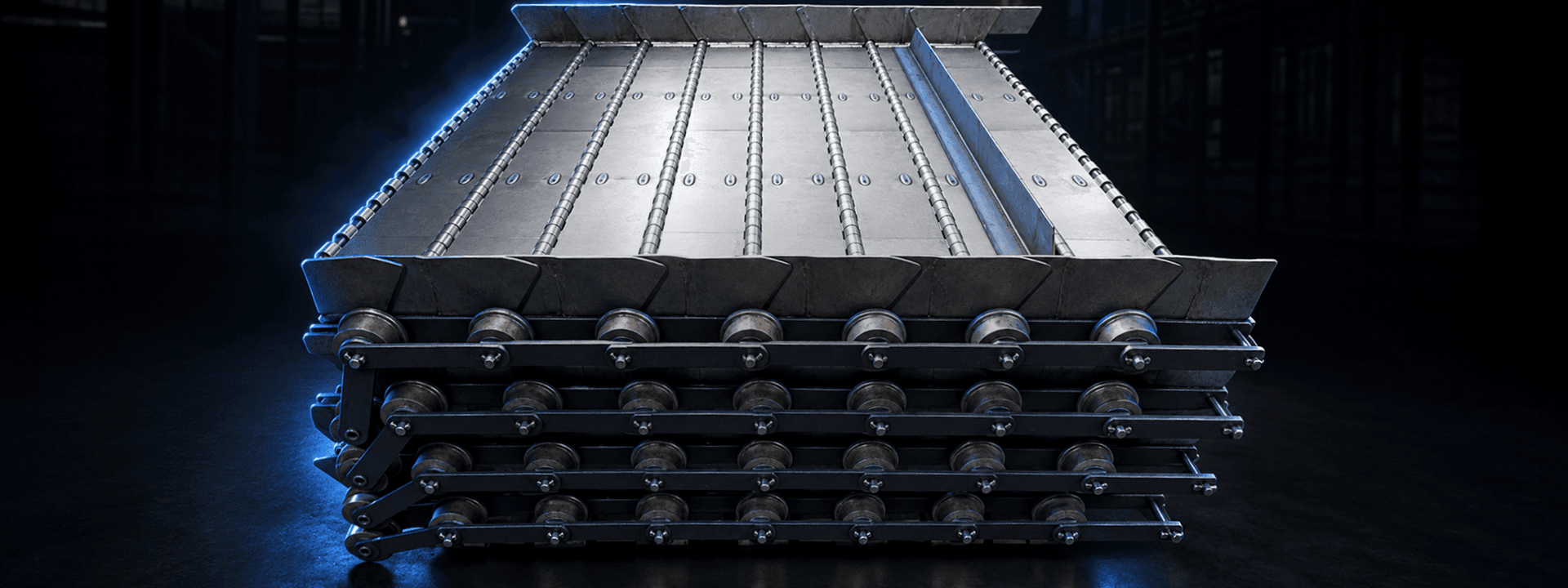
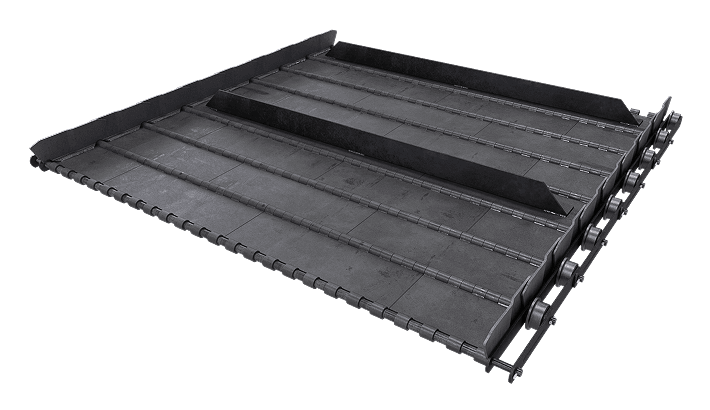
A modular belt conveyor uses a belt built from connected metal pans, plates, or panels rather than a continuous loop of rubber or fabric. Modular belts can be replaced plate by plate as needed, instead of all at once. They can also flex through incline and decline transitions. In heavy-duty applications, their steel plates withstand extreme temperatures, chemicals, and frequent impacts that would damage rubber belts.

On a roller chain modular belt conveyor, power enters the system through an electric motor. A gearbox reduces motor speed and increases torque to match the load. Roller chain conveyors run at low speed and high torque by design. The gearbox output connects to a drive sprocket, whose teeth engage with the roller chain links.
The sprocket teeth mesh mechanically with the chain, so the belt cannot slip under load. The roller chains run along the inside edges of the frame, pulling the modular belt sections forward. At the opposite end, a tail sprocket redirects the chain and belt through the return path.
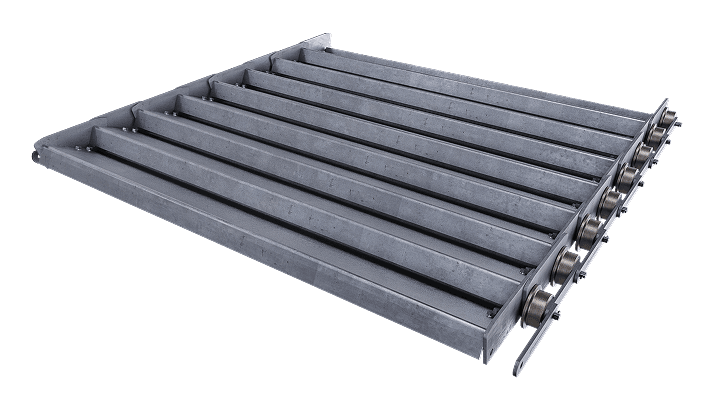
Each modular belt section is bolted, pinned, or hinged to the chains at regular intervals determined by the chain pitch. Sintered steel rollers on the chain ride along wear strips or railroad rails in the frame, reducing friction and supporting the load across the belt width. When a pan, pin, or roller wears out, that section is replaced in place; the rest of the belt stays in service.
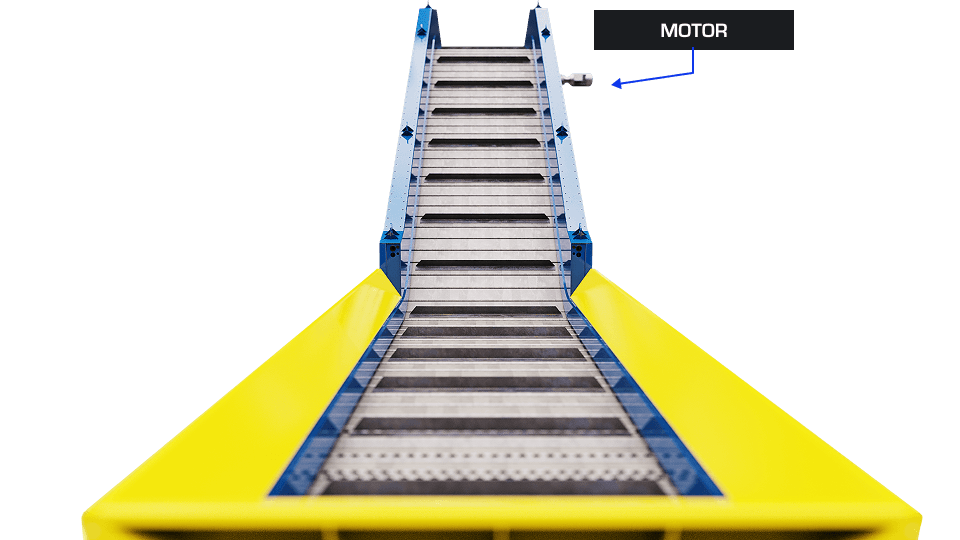
Modular belt conveyors are identified by the belt mounted on their roller chain.
Apron pan roller chain conveyors use overlapping formed steel pans attached to the roller chains. The overlapping geometry contains fine bulk materials and withstands impact from heavy, irregular loads. Pan depth is application-specific; shallow pans absorb impact from large pieces, while deep pans form perpendicular troughs that capture and meter finer material. See apron pan belt dimensions for full specification tables.
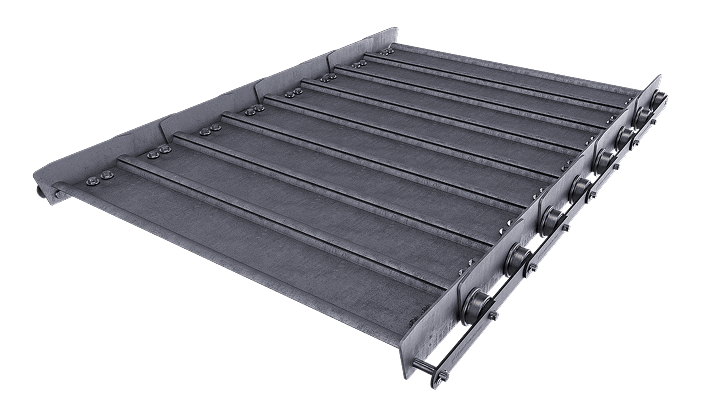
The steel pan construction is what separates modular belt conveyors from other belt types. Steel pans absorb impact, resist abrasion, and carry hot material without structural damage.
Modular belt conveyors are the right tool when the material has one or more of the following characteristics:
When materials are light, fragile, or need precise placement, a pulley-driven belt conveyor is the better fit.
"Modular belt conveyor" is also used in other industries to describe light-duty conveyors built with interlocking plastic belt modules rather than steel pans. Plastic modular belts use a similar principle (connected sections that can be individually replaced) to metal modular belts, but the construction, load capacity, and application range are different.
Plastic modular belt conveyors are common in food processing, packaging, and pharmaceutical applications where washdown, curved layouts, and piece handling are the priorities. They are not suited for heavy, abrasive, or high-impact materials.
When industrial buyers in recycling, scrap, foundry, or bulk material handling search for modular belt conveyors, the relevant system is almost a steel-pan roller chain conveyor.
No Image
Fluent Conveyors is a US manufacturer of custom conveyor systems for recycling, waste management, and heavy industry. We design and build modular belt conveyors to order, including roller chain conveyors of all duty classes.
Contact us if you’re researching conveyor options for your facility or operation. Our team can recommend the right solution based on your footprint, material, environmental, and regulatory requirements.