





Copyright © 2026 Fluent Conveyors, LLC. All rights reserved.

The Fluent Conveyors logo is a registered trademark of Fluent Conveyors, LLC. Serial Number 97664258 Registered on Dec. 12, 2023


Copyright © 2026 Fluent Conveyors, LLC. All rights reserved.
The Fluent Conveyors logo is a registered trademark of Fluent Conveyors, LLC. Serial Number 97664258 Registered on Dec. 12, 2023
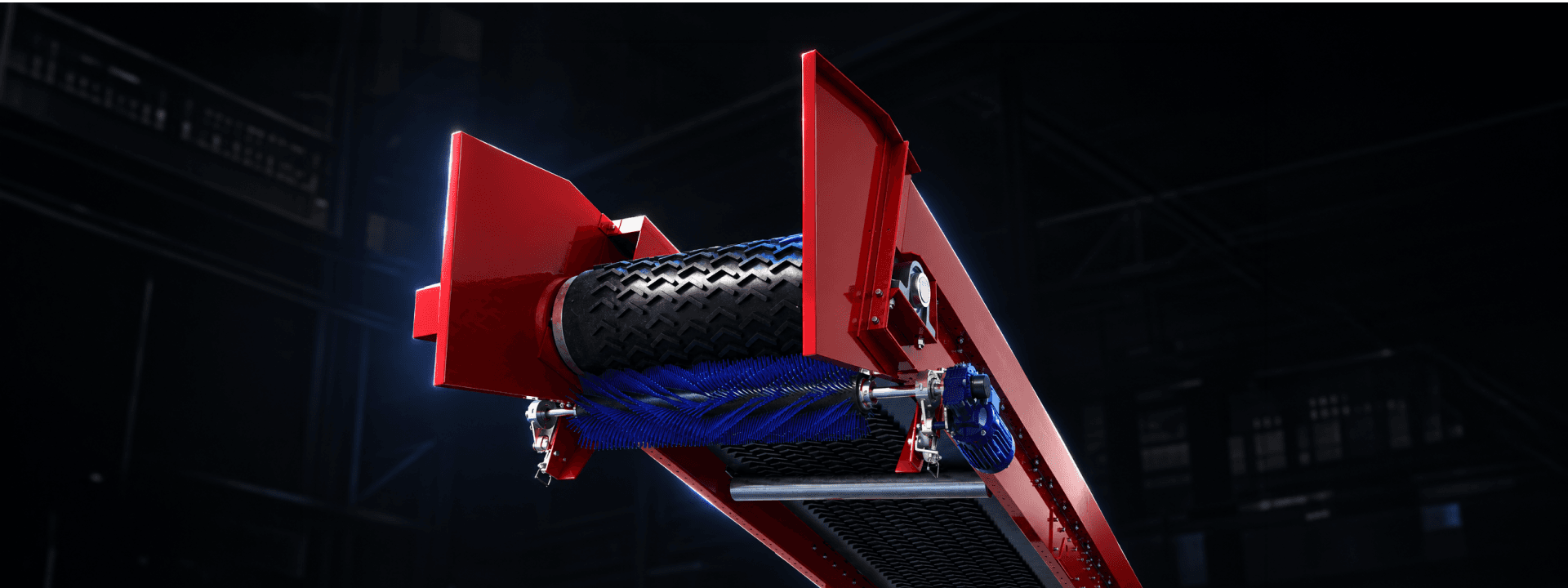
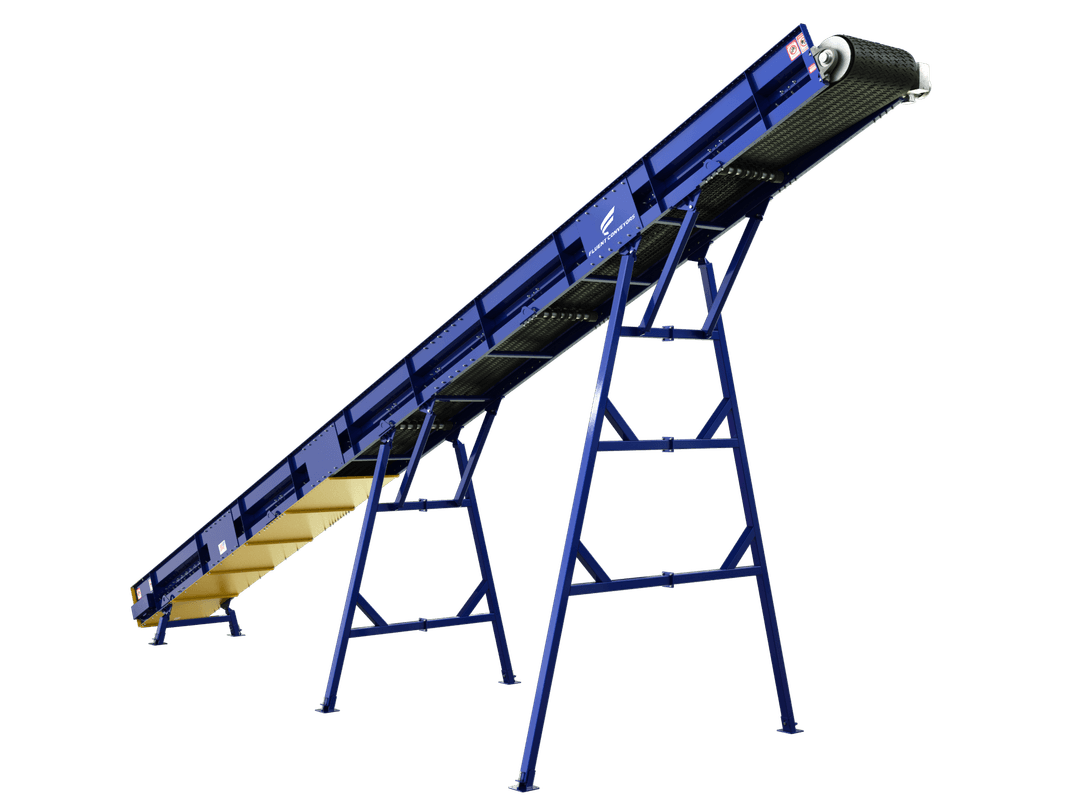
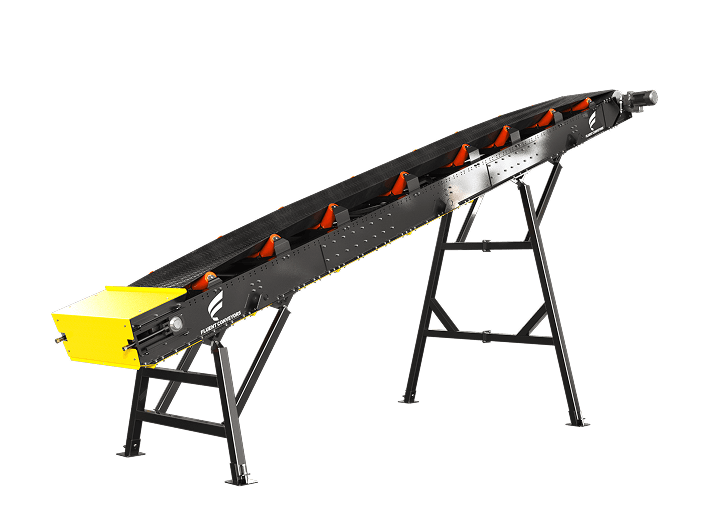
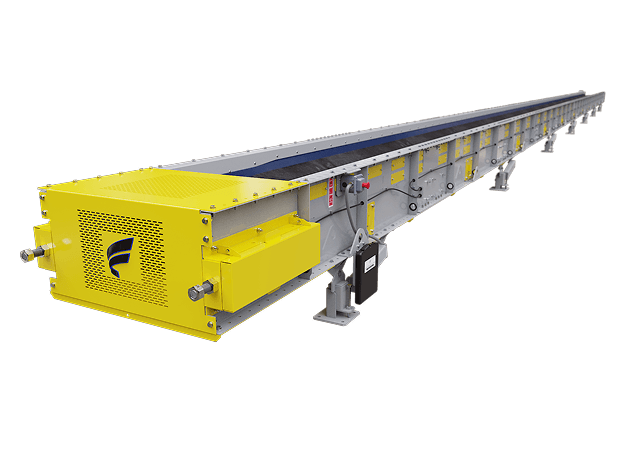
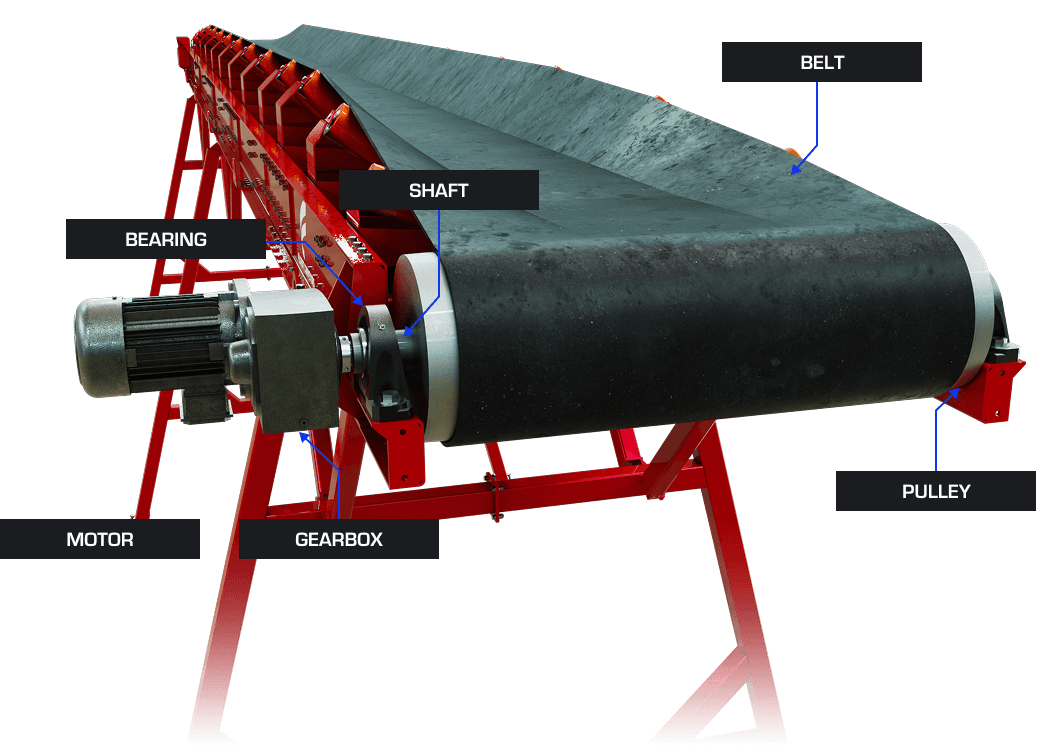
Pulley-driven conveyors move the belt using a powered drive pulley to turn a continuous loop of belting through friction. The motor, gearbox, and shaft deliver rotational force to the drive pulley, which grips the belt and pulls it forward. Tail, snub, and take-up pulleys guide, redirect, and tension the belt through its return path. Flat idler, trough idler, and slider bed conveyors are pulley-driven systems.

Power moves through the drive assembly in a fixed sequence. The electric motor converts electrical energy into rotational force. A gearbox reduces motor speed and increases torque to match the load. The output shaft transfers that torque to the drive pulley.
When the drive pulley rotates, friction between its surface and the conveyor belt pulls the belt forward across the carrying surface (either a series of idlers or a slider bed). Material loaded onto the belt travels to the discharge point as the belt moves. The tail pulley at the opposite end redirects the belt back through the return path, completing the loop.
Lagging is a rubber or ceramic surface material bonded to the drive pulley shell. It increases the coefficient of friction between the pulley and the belt, improving grip under load and reducing slippage. Bare steel pulleys are used in dry, light-duty applications; lagged pulleys are standard for heavier loads and wet or contaminated environments.
Belt wrap is the arc of contact between the belt and the drive pulley. More belt wrap means more surface area transmitting friction, which increases traction. Snub pulleys are positioned close to the drive pulley specifically to increase belt wrap. On longer or heavier-load conveyors, dual-drive pulley configurations are used to distribute the drive force across a larger contact area.
On most belt conveyors, the head pulley (at the discharge end) is also the drive pulley. It makes mechanical sense to place the drive at the discharge end, and it keeps the carrying side of the belt in tension, which is where load is applied.
On more complex systems, the two functions can be separated. The drive pulley may be located mid-conveyor or on the return side to optimize belt tension distribution, while a separate head pulley handles discharge. On some package handling conveyors, center-drive configurations move the powered pulley away from either end entirely.
Pulleys aren’t the only drive system for belt conveyors. Pulley-driven conveyors are generally lighter-duty than sprocket-driven conveyors, and used for longer runs.
Pulley-driven belt conveyors are preferred for applications requiring continuous belt movement, controlled speed, and a belt surface compound matched to a specific material.
Sprocket-driven roller chain conveyors are used when the load is heavy, abrasive, or high-impact (conditions where belt friction drive would be insufficient or cause belt slippage). Scrap, demolition debris, and car shredder feed are typical chain-driven applications.
The following conveyors are the most common pulley-driven configurations:
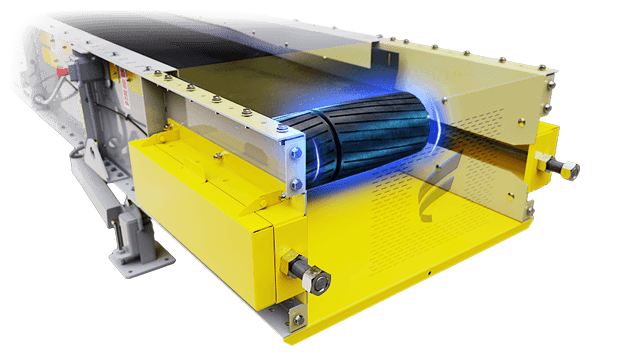
The belt runs over a flat metal bed rather than rollers. Slider beds are quieter, lower in cost, and suited to shorter transfer runs and precision conveyance. They are common in package handling and light-duty sorting applications. The increased friction between belt and bed limits effective length.
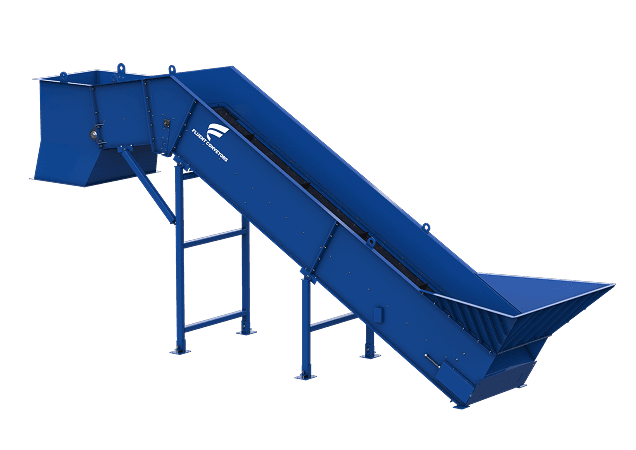

Fluent Conveyors is a US manufacturer of custom conveyor systems for recycling, waste management, and heavy industry. We design and build pulley-driven belt conveyors to order, including slider bed, flat idler, trough idler, and trough slider bed configurations.
Contact us if you’re researching conveyor options for your facility or operation. Our team can recommend the right solution based on your footprint, material, environmental, and regulatory requirements.