





Copyright © 2026 Fluent Conveyors, LLC. All rights reserved.

The Fluent Conveyors logo is a registered trademark of Fluent Conveyors, LLC. Serial Number 97664258 Registered on Dec. 12, 2023


Copyright © 2026 Fluent Conveyors, LLC. All rights reserved.
The Fluent Conveyors logo is a registered trademark of Fluent Conveyors, LLC. Serial Number 97664258 Registered on Dec. 12, 2023


Before installing any conveyor system, thorough site assessment and preparation ensure your facility can accommodate the specific requirements of your conveyor system, preventing costly adjustments and downtime after installation.
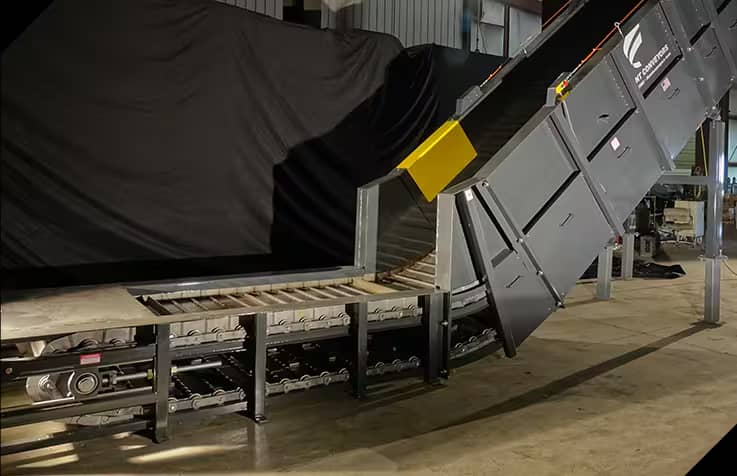
The foundation of any conveyor system is quite literally the floor it stands on. Proper floor assessments evaluate flatness and levelness—critical factors that affect conveyor alignment, operation, and longevity. These assessments help maintain ADA compliance, ensure accurate equipment placement, and provide accountability with concrete vendors.

Comprehensive property surveys provide vital information about your site's topography, existing utilities, and property boundaries. These surveys assist with expansion planning, trenching work for utility lines, and permitting processes for facility modifications. Advanced techniques like aerial imagery can be integrated with other modeling approaches for complete site visualization.
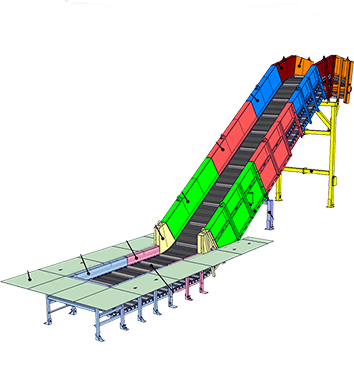
Building Information Modeling (BIM) creates accurate three-dimensional representations of your facility and conveyor systems. This technology enables precise dimensional drawings, hyper realistic models for project coordination, and creates digital twins that store critical asset data. BIM modeling facilitates remote access to facility information and streamlines the permitting process.
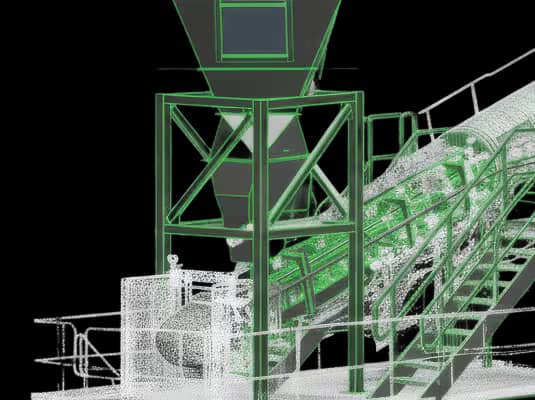
Modern laser scanning techniques—whether drone-based, terrestrial, or mobile—generate high-density point clouds that create accurate models of existing infrastructure. This approach is faster and safer than traditional hand measurements, provides panoramic facility views, and integrates with survey control points for maximum accuracy across all assets.

Implementing a comprehensive asset tagging system aligns physical equipment with digital records, creating structured data that simplifies maintenance and scaling. This approach provides historical financial data, enables predictive maintenance, and helps mitigate risk and downtime through better work order management.
Understanding the full scope of site preparation allows for better planning, more accurate budgeting, and ultimately, a more efficient conveyor installation process. Thoroughly preparing your site before installation minimizes disruptions, reduces the risk of errors, and helps ensure your conveyor system operates at peak efficiency from day one.
Explore each aspect of site preparation in detail through the links above to gain a comprehensive understanding of what's involved before your conveyor system installation begins.