








Copyright © 2026 Fluent Conveyors, LLC. All rights reserved.
The Fluent Conveyors logo is a registered trademark of Fluent Conveyors, LLC. Serial Number 97664258 Registered on Dec. 12, 2023


Copyright © 2026 Fluent Conveyors, LLC. All rights reserved.
The Fluent Conveyors logo is a registered trademark of Fluent Conveyors, LLC. Serial Number 97664258 Registered on Dec. 12, 2023
Integrally molded belts carry aggregate, sand, recycled concrete, and other bulk material on mobile screening plants. They run on the feed, incline, and stacker positions where cleats are needed to hold material against steep angles. Learn about screening equipment belt positions, how integrally molded belts are built, and how screening belts fail.

An integrally molded belt is a single cured unit. The carcass, covers, and cleats are bonded into one continuous piece of material rather than assembled from a flat belt with cleats mechanically fastened or hot-vulcanized on top. Heavy-duty integrally molded belts handle applications that would quickly degrade belts made from assembled components.
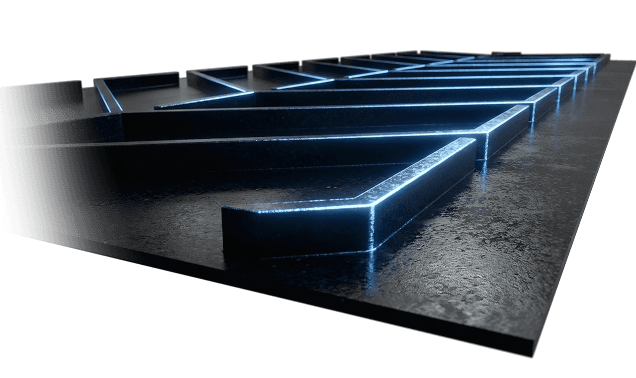
Mobile screening plants process abrasive, variable, and contaminated material under conditions that degrade general-purpose belts.
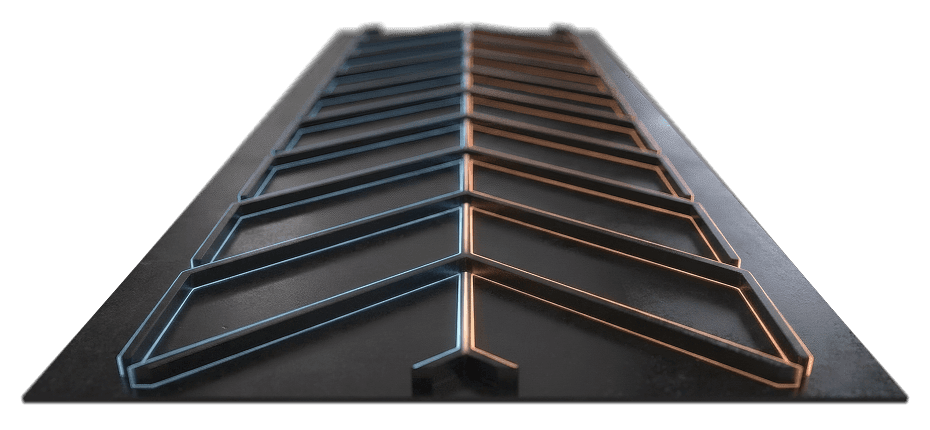
Any cleat bond or layer interface on an assembled conveyor belt becomes a potential failure point within the first few hundred operating hours under these conditions. Integrally molded construction removes that failure point.
A mobile screener runs multiple belts in defined positions. Not all of them need integrally molded construction. Specifying one where it isn't needed wastes money; specifying a spliced belt where cleats take impact wastes the belt.
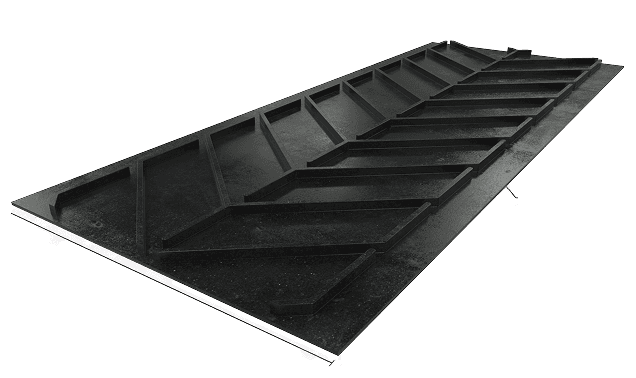

When choosing a belt for mobile screeners, engineers specify the following variables depending on the material, equipment position, and environmental conditions.

The carcass includes multiple plies of polyester or nylon fabric that carry tensile force down the belt and resist longitudinal stretch. Ply count and fabric weight are sized to working tension, with headroom for impact spikes at loading. An undersized carcass stretches and mistracks; an oversized one adds stiffness that works against the small pulley diameters mobile screeners typically use.
The top cover handles impact and abrasion from the material; the bottom cover handles friction against pulleys and slider surfaces. Screener belts typically use a moderately oil-resistant (MOR) rubber compound that balances cut-and-gouge resistance against the oil and hydrocarbon exposure that comes with recycled asphalt, contaminated fines, and C&D feedstock. For dedicated clean-aggregate applications, a premium abrasion-resistant compound without oil resistance can be a better match.
Top cover thickness is a tradeoff between abrasion resistance and belt stiffness. Thicker covers take more abrasion before the carcass is exposed, but they add weight, flex resistance, and heat buildup on small pulleys. Field practice on mobile screeners is to match top cover thickness to expected run hours between belt changes rather than specifying the thickest available option by default.
Cleat geometry involves height, spacing, and profile. It’s where screener belts differ most from other integrally molded belts.
Height determines how much material the belt can carry up a given incline before rollback. Standard heights on screener belts run from roughly 1/2 inch to 1 1/4 inch. Taller cleats hold more material on steeper angles but take more impact damage at loading and make discharge less clean.
Spacing determines how fluid the discharge is. Tight spacing (around 6 inches) retains finer material and evens out flow; wider spacing (up to 12 inches) gives cleaner discharge on coarse material but loses retention on steep inclines. Spacing is matched to material particle size and incline angle together, not either one alone.
Profile determines how material is released at the discharge end. Common profiles on mobile screeners include:
Bullhorn: low-height (around 1/2 inch) profile with a flat top and parallel wings. Clean discharge, moderate retention, good general-purpose choice.
Bighorn: mid-height (around 3/4 inch) profile for moderate inclines with mixed material. Holds finer material better than bullhorn.
Longhorn: mid-height (around 3/4 inch) alternative with a longer wing geometry for improved retention on steep angles.
Fabclimb and Fablift: tall (up to 1 1/4 inch) profiles for steep inclines and heavy retention. Used on stackers and aggressive discharge positions.
For profile references beyond these, see our chevron cleated belts page, which covers the broader cleat profile family.
An endless vulcanized splice approaches the mechanical properties of the surrounding belt material and maximizes service life. A mechanical splice trades some life for field-replaceability. Operators running tight maintenance windows on remote sites often prefer mechanical splices for serviceability; operators running long campaigns from a central yard typically prefer endless splices for the longer life between replacements.
Most screener belt failures relate to one of five patterns. The failure mode tells you what the underlying cause is and what to check.
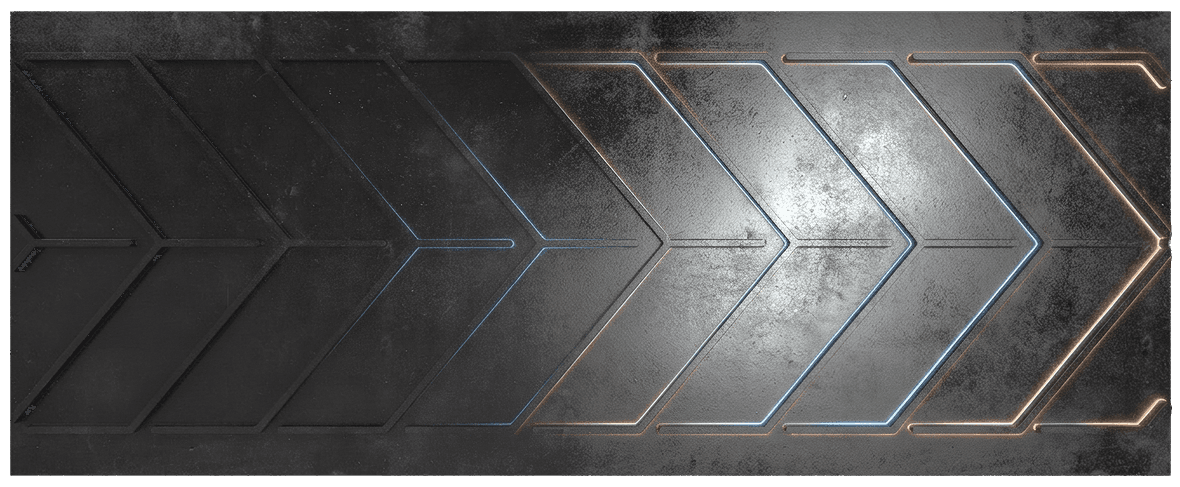
Learn more about conveyor belt wear and tear.
Once a belt is on the plant, service life is driven more by mechanical care than by compound choice. Three practices matter most.
Proper belt tensioning keeps the carcass cycling inside its design range. Undertension lets the belt slip at the drive pulley and accelerates cleat wear at the discharge; overtension stretches the carcass and shortens splice life.
Correct belt tracking keeps the belt centered on the frame. Screeners move between sites and set up on varied ground; tracking needs rechecking at every setup, not just at commissioning.
Clean belt scrapers keep carryback from abrading the cover from underneath. Scraper blade wear is the single most common overlooked factor in premature belt failure. For a broader maintenance framework, see how to make a conveyor belt last longer.

Fluent Conveyors builds integrally molded replacement belts to OEM fitment across mobile screening platforms. Send the plant model and the position you're replacing, and we'll work through the cleat profile, compound, and splice method to match the duty cycle.

