





Copyright © 2026 Fluent Conveyors, LLC. All rights reserved.

The Fluent Conveyors logo is a registered trademark of Fluent Conveyors, LLC. Serial Number 97664258 Registered on Dec. 12, 2023


Copyright © 2026 Fluent Conveyors, LLC. All rights reserved.
The Fluent Conveyors logo is a registered trademark of Fluent Conveyors, LLC. Serial Number 97664258 Registered on Dec. 12, 2023
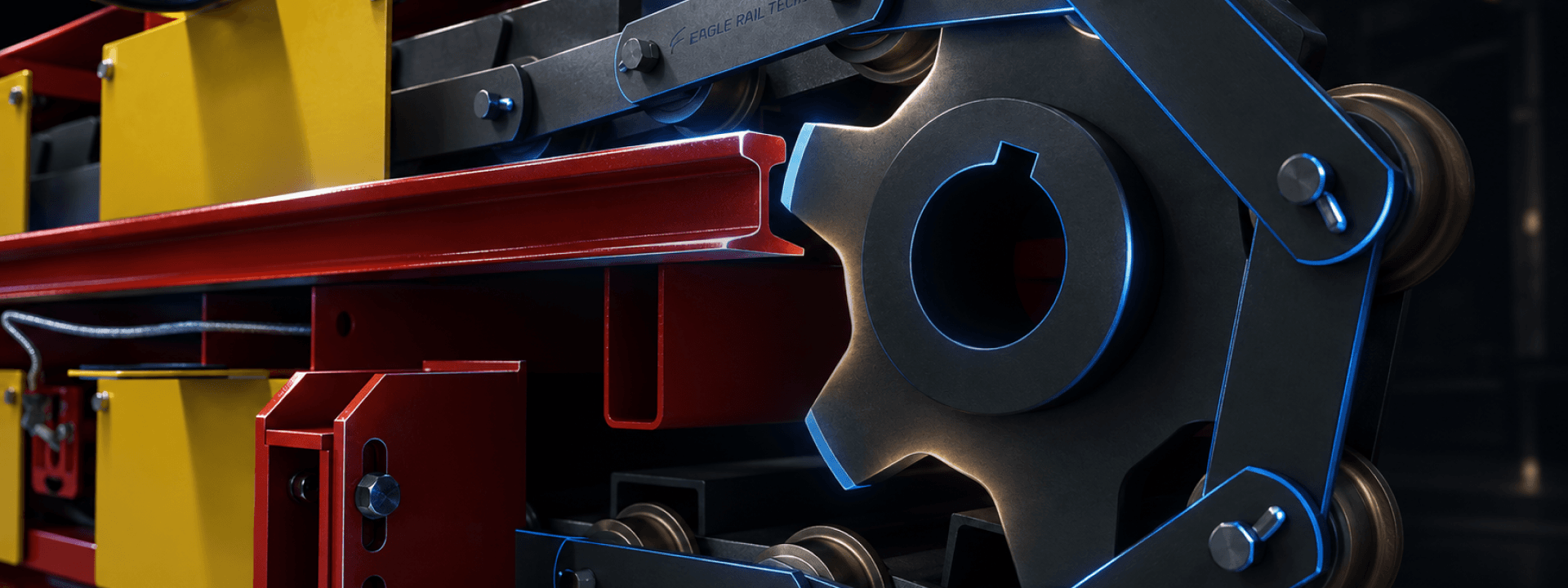
Rail systems use ASCE railroad rails to carry heavy-duty belts and structurally reinforce high-impact loading zones on roller chain conveyors. Weight per yard determines a rail’s conveyor application. Learn how railroad rails fit into industrial conveyors, how Fluent specifies ASCE 25, 60, and 85 lb rail for conveyors, and when a railroad rail system is the right choice for your operation.

"Conveyor rail system" is used informally to describe other systems that have more appropriate alternative terminology.
Two additional terms are sometimes confused with each other:
Carrying rail / carrying track: The rail surface that chain rollers ride on along the loaded run of the conveyor. This is the load-bearing structural function ASCE rail performs in Fluent's heavy-duty and extreme heavy-duty systems.
Side rail / frame rail: The longitudinal side members of the conveyor frame. These are structural frame components, not the carrying surface.
A roller chain conveyor has frame rails and carrying rails.
*The ASCE (American Society of Civil Engineers) designation refers to the same cross-sectional geometry used in railroad track applications.

Railroad rails have two functions on heavy-duty conveyors.

In a roller chain conveyor, chain rollers ride along the surface of the carrying track for the length of the carrying run. ASCE rail provides a wear-resistant rolling surface, and its I-profile distributes load more effectively than angle iron or flat bar at high contact forces. At the load levels common in recycling, scrap, and waste processing, railroad rails increase carrying weight and reduce wear.
At high-impact loading zones (where material drops onto the belt from a loader, excavator, or feed hopper), the conveyor frame absorbs forces that would deform standard steel channel. ASCE rail welded into the frame at these points adds section modulus and surface hardness where loading is most severe.
This application is common on shredder infeed conveyors, where loading forces are extreme. Rail is specified for its moment of inertia and resistance to bending under impact loads.
Fluent stocks three ASCE rail weights for conveyor applications. Selection is based on the conveyor duty class and the rail's function in the system.
These are specifications for Fluent systems. Rail can be applied in other configurations depending on the engineering requirements of a given build.
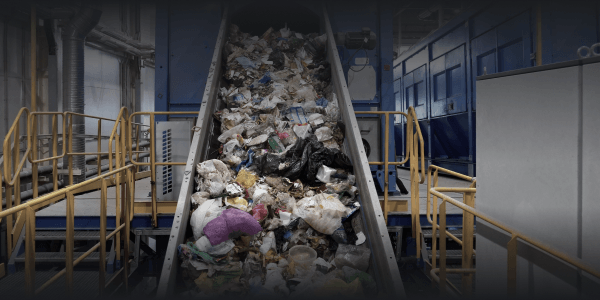
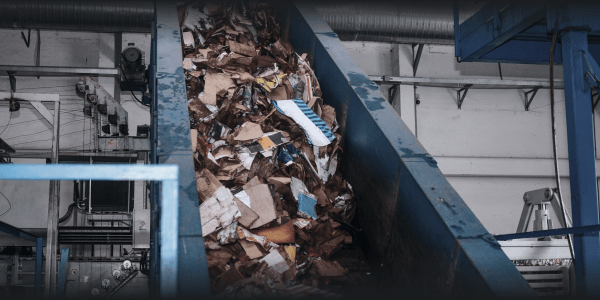
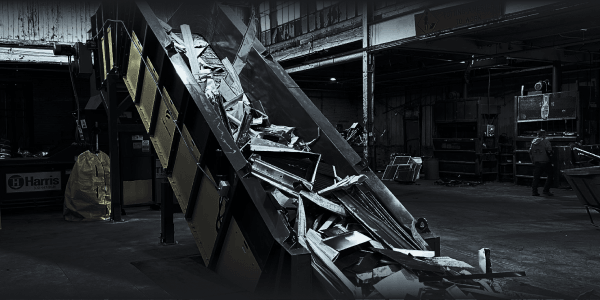
Choose railroad rail when the combination of load weight, material abrasiveness, impact intensity, and throughput rate exceeds the capacity of lighter channeling. Common industry applications include:
Symptoms that indicate the belt track is undersized for the application include accelerated chain roller wear, chain climbing or jumping off the track, belt tracking problems that persist despite adjustment, visible grooving or side wear on the carrying track surface, and chronic chain stretch from excessive rolling resistance.
The upgrade path depends on the severity and the condition of the existing conveyor. In some cases, retrofitting ASCE rail into an existing frame is feasible if the frame structure is sound and the chain and roller configuration is compatible. In other cases, a full conveyor replacement is the more reliable solution. A custom conveyor built with rail carrying track from the ground up eliminates the compromises of a retrofit and matches the frame geometry, supports, and hardware to the rail specification.
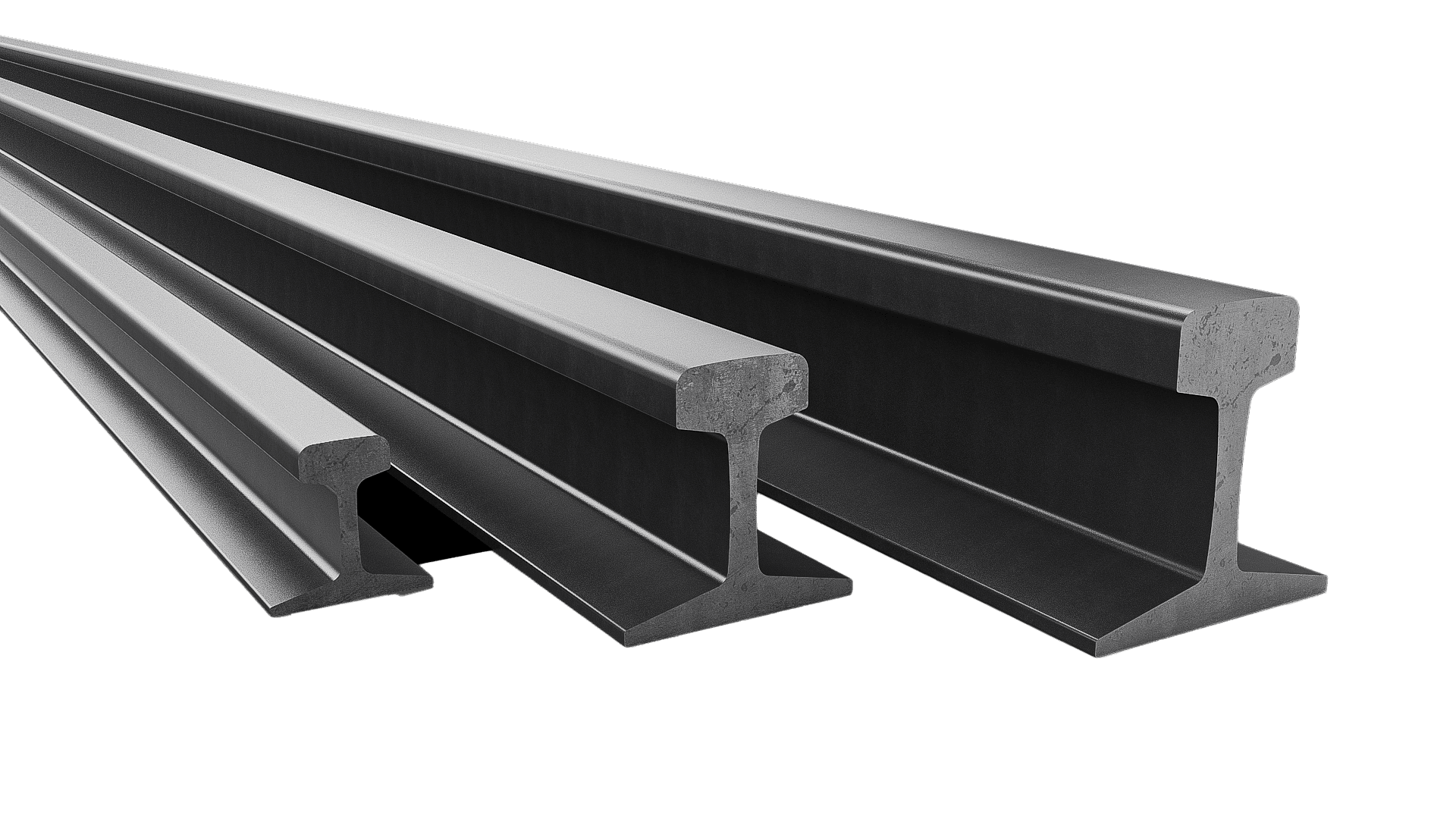
Carrying rail is a wear surface. Inspection intervals should be set based on the application's load intensity and material abrasiveness — higher-throughput and more abrasive applications require shorter intervals. Include rail inspection in the conveyor's routine maintenance schedule.
Persistent belt tracking problems often relate to rail or roller condition rather than belt tension. Inspect the carrying track before concluding that the belt is the problem.
Impact zone rail should be inspected for surface cracking, deformation at the impact face, and weld integrity at the frame attachment points. These areas absorb repeated high-energy impacts and require periodic assessment.

Fluent designs and manufactures custom conveyors with ASCE rail. Our engineering team specifies rail weight, roller type, frame integration, and lubrication as a system, not as individual components. If you're assessing a retrofit or planning a new conveyor build, we can evaluate your application and recommend the right configuration.