









Copyright © 2026 Fluent Conveyors, LLC. All rights reserved.
The Fluent Conveyors logo is a registered trademark of Fluent Conveyors, LLC. Serial Number 97664258 Registered on Dec. 12, 2023


Copyright © 2026 Fluent Conveyors, LLC. All rights reserved.
The Fluent Conveyors logo is a registered trademark of Fluent Conveyors, LLC. Serial Number 97664258 Registered on Dec. 12, 2023
-1.png&w=3840&q=75)
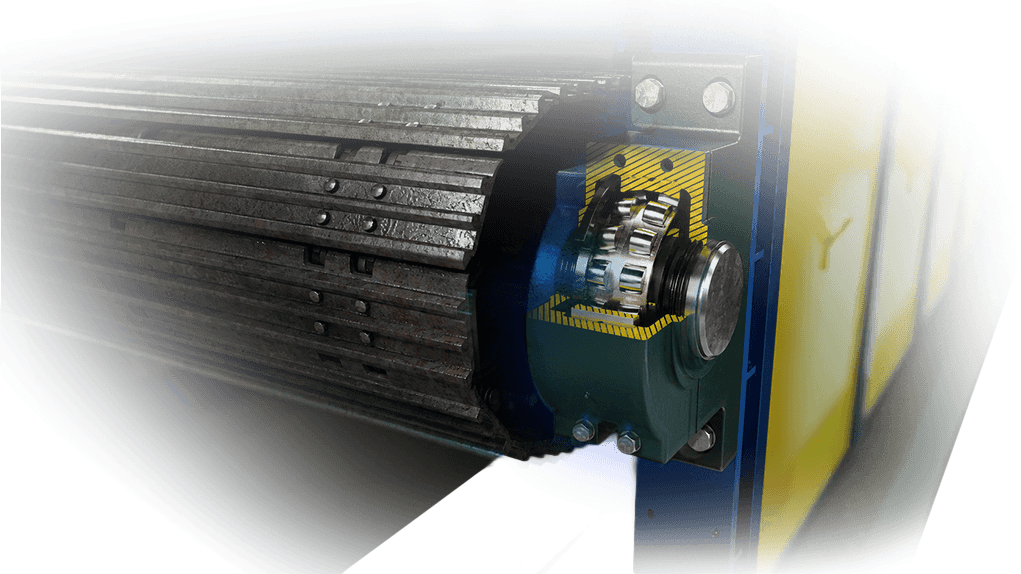
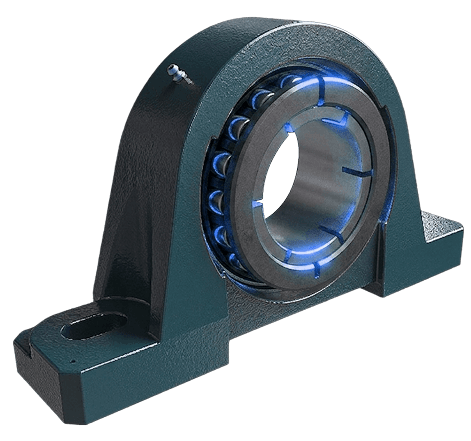
Pillow block bearings bolt to the conveyor frame at each shaft position, housing a bearing insert that supports the rotating shaft, carries radial loads from the belt and material, and keeps the shaft running true under continuous load.

As part of a routine replacement schedule or after failure, pillow block bearings should be replaced following these general steps:
Lock out and tag out the conveyor
Relieve belt or chain tension
Loosen the locking method (set screws or eccentric collar)
Unbolt and remove the bearing housing
Pull the old bearing from the shaft
Inspect and prep the shaft
Slide the new bearing into position
Level and align the housing, using full-length shims where needed
Torque housing bolts and lock the bearing to the shaft
Lubricate if required, then run empty and verify
Most bearing replacements are straightforward once you have the right part and a clean shaft to work with.
Below, we’ll discuss failure diagnosis, replacement part selection, detailed step-by-step procedures for both set screw and eccentric collar locking methods, alignment requirements, and the post-install checks that prevent a repeat failure, as well as what to inspect while you have the conveyor down.
Don't pull a bearing just because the conveyor has hours on it. Replace it according to its service schedule or when one or more of these conditions are present:
Abnormal noise: Grinding, rumbling, or clicking from the housing
Heat at the housing: Bearing temperature meaningfully above ambient
Vibration or shaft play: Detectable movement in the shaft at the housing
Seal damage or grease leakage: Visible deterioration of the seal lip, or grease escaping from around the housing
Shaft scoring: Surface damage on the shaft journal where the bearing sat, which will accelerate the failure of any replacement bearing installed on a damaged seat
Belt tracking problems: Bearing or pulley misalignment can shift pulley position and create uneven tension across the belt width; if tracking problems appeared without an obvious cause, check the bearings on that pulley shaft
Inspect the opposite bearing on the same shaft at the same time. Paired bearings accumulate the same run time, load cycles, and contamination exposure. If one has failed, the other likely needs replacement.
Lock out and tag out the conveyor before touching any part of the bearing housing. OSHA 29 CFR 1910.147 covers all servicing and maintenance where unexpected startup or the release of stored energy can injure workers. CEMA's pulley safety guidelines make the same requirement.
Before maintenance work:
Stop the conveyor
Follow your site's LOTO procedure and isolate all energy sources
Relieve stored belt tension; a tensioned belt holds mechanical energy independent of the drive
On loaded incline conveyors, account for the stored energy of the load itself
Confirm zero energy state before removing guards or contacting any shaft or housing
Wear site-required PPE throughout. Do not service a bearing housing while the conveyor belt is running, even at low speed.
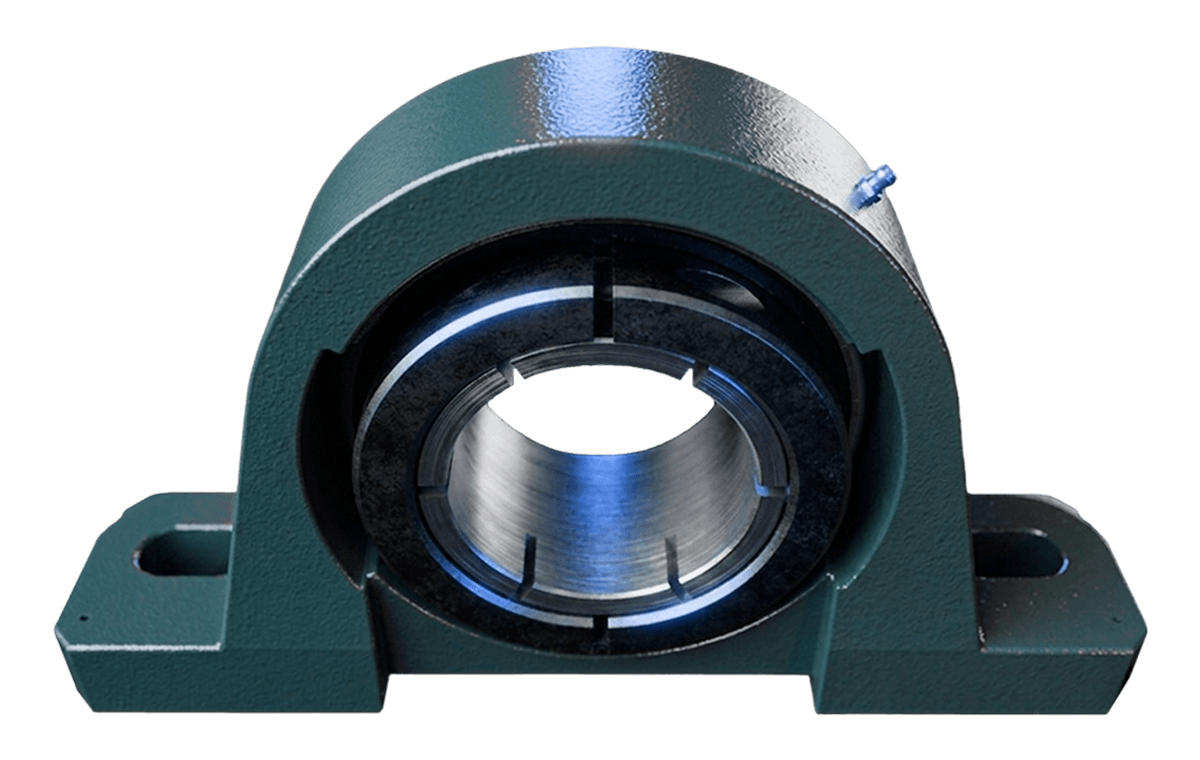
On conveyors with material buildup around the housing, plan extra time for shaft cleaning. Compacted material on the shaft journal is one of the most common reasons a new bearing seats poorly and fails early.
Tools / parts
Socket set, torque wrench, breaker bar
Bearing puller; punch or drift for eccentric collar removal
Emery cloth or honing stone, clean lint-free rags, light oil or solvent
Hex wrench (set screws), punch and hammer (eccentric collar)
Shims, straightedge or machinist level
Grease gun, clean grease fitting
Bearing manufacturer's torque spec sheet
Per site requirements

Your replacement bearing must match all relevant dimensions. Otherwise, it will fail faster or not fit the shaft. Confirm these six variables before ordering:

Measure the shaft diameter at the bearing journal and match it to the bearing's specified bore. A shaft that's been scored or is out of tolerance is also a replacement candidate.
Set screw bores and eccentric locking collar bores are non-interchangeable configurations. The replacement bearing must match the original locking method.
Ball bearing inserts handle moderate radial loads and moderate speeds. Roller bearing inserts (including spherical roller designs) handle heavier radial loads and tolerate a degree of shaft misalignment. Spherical bearings are worth specifying on long conveyor spans or structures subject to settling.
Standard, medium-duty, and heavy-duty housings and inserts carry different load ratings. Match or exceed the original specification.
B-type seals handle standard industrial environments. L3 seals provide heavier contact for dusty or wet conditions. High-heat seals are required in elevated-temperature applications. The wrong seal accelerates contamination ingress and shortens bearing life.
Washdown applications, corrosive atmospheres, and high-temperature environments require specific insert materials and housing options. Learn about these options on the replacement bearings page.
These locking methods are not interchangeable. The replacement bearing must match the original, and the installation and removal procedures are different for each.
Position the bearing at the correct axial location. Tighten the first set screw finger-tight, then advance the second set screw (positioned 90° from the first) to the manufacturer's torque specification. Return to the first set screw and torque it to specification. Do not torque both simultaneously. Over-torquing deforms the inner ring and creates noise immediately; under-torquing allows the bearing to rotate on the shaft under load, scoring both surfaces.
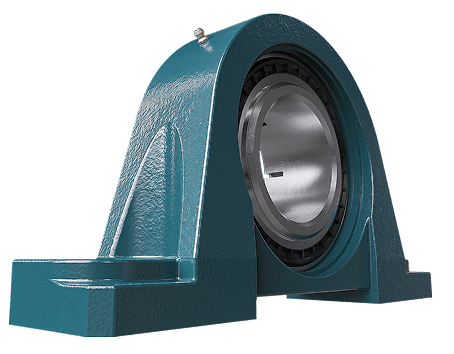
With the housing bolts light-tight and the bearing positioned on the shaft, slide the collar over the inner ring extension and rotate it by hand in the direction of shaft rotation. The collar will engage the eccentric and begin to tighten. Once engaged, place a punch or drift in the blind hole in the collar and strike it sharply in the direction of shaft rotation to seat the eccentric lock. Tighten the collar set screw to the manufacturer's specification.
To remove, back out the collar set screw, then tap the collar in the direction opposite to shaft rotation to break the eccentric engagement. The collar will then slide free of the inner ring
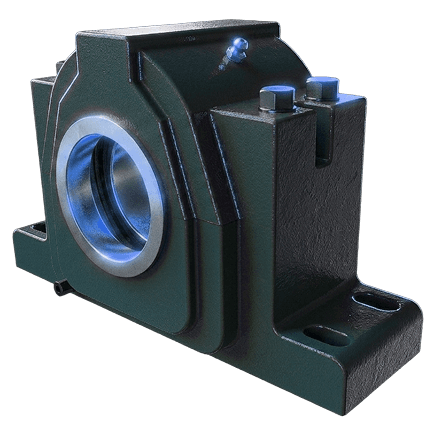
Misalignment is the leading cause of premature bearing and seal failure. The mounting surface must be clean and flat before the housing is seated. Debris under the housing base creates a high spot that rocks the housing under load and distorts the bore.
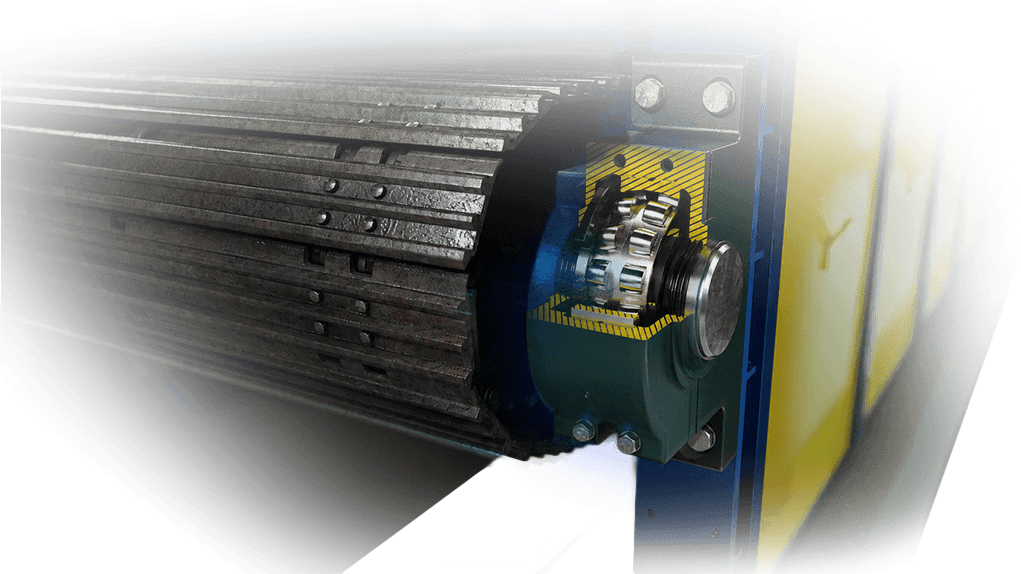
If the mounting surface is uneven, shim the full housing footprint. Partial shimming creates a cantilevered condition that distorts the housing bore and generates uneven internal loading. This applies to every pillow block bearing regardless of duty rating.
When replacing a bearing on a shaft supported by two pillow blocks, check that both housings are aligned axially. A shaft that runs straight through two properly leveled but laterally offset housings is still misaligned. Use a straightedge or alignment bar across both housing bores to verify.
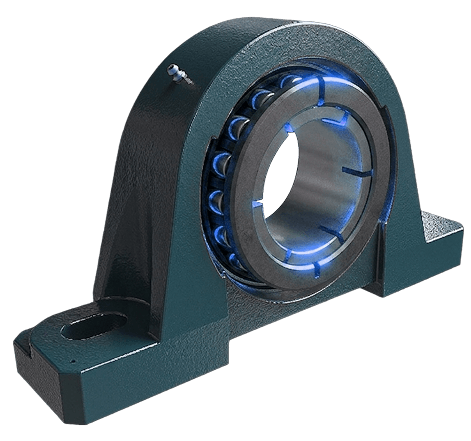
Ball bearing pillow block units accommodate a limited degree of static misalignment. This compensates for minor installation variation, not structural misalignment.If a conveyor shaft consistently runs out of alignment due to frame deflection, thermal expansion, or settling foundations, use a spherical roller bearing insert.
If a conveyor shaft consistently runs out of alignment due to frame deflection, thermal expansion, or settling foundations, use a spherical roller bearing insert.
Reinstall all guards and release the LOTO per your site procedure before restarting.
Run the conveyor empty first. Within the first 10–15 minutes:
Listen for grinding, rumbling, or clicking from the new housing
Check for vibration at the housing with your hand (with the conveyor running and guards in place, at a safe access point)
Check housing temperature; a new bearing will run slightly warm as grease distributes, but significant heat above ambient suggests a problem
Inspect for grease purge at the seals; slight weep is normal on a fresh installation
Observe belt tracking on the first loaded run; bearing or pulley misalignment often shows first as belt drift
Recheck housing bolt torque and set screw or collar engagement after the first full operating shift. Standard practice from most bearing manufacturers includes a 24-hour follow-up inspection, and it catches a meaningful percentage of installation issues before they become failures.
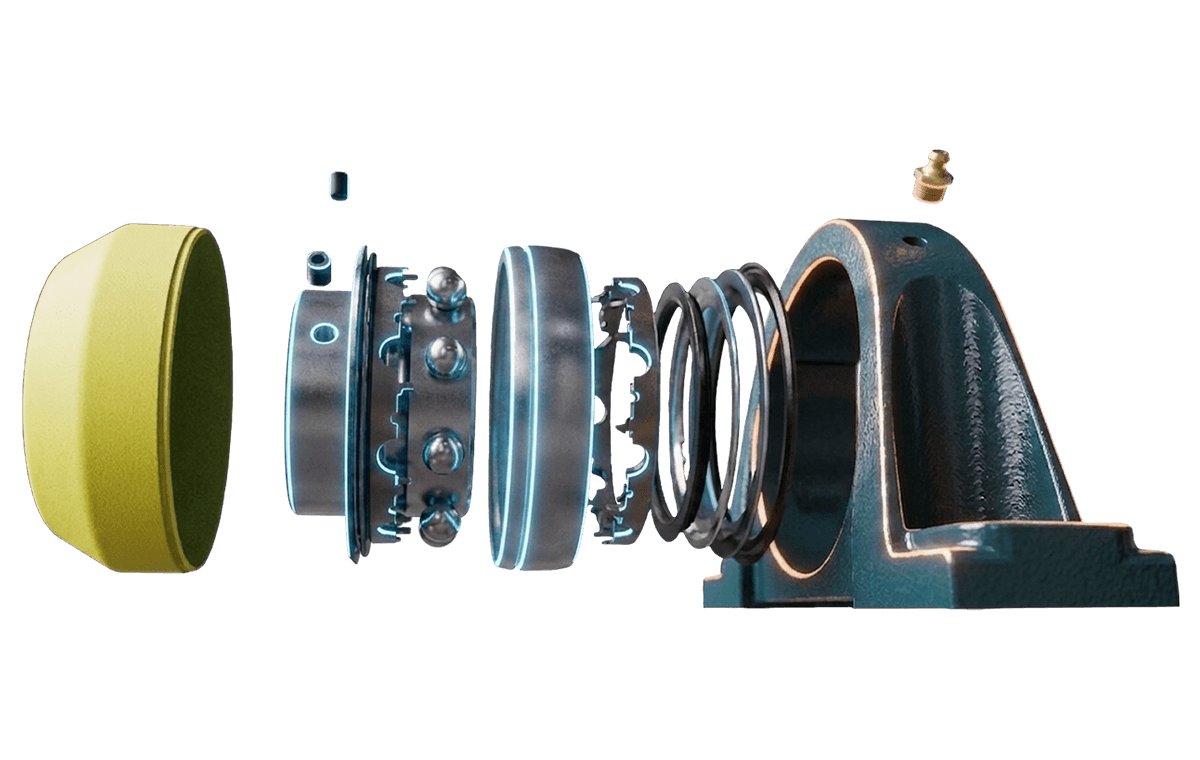

Fluent builds custom conveyors and supplies a full catalog of replacement parts. The parts we supply are the same ones we install on our own conveyors every day, chosen by our team for real-world performance.
We can provide replacement pillow block bearings matched to your system. Contact us when:
The locking method or bore type isn't identifiable from inspection alone, and you need to confirm the replacement specification
The shaft journal is damaged, and shaft replacement may be required alongside the bearing
The application involves high heat, washdown, or corrosive exposure, and you need guidance on seal and insert material selection
You're sourcing bearings for multiple conveyor positions and want to confirm compatibility across configurations before ordering
The conveyor is a Fluent-built system, and you want a matched replacement pulled against the original build spec
We supply genuine Dodge replacement bearings across pillow block, flange, take-up, and spherical configurations, and our parts team can match bore size, duty, seal, and insert type based on what you're running.
Ready to work with the experts?