






Copyright © 2026 Fluent Conveyors, LLC. All rights reserved.

The Fluent Conveyors logo is a registered trademark of Fluent Conveyors, LLC. Serial Number 97664258 Registered on Dec. 12, 2023


Copyright © 2026 Fluent Conveyors, LLC. All rights reserved.
The Fluent Conveyors logo is a registered trademark of Fluent Conveyors, LLC. Serial Number 97664258 Registered on Dec. 12, 2023
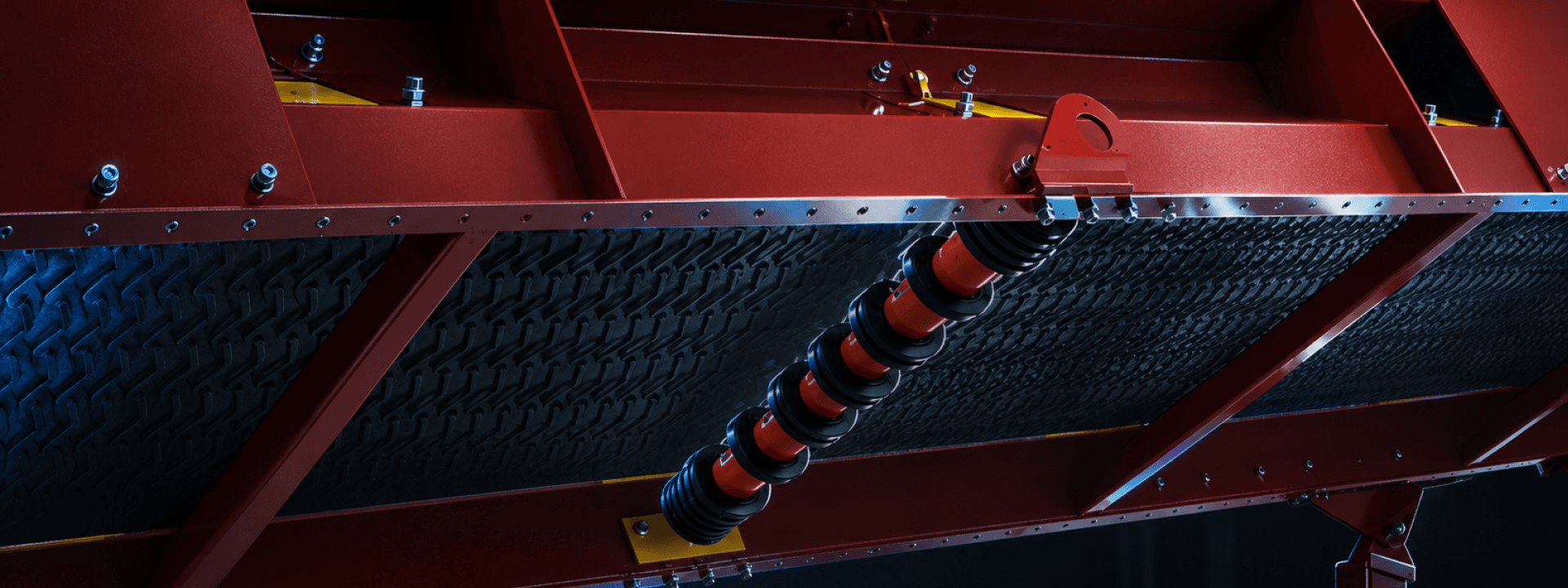
Rubber return idlers mount on the underside of the conveyor frame, supporting the empty belt on its return run from the discharge point back to the tail pulley.

As part of a routine replacement schedule or after failure, rubber return idlers should be replaced following these general steps:
Most idler replacements are straightforward once the part is dimensionally matched and the idler is installed square to the centerline.
Below, we'll cover when a rubber return idler needs replacing, how to decide between replacing, cleaning, or upgrading, the measurements to record before removal, the full step-by-step procedure, and the post-install checks that confirm the repair is complete.
Replace the idler when the roller or its rubber components can no longer do their job. Inspect adjacent idlers and the belt surface in the same window, since a degraded idler accelerates wear on other components.
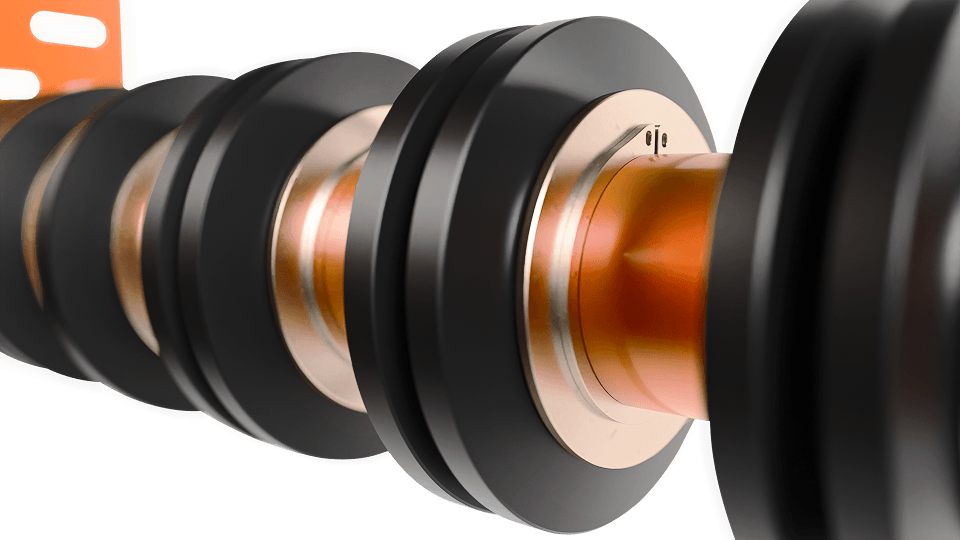
A rubber disc return idler that has lost its edge discs is a particular hazard. The missing contact point allows the belt to drift toward the open edge and catch, which causes tracking problems that can look unrelated to the idler itself.
Not every return run problem requires a new part.
Clean when the idler spins freely, the discs are intact, and the problem is surface buildup only. Material adhering to the roll (not disc wear) is the cause. Clean the idler and the belt in that zone, then monitor.
Replace when:
Discs are worn, cracked, missing, or loose
The roller is seized or noisy
The shaft or brackets are deformed
The belt is catching on the idler at any point
Investigate the root cause before replacing when the same idler position fails repeatedly. A recurring failure at one location points to a structural problem, not just a worn part.
Upgrade when you're replacing a flat rubber return idler, and carryback is a recurring problem at that position. Rubber disc return idlers shed sticky material more effectively and reduce carryback and belt tracking problems. If chronic carryback is the recurring issue, you might also want to invest in a primary or secondary belt scraper.
Lockout/tagout (LOTO) is mandatory before any contact with the idler, belt, or frame. OSHA 29 CFR 1910.147 covers all servicing where unexpected startup or release of stored energy can cause injury.
Before starting:
Stop the conveyor.
Follow your site's LOTO procedure and isolate all energy sources.
Relieve belt tension at the take-up per your site procedure.
On inclined conveyors with a loaded belt, account for the stored energy of the load
Confirm zero-energy state before removing guards or touching any hardware
Return idlers accessible from ground level can have active nip points where the belt wraps the roll. Guards must be reinstalled before restart. Only trained maintenance personnel should perform the work.

You can usually read the part number off the old idler or refer to manufacturer documentation. If that’s not an option, collect the following measurements to help your supplier match your part:
Photograph the shaft ends, bracket style, retainer hardware, and rubber disc layout before removal.

The following sequence applies to most hanger-bracket and drop-bracket return idler configurations. Bracket style and shaft retention method vary — some idlers use retainer clips, others use mounting bolts. Match each step to your specific hardware.

Follow your site's LOTO procedure. No work proceeds until a zero-energy state is confirmed.
Remove material, tools, and foreign objects from the return side before touching the belt or idler. Debris left on the return run is a common source of belt damage during changeouts.
Position a belt lifter or support plank on either side of the idler being replaced. Do not rely on adjacent idlers to hold the belt, and do not use pry bars against the belt carcass.
Remove any fixed guards or nip guards covering the return idler. Set hardware aside.
The removal sequence depends on the idler style:
Hanger bracket: Remove shaft retainer clips at both ends, then lift the roll out of the bracket slots.
Drop bracket / bolt-mount: Loosen all mounting bolts and support the idler assembly before removing the last bolt.
Note the bolt count, hardware type, and any washers.
Lift the idler clear of the belt and brackets without prying against the belt carcass or forcing the shaft ends. If the idler is seized in the bracket due to corrosion or debris, clean the bracket slot before applying force.
With the idler out:
Check bracket slots or bolt holes for wear, deformation, or corrosion that would affect idler seating.
Inspect shaft seat surfaces for scoring or buildup.
Check the belt surface in the zone the failed idler contacted — scoring, gouging, or ply separation indicates how long the idler had been running degraded.
Belt damage should be assessed before the conveyor is returned to service.
Remove buildup, rust, and debris from bracket slots and mounting surfaces before installing the replacement.
Before installing, verify:
Roll length matches
Shaft diameter and end style match the bracket
Rubber disc layout matches (disc count, disc spacing, edge disc position)
Mounting hole spacing or bracket slot dimensions match
CEMA class matches or exceeds the original
A mismatch found here costs minutes. Found after installation, it costs hours.
Set the shaft ends into the bracket slots or bolt-mount positions. Hand-tighten all hardware before applying final torque. Do not fully tighten one end before the other end is seated.
Return idlers must be perpendicular to the conveyor centerline and level across the belt width. An off-square idler will de-train the belt.
Confirm equal distance from the idler centerline to a fixed frame reference on both sides.
For V-return and self-aligning configurations, follow manufacturer specifications for pivot angle and edge roller contact.
Torque hardware to specification once square is confirmed.
All guards removed for access must go back on before restart.
Start unloaded and observe belt tracking through at least two full revolutions.
Confirm the new roller spins freely, the belt doesn't drift toward either frame edge, and there is no rubbing, squealing, or vibration.
Run under light load before returning to normal operation.
If tracking problems persist after replacement, the most likely causes are idler squareness, the condition of adjacent idlers, or a pre-existing belt issue that the failing idler was masking. See how to track a conveyor belt for more information.
Fluent manufactures custom conveyors for recycling, waste management, and other demanding industries. The rubber return idlers we stock are the same ones we specify for our systems, chosen for superior real-world performance.
CEMA-rated rubber return idlers in flat, disc, V-return, and self-aligning configurations
Belt widths from 18–96 inches; custom widths available
Matched to your existing part number, manufacturer, and critical dimensions
Approval drawings available to validate non-Fluent specifications before order placement
Stocked configurations ship in 1–3 business days
Ready to work with the experts?