





Copyright © 2026 Fluent Conveyors, LLC. All rights reserved.

The Fluent Conveyors logo is a registered trademark of Fluent Conveyors, LLC. Serial Number 97664258 Registered on Dec. 12, 2023


Copyright © 2026 Fluent Conveyors, LLC. All rights reserved.
The Fluent Conveyors logo is a registered trademark of Fluent Conveyors, LLC. Serial Number 97664258 Registered on Dec. 12, 2023

Fluent supplies genuine rocker-pin load cells for Fluent conveyor belt scale systems and retrofit installations. Certified OIML Class C3 and NTEP Class III M or IIIL M, depending on capacity. Capacity range 7.5–50 t, IP68/IP69K sealed, compatible with standard weighing indicators, precision junction boxes, and PLC-integrated process control.

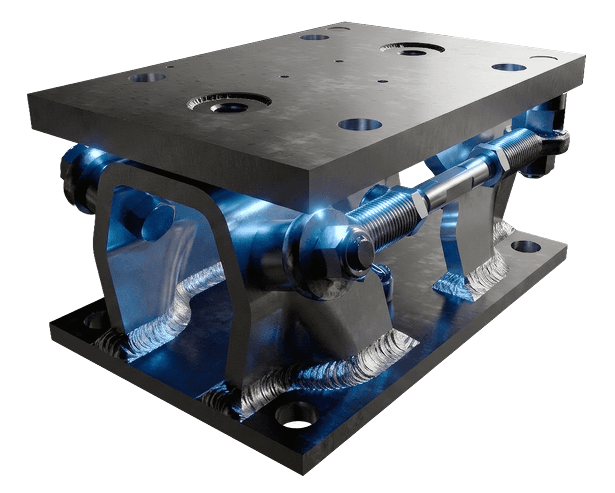
Fluent supplies two rocker-pin load cell sizes, available as part of a pin-mount weigh module assembly or as standalone replacement cells.
Combined error and temperature effect on sensitivity comply with OIML R60 and NIST HB44 requirements. See certification documents for complete approval information.
continuous performance.
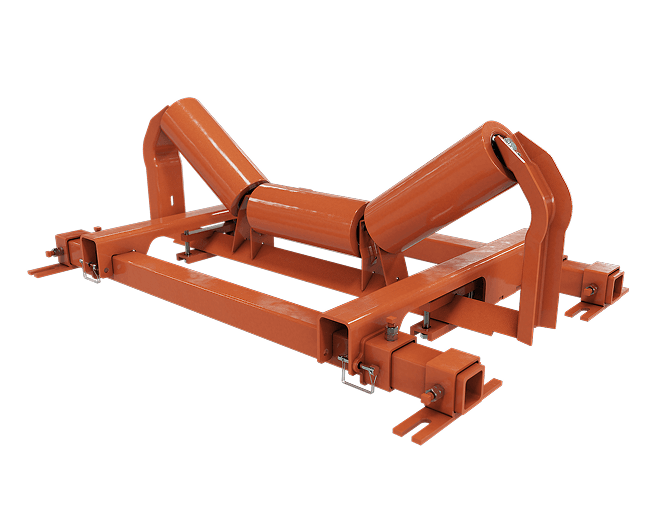
Complete belt scale assemblies for continuous bulk weighing on moving conveyors. Measure flow rate in tons per hour and accumulate weight totals for throughput monitoring and custody transfer.
Fluent supplies Mettler Toledo load cells with compression geometry. Rocker-pin cells use a cylindrical rocker that self-aligns load forces through the cell's axial axis regardless of minor angular misalignment in the mounting structure. This eliminates the precision shimming that flat-bottom compression cells require and reduces sensitivity to thermal expansion in the weighbridge.
Rated capacity must exceed the maximum combined force the installation applies to the cell at any operating condition: material weight on the weigh zone, belt and weighbridge structure weight, and dynamic load amplification from belt speed and material impact. Standard practice is 1.5x the calculated maximum operating load (higher for impact-heavy applications such as shredder infeed conveyors.
Oversizing capacity does not proportionally degrade accuracy: combined error is expressed as a percentage of rated capacity, so a cell running at 30% of rated capacity still performs within its certified accuracy class for that portion of the range, subject to the Vmin constraint. Vmin defines the smallest weight increment the cell can reliably resolve at rated capacity and certification class. For NTEP Class III M, the SLC611 carries a Vmin of 0.96–2.88 kg depending on capacity. Verify that the minimum material increment you need to resolve exceeds the Vmin for the selected cell across all cells in the weighbridge.
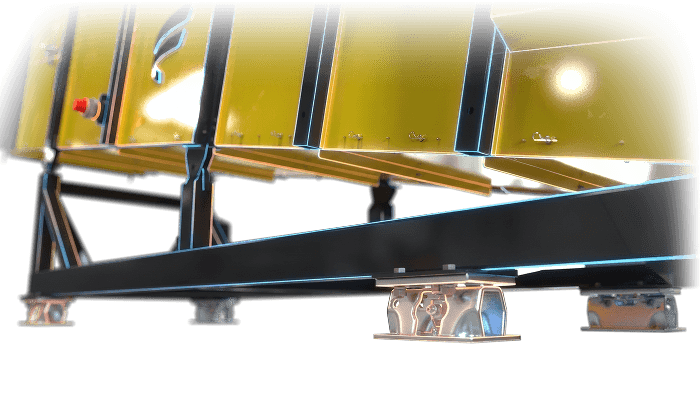
OIML Class C3 and NTEP Class III M define maximum permissible error relative to rated capacity across all sources: non-linearity, hysteresis, creep, and temperature effects. Combined error (non-linearity plus hysteresis) is ≤0.018% R.C. for both sizes, complying with OIML R60 and NIST HB44. On a 22.5 t cell, that is a maximum of approximately 4 kg of error at rated load from these two sources. Temperature effect on sensitivity adds ≤0.001% A.L. per °C within the compensated range of –10 ~ +40°C.
Load cell error is one term in a larger accuracy budget that includes speed sensor precision, indicator calibration quality, weighbridge isolation from horizontal belt forces, weigh zone idler spacing, belt tension stability, and material distribution uniformity across the belt width. A C3-class cell ensures the load cell is not the limiting factor, but it does not guarantee a specific system-level accuracy figure.
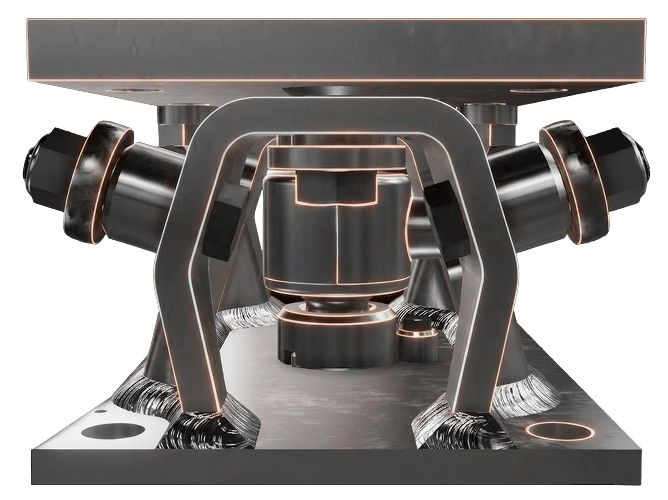
Size 1 cells are rated IP68 and IP69K; Size 2 cells are rated IP68. Both use hermetically welded stainless steel with no external sealing to degrade over time. For hazardous area installations, both sizes carry ATEX and IECEx approvals for Zone 1/2 gas and Zone 21/22 dust environments, and Factory Mutual approvals for Class I/II/III Division 1 locations in the US and Canada. Confirm the required temperature class and gas group against the site area classification before ordering.
Both sizes output a standard analog millivolt signal: 2 ± 0.1% mV/V at rated capacity with Wheatstone bridge excitation of 5–15 V AC/DC (20 V maximum). This is compatible with all industrial weighing indicators and transmitters.
Multiple load cells in a weighbridge connect through a precision junction box that sums individual cell signals into a single output to the indicator. Junction boxes may include trimming potentiometers to balance individual cell contributions. For installations requiring per-cell signal monitoring (diagnostics, legal-for-trade auditing, or remote access), a digital junction box handles each signal independently before summing.
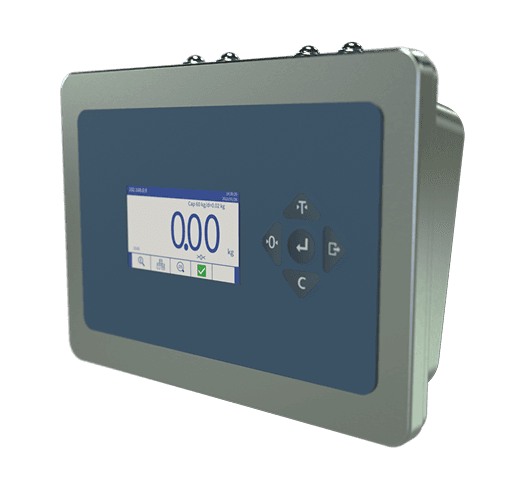
See the weighing indicators page for specifications and connectivity options.
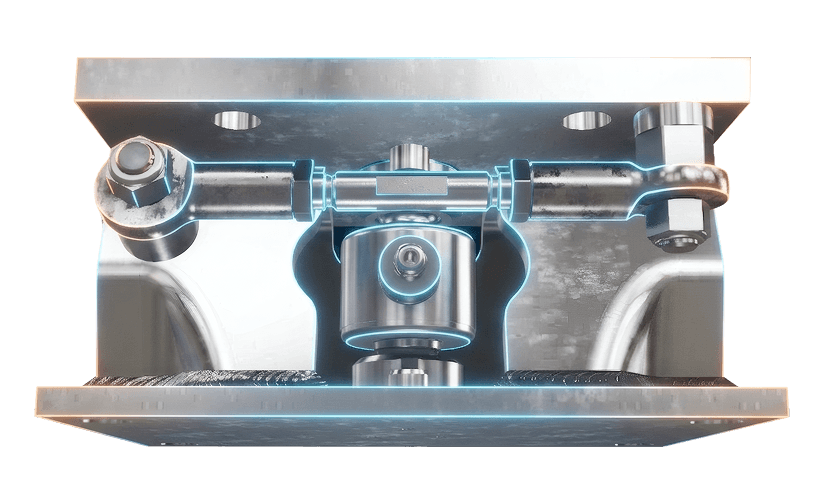
The load cell outputs an analog millivolt signal to the weighing indicator. The indicator converts that signal to process outputs, and the PLC receives those outputs and handles all control logic, setpoints, and process automation. The weighing terminals Fluent supplies are configured with Industrial Ethernet connectivity; control logic runs PLC-side. See the control systems page for PLC panel builds and Industrial Ethernet integration.
For VFD-controlled conveyors, belt speed input to the indicator must come from a physical speed sensor (not from the VFD command signal). Motor slip, belt stretch, and acceleration transients cause the actual belt speed to diverge from the commanded frequency, introducing proportional error into the mass flow calculation.
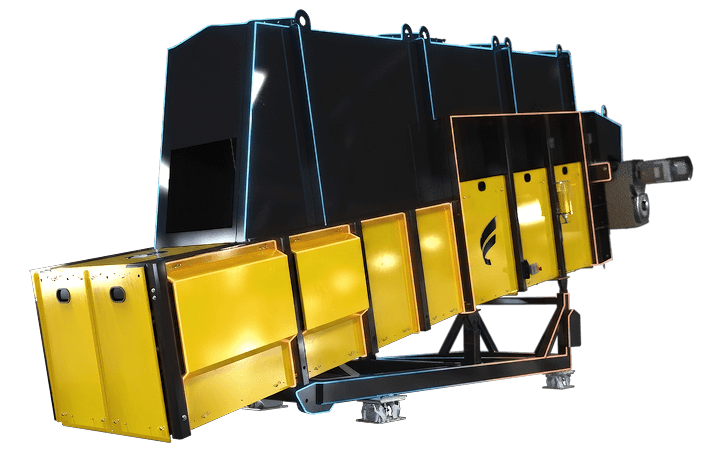
When replacing a cell, confirm the replacement matches the original capacity and accuracy class, verify span calibration after installation, and confirm with your weights and measures authority whether recertification is required.

Fluent designs and manufactures conveyors for recycling, waste management, and other demanding industries. We understand how belt tension, idler deflection, drive speed stability, and belt tracking affect scale accuracy because we deal with these challenges every day.
When you source weighing components through Fluent, you tap into decades of hands-on experience that informs selection, guides installation, and guarantees integration with the rest of the drivetrain.
Ready to work with the conveyor experts?
 Download Brochure