





Copyright © 2026 Fluent Conveyors, LLC. All rights reserved.

The Fluent Conveyors logo is a registered trademark of Fluent Conveyors, LLC. Serial Number 97664258 Registered on Dec. 12, 2023


Copyright © 2026 Fluent Conveyors, LLC. All rights reserved.
The Fluent Conveyors logo is a registered trademark of Fluent Conveyors, LLC. Serial Number 97664258 Registered on Dec. 12, 2023
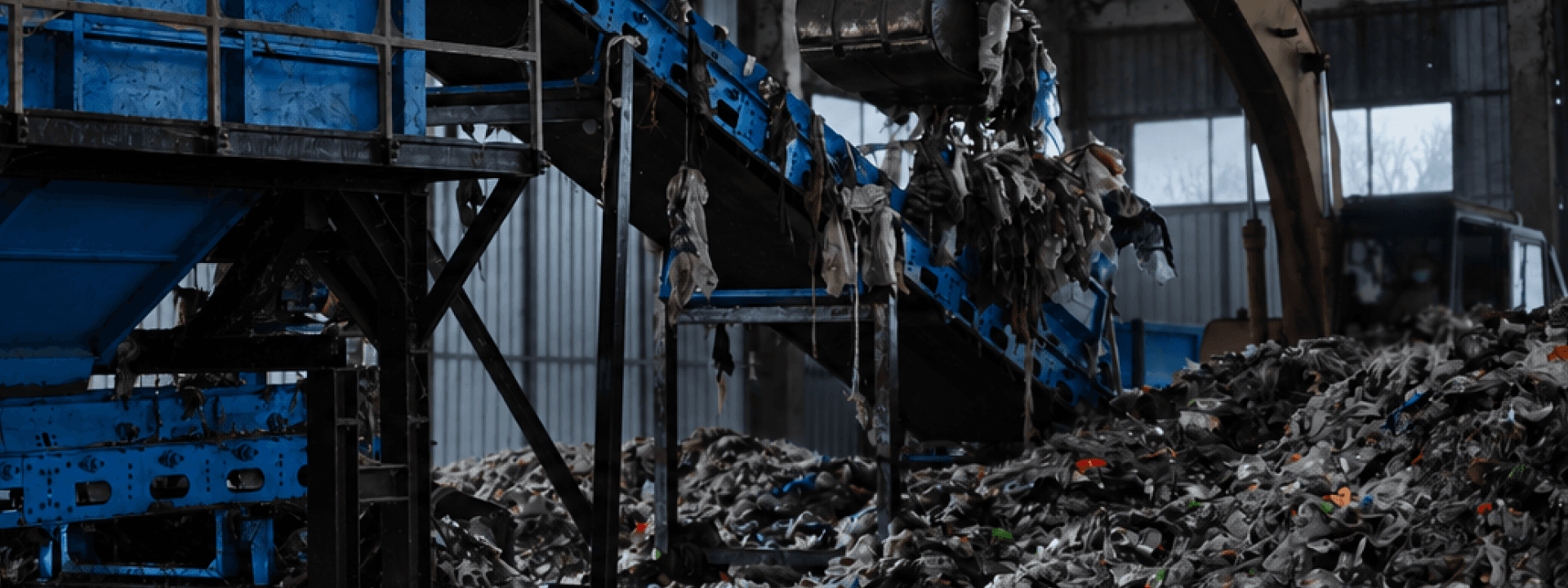
According to the U.S. Environmental Protection Agency, Americans generated 292.4 million tons of municipal solid waste in 2018 (roughly 4.9 pounds per person per day). The majority of which was collected as mixed solid waste.

Mixed solid waste is garbage, refuse, recyclables, and other discarded material collected in a combined stream. The term overlaps with municipal solid waste (MSW) and includes paper, packaging, plastics, food scraps, metals, glass, and textiles. Construction debris, tires, batteries, used oil, and hazardous waste are excluded from mixed solid waste.
Because the recyclable and non-recyclable materials arrive mixed, the waste stream has to be separated mechanically and manually after collection. That separation happens at a material recovery facility (MRF) or a mixed waste processing facility.
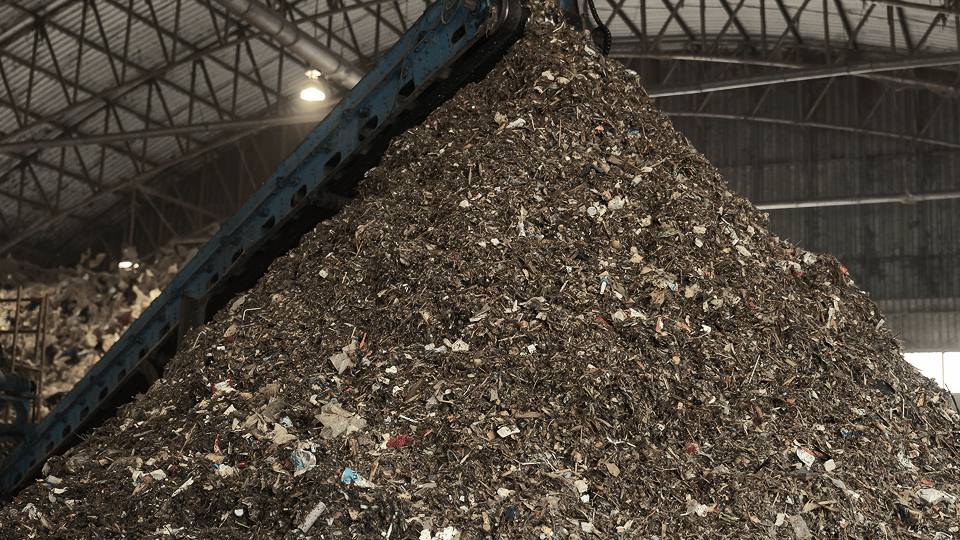
The US Environmental Protection Agency defines solid waste as “garbage, refuse, sludge, and other discarded material from industrial, commercial, mining, agricultural, and community activities.” “Mixed solid waste” narrows that to the everyday, non-hazardous stream that municipalities and private haulers collect, and it adds the operational fact that the material is unseparated when it reaches a facility.
Several states codify the closely related term "mixed municipal solid waste," which generally describes MSW that the generator aggregates for collection and explicitly excludes separately handled streams such as construction debris, tires, lead-acid batteries, and used oil.
The practical takeaway for facility operators is consistent across definitions: the inbound stream is heterogeneous, contaminated, and variable in weight and size.
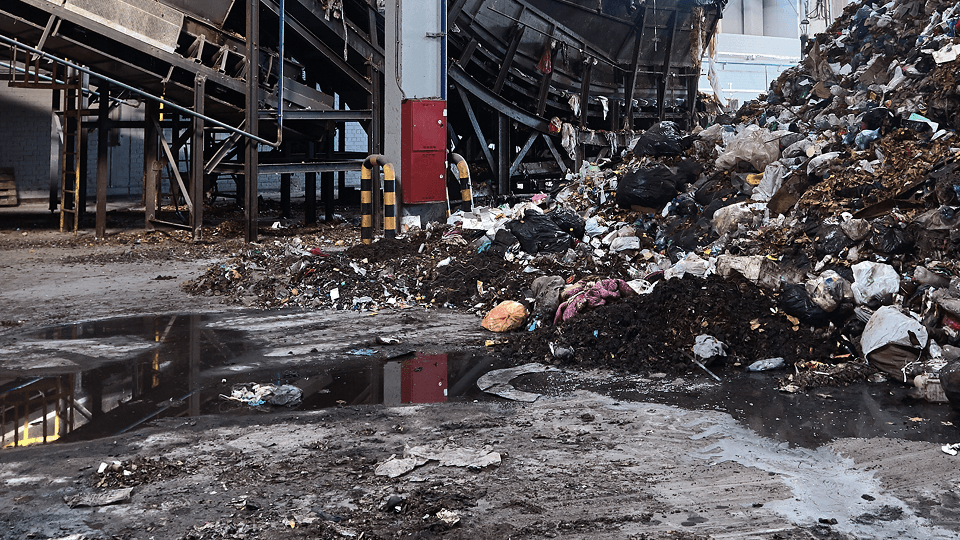
The contents of a mixed solid waste stream depend on local collection rules, but the general boundary between what's in the stream and what's diverted elsewhere is consistent.
Items on the excluded side are kept out because they're hazardous, too large or abrasive for standard sort lines, or regulated under separate disposal rules. When excluded materials do enter the stream by mistake, they become contamination that the pre-sort station removes before mechanical separation.
“Mixed solid waste” overlaps with several other terms that can confuse. This is due to variation in state and corporate terminology. The following table explains the technical differences between “mixed solid waste” and other similar terms:
In short, mixed solid waste and mixed municipal solid waste describe the same ordinary, non-hazardous combined stream. Hazardous "mixed waste" is a compliance term for material that contains hazardous and radioactive components, and it never belongs in a standard MSW sort line.
Mixed solid waste sits at one end of a spectrum of pre-collection material separation.
A mixed waste processing facility coordinates a full equipment stack. This list covers the major components a line integrates:
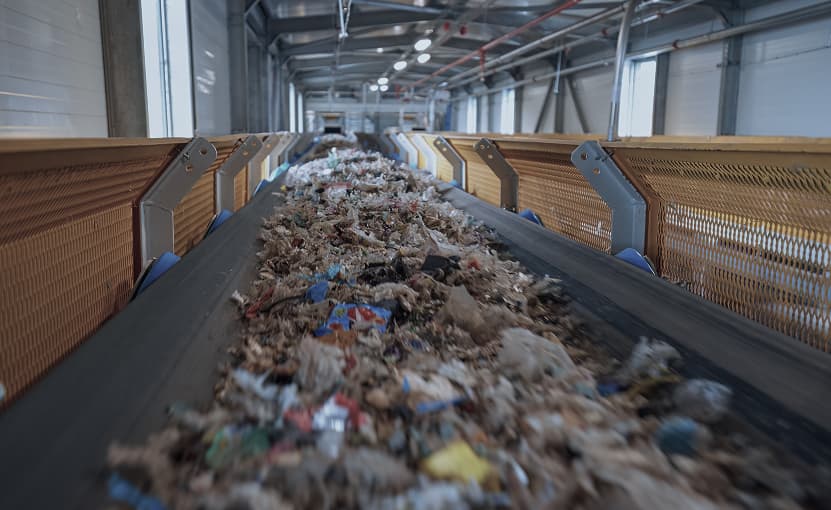
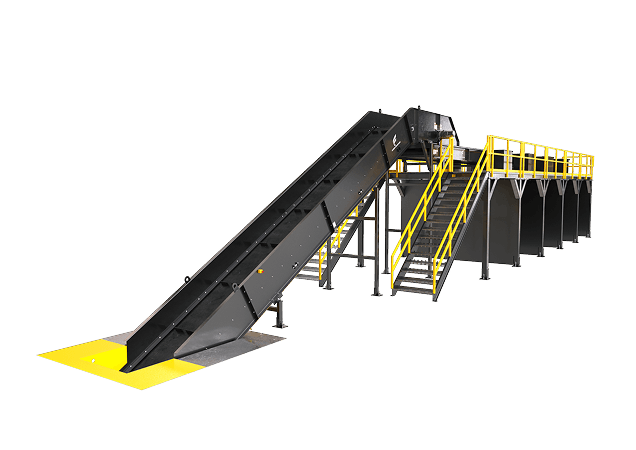
Equipment and stations are connected by a network of conveyors. Conveyor design accounts for elevation, transition geometry, belt or pan speed, and discharge points so each stage feeds cleanly into the next. See conveyors for material recovery facilities for more information.
After collection, mixed solid waste moves through a defined sequence from inbound delivery to recovered commodities and residue.
Recovered materials are sold as commodity bales. The remaining residue is sent to a landfill, a waste-to-energy facility, or for fuel production. Many municipalities route material through a transfer station before it reaches a processing facility.
Mixed solid waste is the hardest stream a recycling operation handles.
The EPA reports that of the 292.4 million tons of MSW generated in 2018, only 69 million tons were recycled (a recovery rate of approximately 23.6 percent). Mixed-stream contamination is cited as a primary barrier to higher diversion rates.
Conveyors are the backbone of a mixed solid waste facility. Every separation stage depends on a conveyor to receive material, present it at the right depth and speed, and transfer it to the next stage. Mixed solid waste is extremely demanding on equipment because it's heavy, abrasive, wet, and full of contaminants that jam, cut, or wrap around poorly chosen equipment.
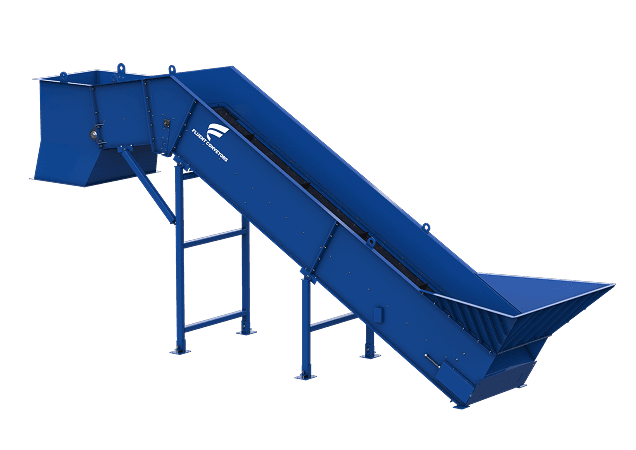
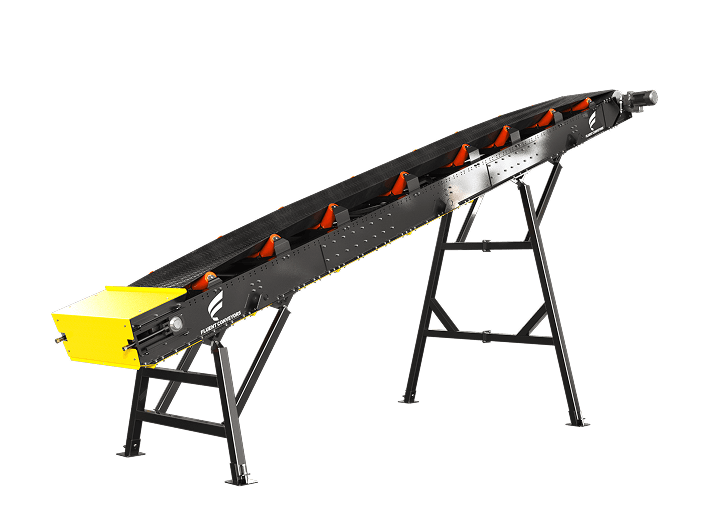
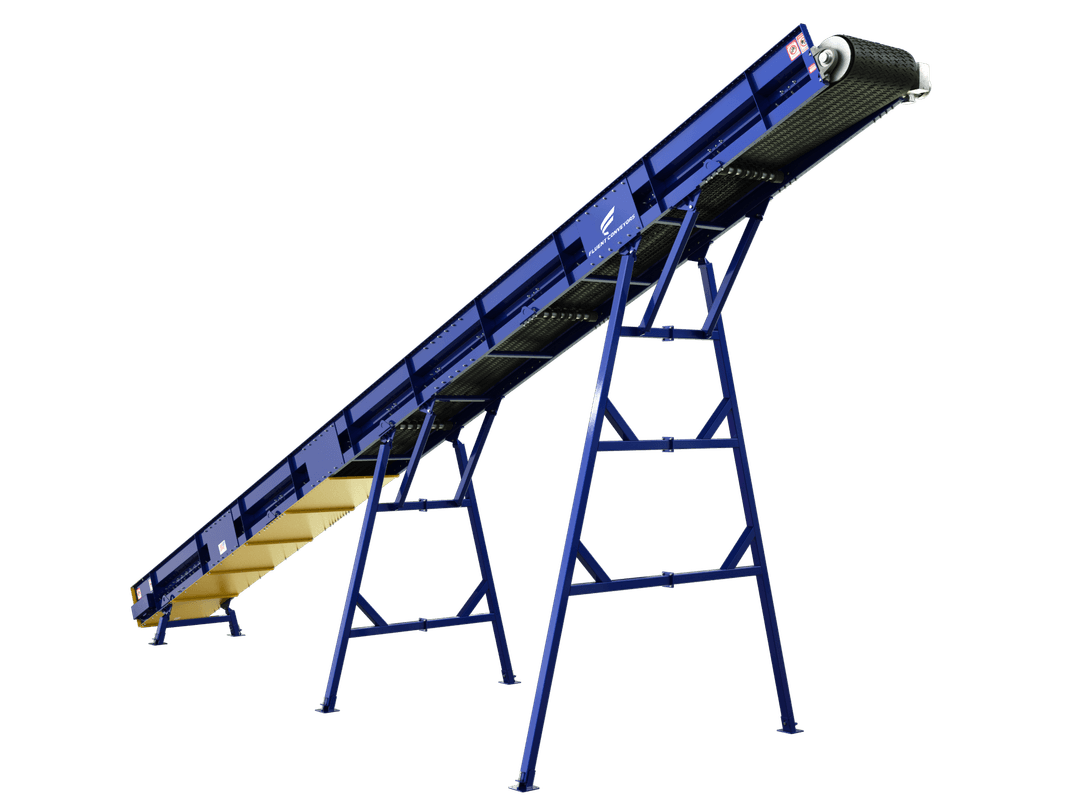
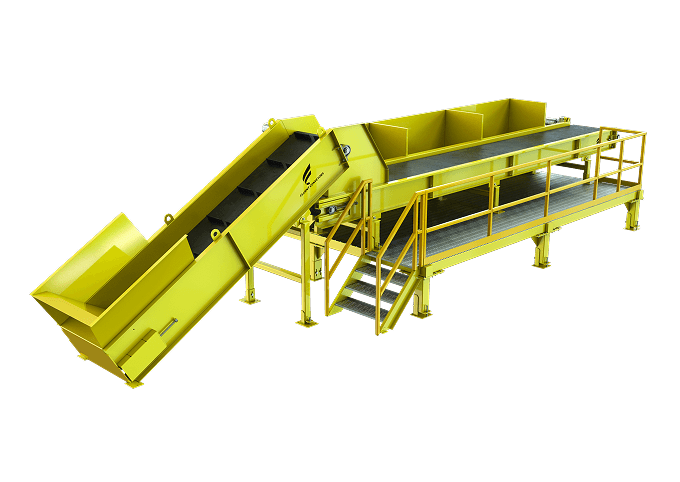
Fluent designs and builds custom conveyors for the demanding conditions of mixed solid waste processing:
The workhorse for the infeed and any high-impact, abrasive flow, where mixed waste with glass shards, dense cardboard, and metal arrives raw. Heavy-duty and extreme heavy-duty builds use steel pans riding on railroad rails for the toughest loads.
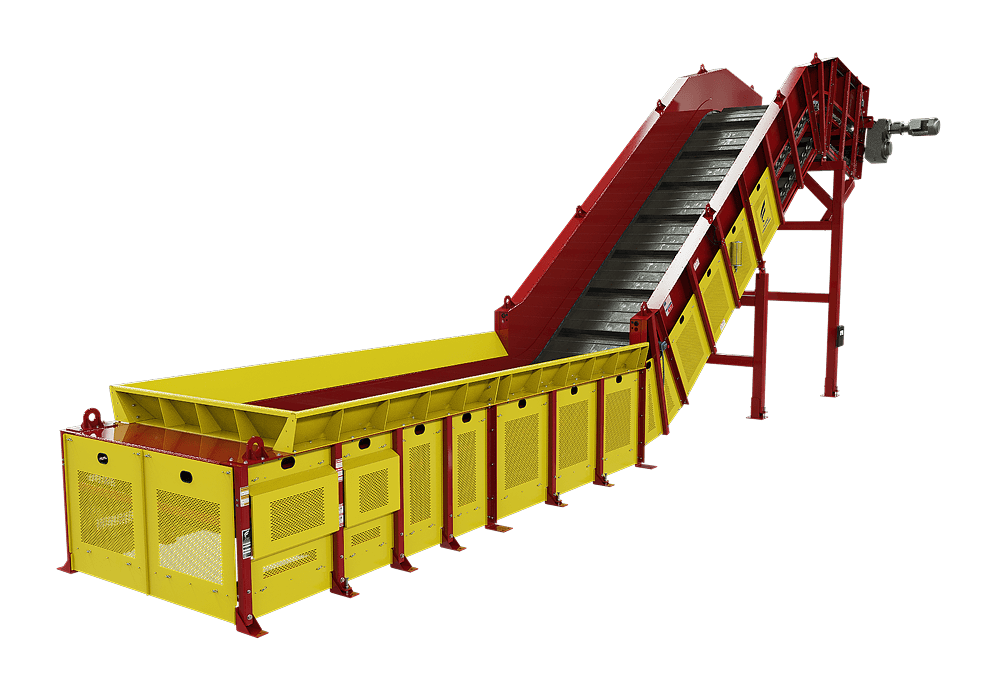
From a single replacement conveyor to a full conveyor system for a new facility, Fluent equipment optimizes your mixed solid waste recycling operation.