









Copyright © 2026 Fluent Conveyors, LLC. All rights reserved.

The Fluent Conveyors logo is a registered trademark of Fluent Conveyors, LLC. Serial Number 97664258 Registered on Dec. 12, 2023


Copyright © 2026 Fluent Conveyors, LLC. All rights reserved.
The Fluent Conveyors logo is a registered trademark of Fluent Conveyors, LLC. Serial Number 97664258 Registered on Dec. 12, 2023
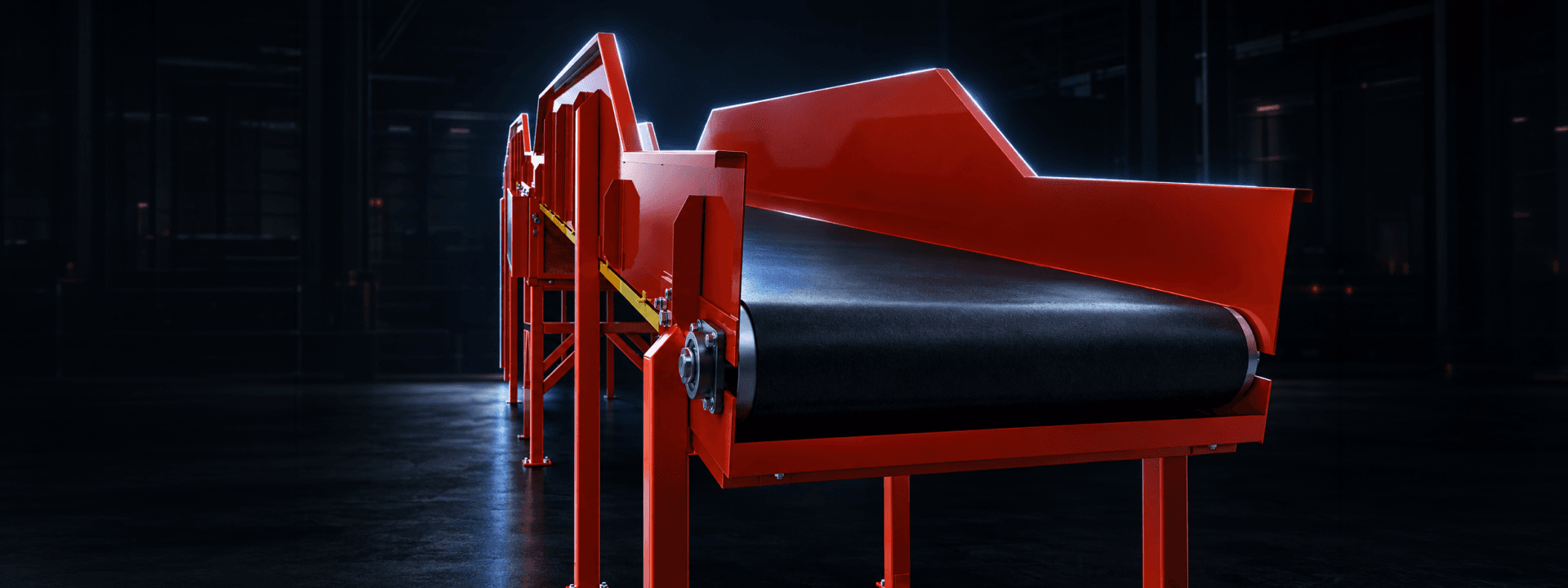
Conveyor belt misalignment can be caused by contaminated components, uneven tension, misaligned pulleys or idlers, off-center loading, a bad splice, or structural issues with the frame. Mistracking is usually preventable and correctable without training devices or belt replacement.

Use this table as a first-pass diagnostic when a belt is mistracking. Start with the symptom, confirm the first check, and follow the corrective action before moving to the full workflow below.
The most common maintenance error in belt tracking is adjusting tension or idler position before the system is clean. Material buildup on pulleys, return idlers, and the belt surface creates a raised profile that pushes the belt to one side. Adjusting contaminated components won’t fix alignment and may cause additional damage.
Clean all pulley faces, return idlers, and carrying idlers before touching any adjustment point. This rule applies whether you're troubleshooting a new drift problem or following up on a previous correction that didn't hold.

Work through these steps in order. Make one adjustment at a time, allow the belt to complete at least three revolutions before evaluating the result, and document what changed and how the belt responded.

Start with an unloaded belt. Run it at normal operating speed and walk the full length to identify where the belt begins to drift. The drift point is where the correction needs to happen (not where the belt ends up off-center).
Reload the conveyor and observe tracking behavior. If the belt tracked correctly empty but drifts under load, the cause is probably at the loading zone; an off-center chute, uneven material distribution, or misaligned skirtboard creating asymmetric loading across the belt width. Structural and tension corrections will not fix a loading fault. Address the chute position first, then re-test.
If the belt drifts both empty and loaded in the same direction, the cause is structural: frame, pulley alignment, idler position, or tension.
With the conveyor stopped and locked out per your lockout/tagout procedures, inspect all pulley faces and return idlers for material buildup, wear, and surface condition. Clean all contact surfaces. Check that pulley lagging is intact and even; worn or missing lagging creates an uneven grip that pulls the belt laterally. Verify that return idlers rotate freely; seized or dragging rollers are a primary cause of belt wander, particularly on the return run.
Measure the distance from each pulley shaft end to a fixed reference point on the frame. Both sides of the head pulley and both sides of the tail pulley should be equal. A pulley that is angled relative to the belt centerline will steer the belt toward the closer frame side. On longer conveyors or equipment on settling foundations, verify frame squareness with a level and tape.
Slider bed conveyors and trough idler conveyors are sensitive to frame levelness across the width. A transverse lean will cause consistent single-direction drift that tension adjustment cannot resolve.
Belt tensioning adjustments at the take-up are for maintaining proper belt tension, not for correcting tracking. Uneven take-up tension accelerates edge wear and places asymmetric load on bearings and the frame. Learn about the difference between tension and alignment.
Set both sides of the take-up equally. If the belt requires significantly different tension on each side to track, the cause is structural.
Return idlers have the most influence on belt tracking and are the primary adjustment point, but carrying idlers also affect alignment.
The belt will follow the direction the leading edge of the idler is angled toward. If the belt is drifting left, angle the leading edge of the return idler toward the right (in the direction of belt travel on the underside, which is opposite to the top-run direction). Adjust one or two idlers at a time so you can accurately evaluate the change in alignment. Wait for the belt to complete at least 3 revolutions before assessing the result and making further adjustments.
Return idler brackets typically allow 10–15 mm of lateral adjustment. Work progressively in small increments.
A splice that is not square to the belt centerline will cause the belt to migrate side to side each time the splice passes over a pulley. This is a distinct, repeatable wander pattern. If tracking is otherwise correct but the belt oscillates at regular intervals, inspect the splice. For mechanical splices, check that the fastener line is perpendicular to the belt edges. Vulcanized splices are generally more dimensionally stable; a crooked mechanical splice may need to be removed and redone. Learn how to square a conveyor belt.
After corrections, run the belt loaded at normal operating speed for a full duty cycle before confirming the problem is resolved. Note what was adjusted, by how much, and what the belt response was. An adjustment log can help identify an underlying component issue before those problems cause belt edge failure or unplanned downtime.
Tracking problems can be built into the belt before it ever runs. Three specification factors have the most impact.
Proper belt storage before installation also affects alignment. A belt stored improperly can develop set or camber that causes immediate mistracking.
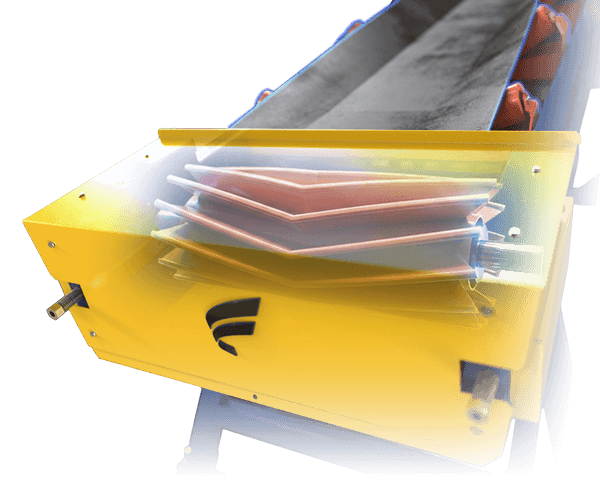
Self-aligning training idlers detect belt edge contact via a pivot mechanism and apply a corrective angle to guide the belt back toward center. They are a legitimate tool for managing minor, consistent belt drift (applications where small tracking variations are inherent to the material flow or environment).
But training idlers cannot correct the root causes of misalignment. A training idler under constant load accelerates wear on the idler and belt edge, and it can mask a problem that is progressively worsening.
Training idlers should be locked in the neutral position during any tracking adjustment workflow, then released after the belt is running straight. Evaluating tracking with training idlers active makes it impossible to determine whether structural corrections are working.
Appropriate uses include:
Final trim after structural corrections are confirmed
Applications with variable loading
Return-run stabilization near the tail pulley on long conveyors.
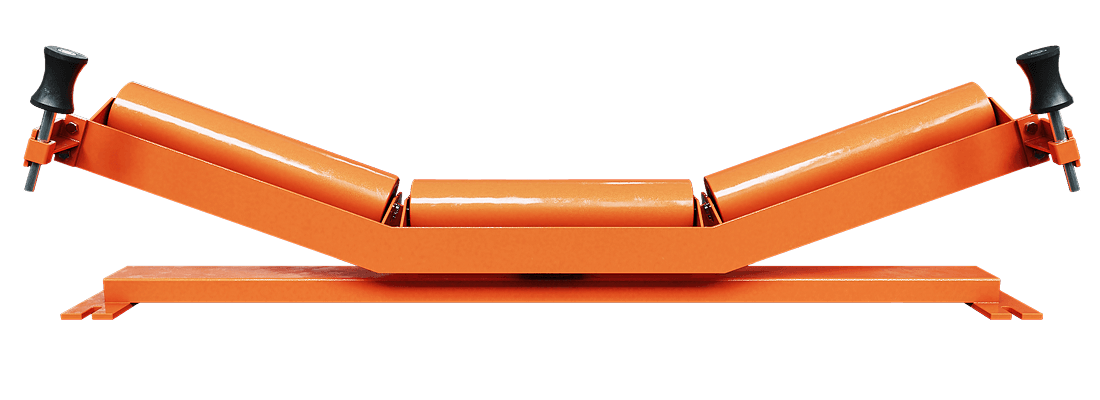
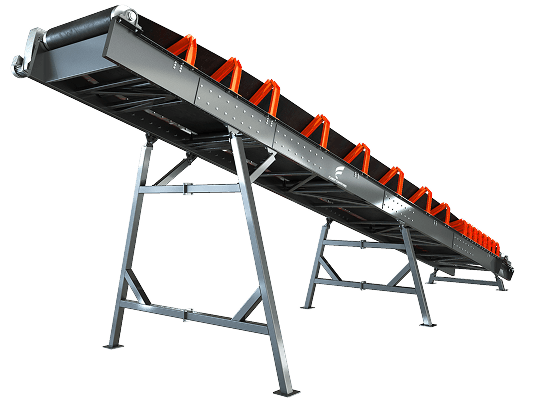

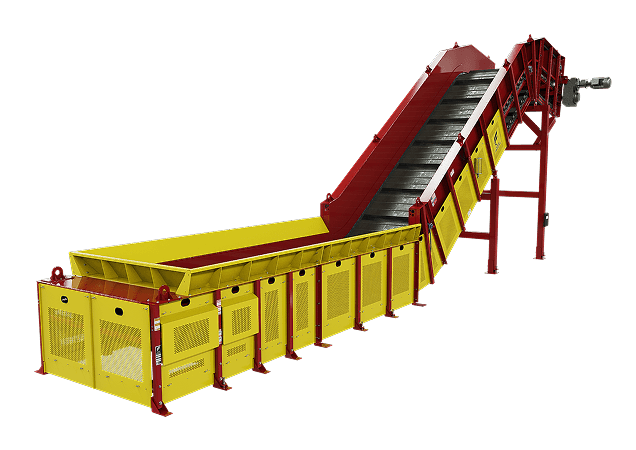
On trough idler conveyors, the belt's profile creates a drift point at the transition between flat and troughed idlers. Transition idler count and spacing must be adequate for the belt's troughability rating; too few transition idlers or too short a transition creates edge stress and lateral instability as the belt changes profile. Verify that transition idler sets are present, correctly spaced, and at the specified angle progression for the belt in use.
Return-side behavior is also more complex on troughed systems. In many applications, the belt must shed material buildup. Specify disc return idlers or urethane return idlers in high-carryback environments.
On roller chain conveyors, belt tracking is governed mechanically by roller chain sprockets. Sprocket alignment and symmetrical chain tension are the primary variables affecting whether belts travel straight.
Unequal chain tension across the two drive chains causes the belt to skew under load. This is more pronounced at high loads and on wider conveyors.
Inspect drive chain elongation on both sides, and always replace both chains at once. A single replacement will create a new asymmetry.
On rubber combination belts, the belt edges must clear the frame rail throughout the full belt path, including at curves and inclines. Check that the belt width is correct for the frame and that the belt is not riding on its edges along the frame rail.

Fluent Conveyors manufactures custom conveyors and supplies replacement belts and parts for our systems and general replacement. Our team can spec a replacement belt, pulley, idler, splice kit or bearing matched to your conveyor's frame, drive configuration, and operating conditions. We can also help you select components for tracking performance and application fit.