









Copyright © 2026 Fluent Conveyors, LLC. All rights reserved.

The Fluent Conveyors logo is a registered trademark of Fluent Conveyors, LLC. Serial Number 97664258 Registered on Dec. 12, 2023


Copyright © 2026 Fluent Conveyors, LLC. All rights reserved.
The Fluent Conveyors logo is a registered trademark of Fluent Conveyors, LLC. Serial Number 97664258 Registered on Dec. 12, 2023

Steel cord conveyor belts are typically 0.41–1.28 inches (10.5–32.5 mm) thick across published general-purpose constructions from ST500 to ST5400. This measurement covers the entire belt. Spec sheets also list cover gauges and cord diameters. Confusing these measurements can lead to the wrong replacement. We’ll cover the measurements that matter in depth and discuss applications for different steel cord belt thicknesses.

Steel cord belt thickness increases with ST rating, but not with every strength class. An ST500 belt starts near 0.41 inch (10.5 mm), while an ST5400 belt reaches about 1.28 inches (32.5 mm). The table below shows typical cover gauges and total thicknesses for common classes.
Values are representative general-purpose constructions with X-grade covers. Other manufacturers and standards produce different totals.
Neighboring ST classes often share the same thickness. ST1600 and ST2000 both measure 0.77 inch (19.5 mm) in this series, so thickness doesn’t define a belt's strength rating. Custom constructions can also exceed the ranges in this table.
The ST number indicates nominal breaking strength in newtons per millimeter of belt width. ST2000, for example, means 2,000 N/mm. ISO 15236-1 covers strengths from 500 to 10,000 N/mm. Our guide to the strongest conveyor belts compares steel cord ratings with other belt types.
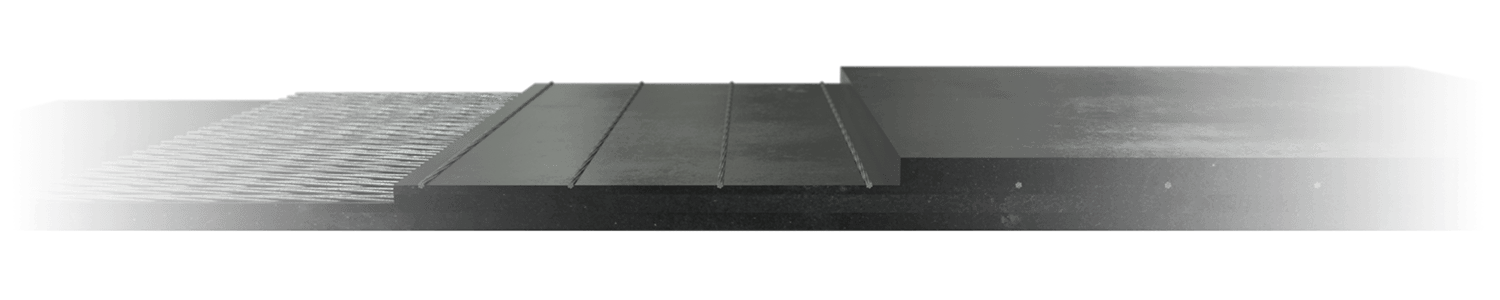
Steel cord belt spec sheets list three dimensions, but only one represents total belt thickness. ISO 15236-1 assigns a symbol to each measurement. Width and length are separate dimensions covered in our guide to sizing a conveyor belt.
The formula is straightforward:
Total thickness (s1) = The carrying cover (s2) + The core (s6) + The pulley cover (s3)
Learn why some conveyor belts have metal cords.
Cover notation lists the top cover first and the bottom cover second, in millimeters. An 8+6 belt has a 0.31-inch (8 mm) carrying cover and a 0.24-inch (6 mm) pulley cover. On an ST2000 belt with a 0.22-inch (5.5 mm) core, the total thickness is 0.77 inch (19.5 mm), well above the 0.55 inch (14 mm) represented by the two covers alone.
On a standard construction, yes. The cords fill the core, so ISO 15236-1 treats core thickness as equal to cord diameter. Belts with breakers or weft contain additional reinforcement layers, which changes the calculation and minimum cover requirements.
ISO 15236-1 sets a minimum thickness for each cover: at least 4 mm or 0.7 times the cord diameter, whichever is greater. Larger cords require more wear rubber, so minimum belt thickness rises with cord size. Any cover material above this minimum becomes additional wear rubber specified for the application.
We applied the ISO 15236-1 minimum cover rule to each construction in Table 1. Core thickness equals total thickness minus both covers.
Above ST500, additional cover rubber accounts for 14–33% of total thickness in these constructions. Two ST2000 belts can differ by about 1/4 inch in total thickness while carrying the same rated load. The additional rubber increases wear life and impact protection. Our guide to abrasion-resistant belts covers the compounds used for these conditions.
Usually, within a manufacturer's series. Across manufacturers and standards, belts with the same ST rating have different thicknesses for two main reasons.
The governing standard affects the construction. Different standards may specify different cord diameters and pitches at similar strength ratings, which changes core thickness.
The belt construction can also change total thickness. A self-extinguishing underground ST1000 belt with textile transverse reinforcement may measure 0.79 inch (20 mm), compared with about 0.55 inch (14 mm) for a general-purpose ST1000 construction. Underground and other fire-risk belts may require additional reinforcement or specialized covers.
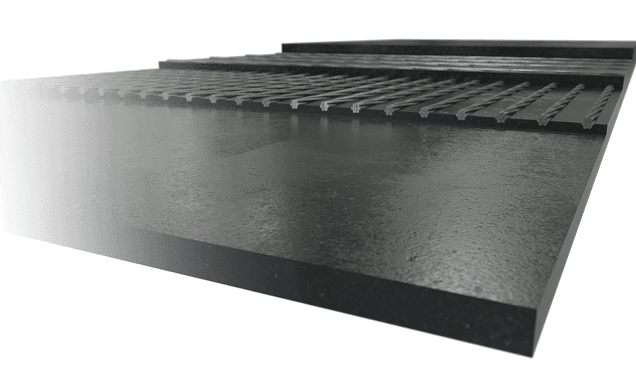
Steel cord belts are used where tension, distance, and tonnage are high, including overland conveyors, mines, quarries, cement plants, power plants, and bulk ports. Their low elongation allows high-tension operation over long centers with shorter take-up travel. They typically run on troughing conveyors with three-roll idler sets. Application determines cover thickness.
Lump size and shape, density, abrasiveness, chemical makeup, and temperature can require a thicker carrying cover. Heavy, sharp lumps cut and gouge the cover, fine abrasive materials wear it down, and high temperatures accelerate rubber aging. Matching the conveyor belt grade to the material is as important as choosing the correct thickness.
Drop height, loading speed, and loading direction also affect cover requirements. A long drop at a transfer point subjects the belt to more impact than a short, in-line feed moving at belt speed. An impact bed under the loading zone helps protect the belt and works alongside the correct cover gauge.
Breakers are fabric or steel reinforcement layers installed across the belt width within the cover rubber. DRB's catalog credits them with limiting longitudinal rips, preventing broken cords from pushing through the cover, and reducing impact damage. ISO 15236-1 notes that breakers can increase the minimum cover requirement, while a weft can allow a thinner cover. Learn what causes a conveyor belt to rip.
ISO 7590:2018 specifies three methods for measuring total thickness and cover thickness. Methods A1 and A2 use a micrometer and apply to any steel cord belt. The optical method only measures covers and is not suitable for belts with textile or metal weft or belts whose cord ends twist after cutting.
Laboratory methods measure a cut sample under controlled conditions, while a field measurement on an installed belt shows its current condition. For belt properties beyond thickness, including conductivity and flammability, see our ISO conveyor belt standards page.
ISO 15236-1 allows the following tolerances on nominal thickness:
Maximum: 1.1 times nominal.
Minimum for belts 20 mm and under: nominal minus 1 mm (0.04 inch).
Minimum for belts over 20 mm: nominal minus 1.5 mm (0.06 inch).
Variation across the width: no more than 5% of nominal.
For a nominal 0.77-inch (19.5 mm) belt, the acceptable range is 0.73–0.84 inch (18.5–21.5 mm).
Match the original belt construction layer by layer. Ordering from measured thickness alone can result in the wrong cord size, cover split, or a belt your pulleys cannot accommodate. Our steel cord replacement belt guide covers the construction options in more detail.
Gather these details before requesting a quote:
ST rating: Strength class, such as ST1600.
Belt width: As stamped on the belt or measured.
Cord diameter and pitch: From the original spec sheet or a cut sample.
Cover gauges: Top and bottom, such as 8+6.
Cover grade: Abrasion, heat, oil, or fire resistance.
Transverse reinforcement: Breaker, weft, or none.
Splice: Type and length.
See our guide on how to choose the correct conveyor belt for more information.
Stronger, thicker steel cord belts require larger pulleys. Check your drive, bend, and tail conveyor pulleys before moving to a higher ST class or increasing cover thickness.
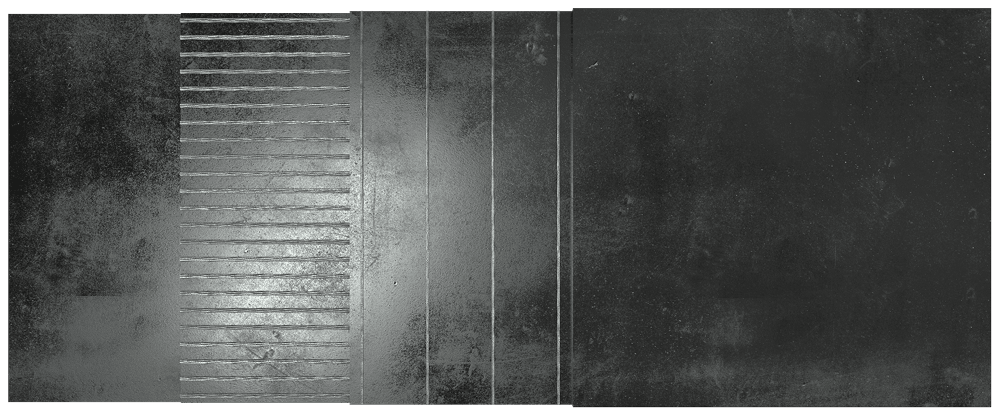

We supply steel cord ripstop belts in ST1000–ST5000 ratings with abrasion-, heat-, oil-, and fire-resistant covers. Send us your old belt's specifications, and our engineers will confirm the construction, cover gauges, and pulley fit before you order.