










Copyright © 2026 Fluent Conveyors, LLC. All rights reserved.
The Fluent Conveyors logo is a registered trademark of Fluent Conveyors, LLC. Serial Number 97664258 Registered on Dec. 12, 2023


Copyright © 2026 Fluent Conveyors, LLC. All rights reserved.
The Fluent Conveyors logo is a registered trademark of Fluent Conveyors, LLC. Serial Number 97664258 Registered on Dec. 12, 2023

Belt manufacturers often publish property data using ISO test methods, so rubber and fabric belt data sheets may already use ISO terms even when the purchase order does not. In the United States, these standards have no legal force on their own. They become contract requirements only when a specification names them. Our ISO compliance overview covers the other ISO documents that may apply to a conveyor. This page mostly pertains to belts destined for markets outside the United States.

ISO/TC 41/SC 3 is the subcommittee responsible for conveyor belts, and its catalogue held 44 published documents as of August 2026. Belt properties are spread across those documents, so complete belt specifications require multiple ISO citations. Our explainer on how conveyor belts work covers the belt construction those standards measure.
The documents fall into four practical groups.
Sets requirements for a whole class of belting. ISO 14890 is the umbrella document for heavy textile-carcass belts with rubber or plastics covers.
Sorts a characteristic into named classes. ISO 10247 classifies cover compounds, which is the closest ISO equivalent to what the market calls a belt grade.
Defines how one property is measured and reported. ISO 283, ISO 252, ISO 284, ISO 340, ISO 505, and ISO 4195 each address a single characteristic.
Govern the paperwork and the conditions around a test. ISO 433 fixes belt marking, ISO 18573 fixes test atmospheres, and ISO 5284 standardizes terminology.
Replacement belt specifications must harmonize multiple specifications.
Dimensional questions belong to ISO 251, which fixes nominal widths and the tolerances that apply to them.
One exclusion runs through much of this family. ISO 14890, ISO 284, ISO 433, ISO 252, and ISO 4195 exclude light conveyor belts, which ISO 21183-1 defines as thin synthetic-ply belting with thermoplastic coatings, used mostly for indoor unit-load handling and often built into a machine as a component. Light belting has a separate family of standards, including ISO 21178 for electrical resistance in place of ISO 284. The distinction depends on construction and duty rather than material name. A heavy PVC belt on a recycling slider bed and a thin PVC machine tape can therefore fall under different standards.
Specifications and vendor responses use ISO designations for three different claims. They are not interchangeable, and confusing them can create problems in the wider quality and regulatory documentation collected for a project.
There is no general category of "ISO-certified conveyor belt." ISO publishes standards but does not operate test laboratories or issue product marks. Product conformity comes from the belt manufacturer. At the organization level, ISO 9001 addresses how a company manages its processes.
A vendor that answers a belt-property requirement with a management-system certificate has answered a different question. Our guide to evaluating conveyor manufacturers explains how to separate the two.
Each specified property has a standard that defines how it is measured. The table below maps common industrial belt data-sheet properties to their current ISO documents.
Two of these standards are easy to misread.
ISO 284 sets a maximum electrical resistance, not a minimum. Anti-static belting must be conductive enough for charge to reach ground, so asking for high resistance in the name of static control would do the opposite. Anti-static belt selection follows from that maximum.
ISO 340 provides a test procedure but does not define the class a belt must meet. Fire-resistant classes come from other documents, principally EN 12882 for general-purpose installations and EN 14973 for underground work, or from MSHA acceptance in US mining service. A purchase order that says only "pass ISO 340" names a test method without stating the required class. Flame-retardant belt requirements should also state the class.
Cover grade is one of the most commonly specified belt properties, but three different grading systems are in use. They rely on different test methods, and there is no direct conversion table between them.
Problems arise when a buyer writes the specification using one grading system and a supplier quotes using another. A delivered belt may satisfy its stated grade without matching the requirement the buyer intended. Cross-system substitution requires engineering judgment about the material and wear mechanism.
Fluent works in the grading system required by the end customer's legal, operational, and compliance requirements. A recycling facility using an internal EHS specification, a European installation citing DIN, and a US municipal project citing ARPM may require different documentation for physically similar belts. The rubber compound has to meet the system that governs the project.
Grade is just one of many important belt specifications. Cover thickness, top-to-bottom ratio, and compound chemistry must also match the conveyed material and operating environment. An abrasion-resistant grade, for example, has nothing to do with resistance to oil, chemicals, or ozone.
Applicability depends on belt construction.
The textile carcass is the main dividing line across this family. ISO 14890 and its related test methods apply to the fabric belt constructions used on pulley-driven machines and stop at chain-and-rail designs.
ISO 252 excludes steel cord belts and textile belts with full-thickness tensile strength below 160 N/mm, so some light-duty fabric belts have no ISO adhesion value to quote. ISO 4195 applies when the carry-side cover is at least 4 mm thick, which excludes many thinner heat-service belts. Those exclusions only define the scope of the test method. A belt without an ISO value can still rip or delaminate in service.
Belting for our roller chain conveyors falls outside this family. These designs carry the load on chain and rail and have no textile carcass to test, so their specifications come from steel gauge, pan geometry, and chain rating instead of belt-property standards.

Belt selection is a shared engineering and compliance decision. The customer defines the operating requirements and any site or jurisdictional obligations. Fluent contributes the machine geometry calculations, application data, and belt-supplier information. The process below shows where belt standards enter a project, from the first sizing conversation through the records supplied with the machine.
Application and compliance review
Belt property selection with the customer
Supplier specification and certificate review
Belt fitment to the machine as built
Assembly, run-in, and records

Defines what the belt must withstand and what documentation the project requires. Engineering records the conveyed material, bulk density, lump size, operating temperature, incline, washdown method, and contamination load, along with the destination and governing jurisdiction. Fire and static requirements are set here because they affect the belt compound and price. Our RFQ writing guide lists the information that belongs in the package.
Turns all inputs into a defined property set: carcass and ply, cover grade in the required system, top and bottom cover thickness, and any conductivity, flame, or heat requirement. Fire-resistant and anti-static belts are specified to the end customer's location and stated requirements, so the same physical application may need different criteria in a US recycling facility and an exported installation. On a custom conveyor, that decision reaches the drawings before fabrication starts.
Puts the property set into the purchase specification sent to the belt supplier. Fluent manufactures conveyors and resells belting produced by other manufacturers, so property values come from the belt manufacturer's testing. Fluent accepts the manufacturer's certificate rather than repeating those tests. Component suppliers are qualified before their material reaches a machine under our vendor quality process.
Required or requested belt documentation can be passed through to the end customer, including data sheets, test reports, and certificates for the properties named in the specification. Request it before shipment so it travels with the machine instead of being reconstructed afterward. Our brand partners page covers the component and material manufacturers behind a Fluent build.
Checks the specified belt against the machine being built. Minimum pulley diameter, transition distance from trough to flat, take-up travel, and splice method have to suit the selected carcass.
Involves running the assembled conveyor for more than 10 hours while speed, tracking, alignment, noise, safety stops, and electrical function are checked, with the belt installed and loaded as it will run. Tracking and edge behavior can be identified here instead of at the customer's site. Our conveyor quality assurance page explains what those checks record.
A belt-property requirement is only verifiable when the specification, supporting evidence, and contract all match. Eight items resolve most disputed claims.
The exact designation and edition, since six of these documents changed between 2022 and 2026
Confirmation that the standard covers the belt construction being supplied, given the light-belt, steel cord, and thickness exclusions
The property and its measured value, stated in the units the standard uses
The belt manufacturer's data sheet naming that value
A test report where the property carries a safety consequence, such as flame or static behavior
Lot and belt identification tying the report to the material shipped
The ISO 433 marking present on the belt itself
A purchase order clause making the requirement contractual
Items 1 through 3 belong in the specification, 4 through 7 in the vendor submittal, and 8 in the commercial documents. Our procurement checklist covers the broader document set for a capital purchase.
A requirement that appears only in an email may not be part of the contract. Belt-property requirements should be incorporated into the order itself. Our purchase order terms explain how specification documents attach to a Fluent order.

Several standards in this family have changed recently, so older articles may still cite withdrawn editions.
The standards above do not govern belt dimensions. Nominal width, actual width, tolerance, and length conventions for textile-carcass belting fall under ISO 251, which affects whether a replacement belt fits an existing frame. Our guide to measuring belt length covers the field side.
ISO 5285 covers packing, storage, lifting, and running a belt onto a structure. A belt can meet every property requirement and still be damaged before installation.
Drive and tension calculations belong to ISO 5048, which sets the international method for belt conveyor power and tensile force and can be compared with the CEMA calculations commonly used on US projects.
ISO 12100 provides the risk assessment method behind guarding, stop, and access decisions, none of which depend on belt properties.
On US projects, CEMA standards commonly govern idler classification, pulley ratings, capacity, and terminology. They serve a different purpose from the belt-property standards above.
Conveyor safety requirements also come from the ANSI and ASME documents used on many domestic projects. US specifications are also more likely to cite ASTM test methods and ARPM grades than their ISO equivalents, and both systems can appear in the same procurement package.
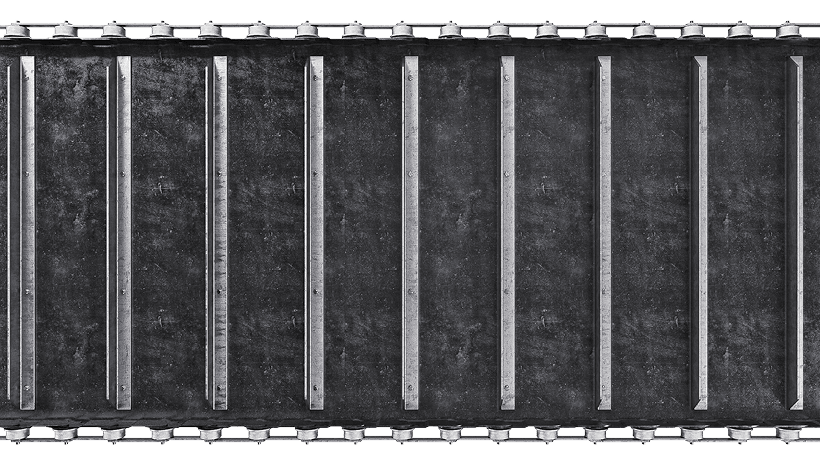

Belt properties affect the compound, lead time, and price, so they should be defined during quoting.
Document and send the conveyed material and its temperature, operating environment, destination country, and any fire, static, or agency requirements the facility must meet. If an internal specification or customer standard governs the belt, include it so the applicable documents can be confirmed before the order is placed.