





Copyright © 2026 Fluent Conveyors, LLC. All rights reserved.

The Fluent Conveyors logo is a registered trademark of Fluent Conveyors, LLC. Serial Number 97664258 Registered on Dec. 12, 2023


Copyright © 2026 Fluent Conveyors, LLC. All rights reserved.
The Fluent Conveyors logo is a registered trademark of Fluent Conveyors, LLC. Serial Number 97664258 Registered on Dec. 12, 2023
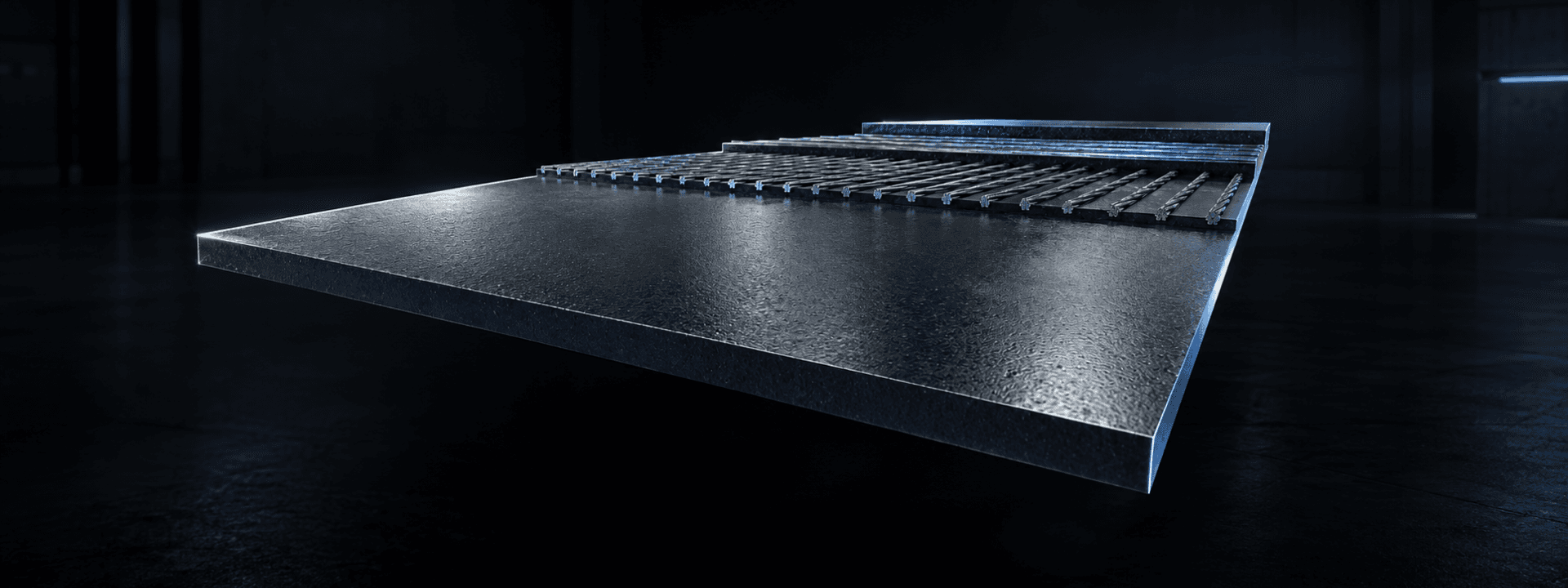
Steel-cord conveyor belts have the highest tensile ratings (up to about 10,000 N/mm of belt width or more). On pulling strength, they are the strongest belts you can specify for a rubber belt conveyor. But tensile strength answers only one form of the question. A belt also has to resist impact, abrasion, cutting, heat, and moisture, and a belt with a high tensile rating can still tear or puncture under a loader-fed drop or a load of hot, sharp scrap. For the hardest applications, the strongest choice is a metal belt on a roller chain conveyor.

Material, environment, and distance uniquely stress conveyor belts, meaning the strongest belt will be specific to the application. These factors contribute to belt performance:
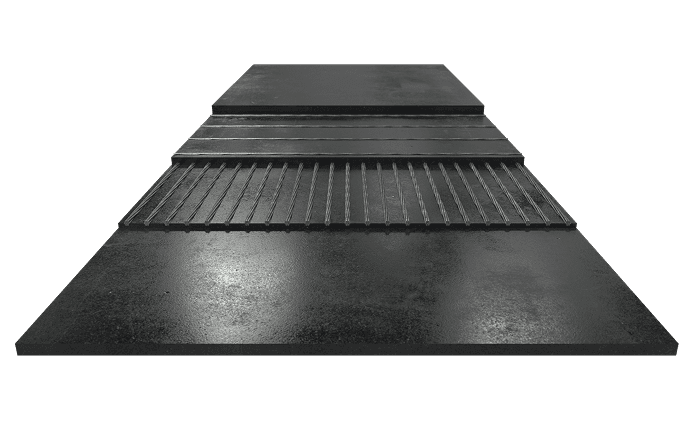
Steel-cord belts have the highest tensile strength. Steel cables run the length of the belt in place of fabric plies, so the belt resists high pulling forces and stretching. Ratings climb into the thousands of kilonewtons per meter on the ST scale used across the belting industry, which is why steel cord dominates long, high-capacity runs in mining and bulk handling.
For most pulley-driven work, the honest answer is that a steel-cord or high-ply fabric belt is the strongest belt you can run on a pulley-driven conveyor.
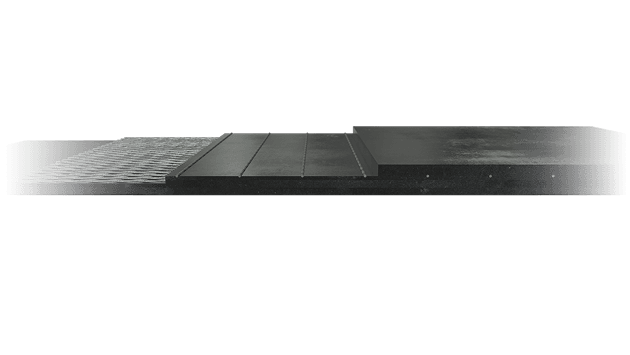
Tensile strength measures pull along the belt. Most severe-duty damage comes from other directions. A belt that resists thousands of kilonewtons of tension can still rip or gouge when a sharp casting lands on it or when a front-end loader drops a bucket of scrap onto a short belt section.
The stresses that reduce belt life in harsh plants include:
When one or more of these conditions dominate, you shouldn’t look for a stronger belt; you should invest in a stronger conveyor.
A pulley-driven belt relies on friction and belt tension to move the load. Push that design with heavy impact and abrasion, and the belt becomes the weak point.
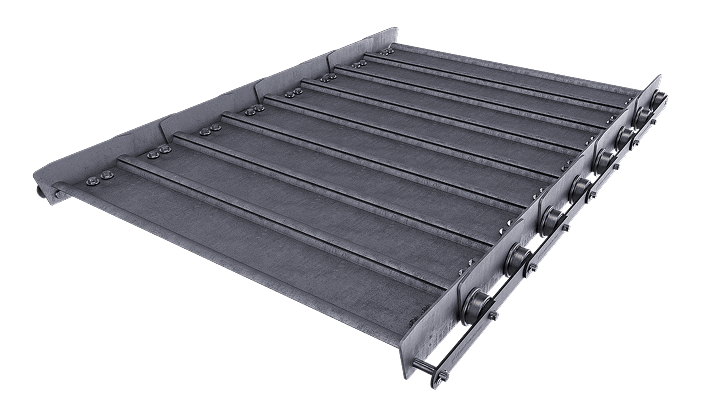
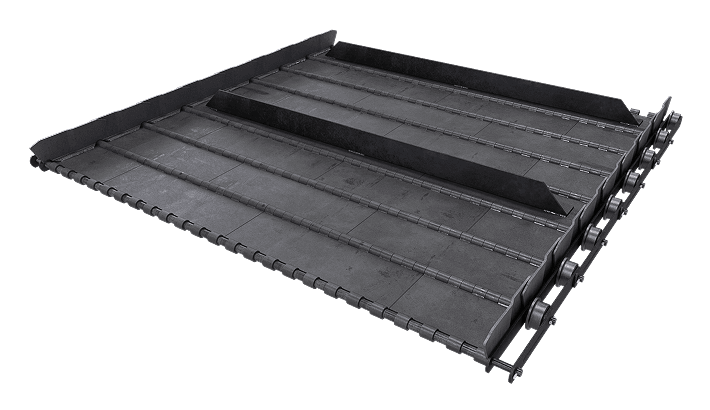
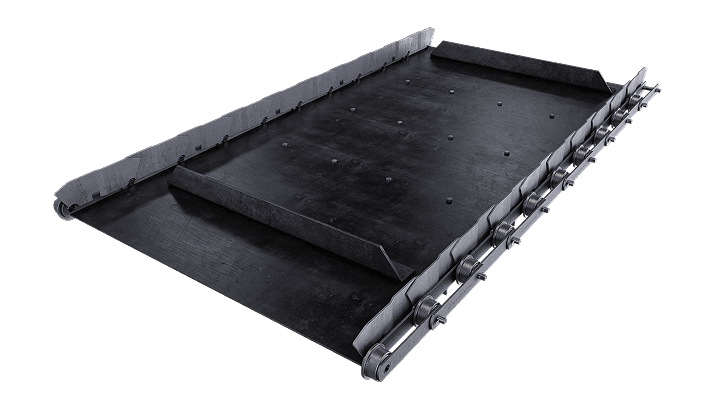
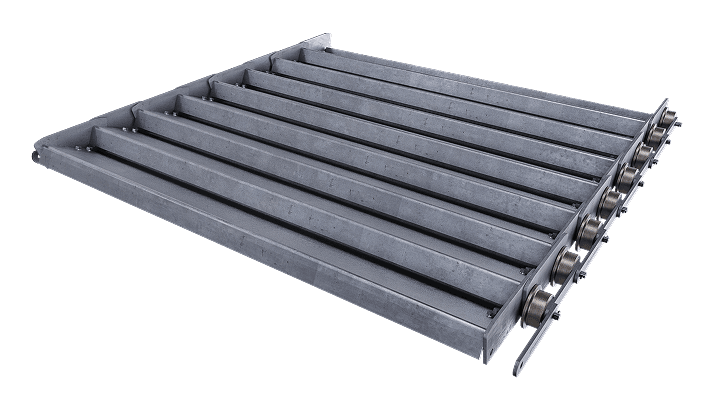
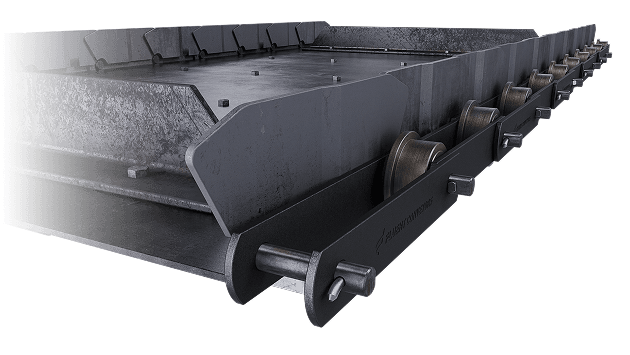
Roller chain conveyors are sprocket-driven, and the carrying surface is a series of steel pans or slats bolted to heavy roller chain, so the load rides on steel and the chain carries the pull.
That is why the strongest option for severe duty is usually one of the metal conveyor belts built for roller chain conveyors. The stress goes into the pans, the chain, and the frame instead of into a rubber carcass.

Pit and hopper infeeds receive material from a loader or excavator. Steel pans absorb the drop, and the chain pulls the load up an incline without slipping.
Shredded metal, castings, and demolition debris cut rubber quickly. Steel pans do not puncture, which is why scrap metal conveyor systems use metal belts for infeed and baler feed.
Foundry returns, slag, and hot ash harden rubber and crack the cover. Steel pans carry hot material that a rubber belt could not survive.
Water, oil, and chemicals degrade rubber compounds and loosen splices. A steel carrying surface is unaffected by most of what shortens rubber belt life in wet waste and process lines.
Many material streams combine impact, abrasion, heat, and moisture. A metal belt on a roller chain conveyor is built for that mix, where no single rubber belt handles all four well.
Roller chain conveyors run four carrying surfaces. Each one is strongest against a specific failure mode, so the material decides the belt.
Z-pan belts use deep, formed steel pans that lock together. The Z profile adds rigidity and holds sharp, rigid, high-impact material such as scrap, slag, and castings. They also handle hot materials.
The strongest belt is the one matched to the load, not the one with the highest rating. Answer these before you decide, and use them to compare belt options:
What is the heaviest single object or the densest concentration of material?
How is the belt loaded, by chute, by hand, or by machine?
Is there a drop height or a direct loader impact at the infeed?
Is the material sharp, abrasive, or both?
Is the material hot, wet, chemically aggressive, or contaminated?
Are fines or small particles present with the larger material?
What length, incline, throughput, and duty cycle does the conveyor run?

Fluent Conveyors builds custom conveyors and supplies the metal and rubber belts that run on them. Tell us what the conveyor moves, how it is loaded, and how your current belt is failing, and we match the carrying surface and the drive to the real stress on the line.
Ready to work with the experts?