









Copyright © 2026 Fluent Conveyors, LLC. All rights reserved.

The Fluent Conveyors logo is a registered trademark of Fluent Conveyors, LLC. Serial Number 97664258 Registered on Dec. 12, 2023


Copyright © 2026 Fluent Conveyors, LLC. All rights reserved.
The Fluent Conveyors logo is a registered trademark of Fluent Conveyors, LLC. Serial Number 97664258 Registered on Dec. 12, 2023
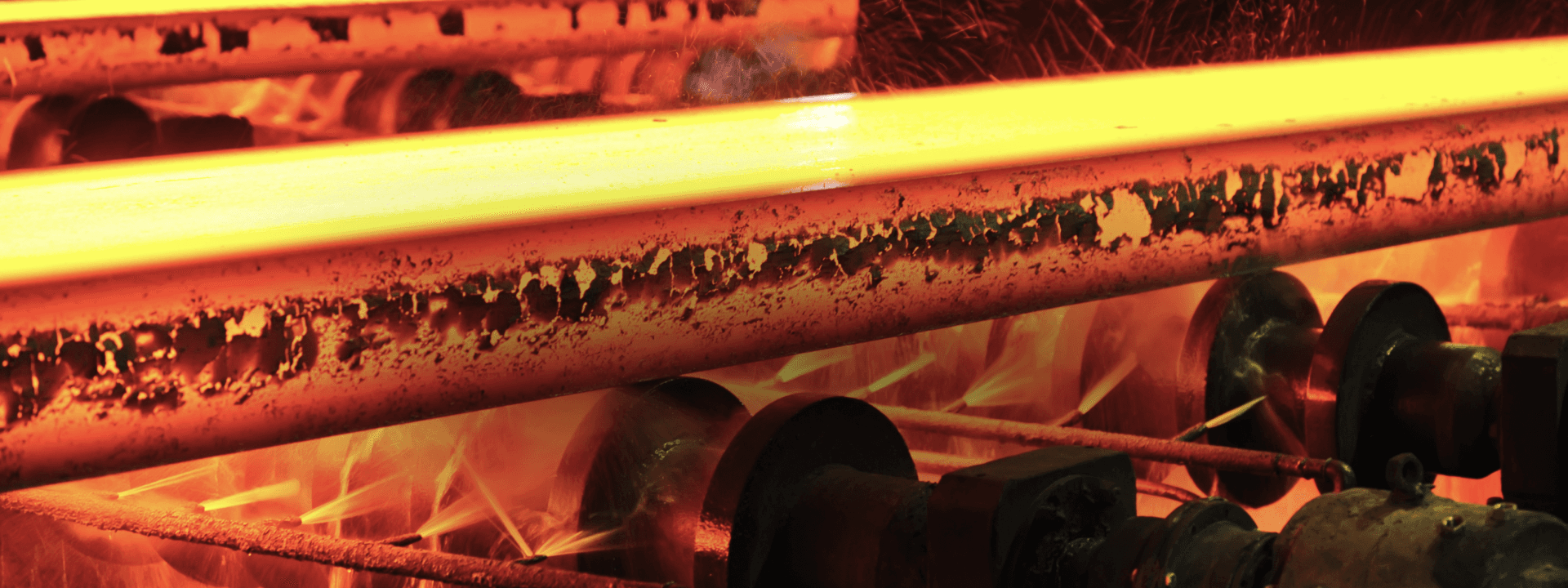
The best conveyors for a foundry are heavy-duty roller chain conveyors with steel belts that take the heat and impact of hot castings, sprues, and shakeout discharge, with trough idler and flat idler conveyors moving green sand, return sand, and cooler material through the plant. Because foundry material runs hot and abrasive, the belt and carrying surface are matched to the temperature and load at each stage rather than to the plant as a whole.

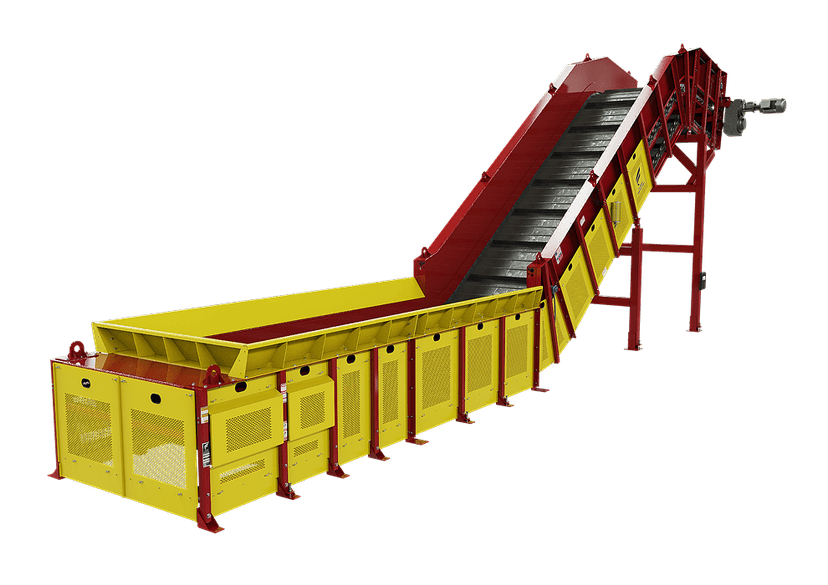
High-torque, no-slip steel-belt conveyors that take the heat and impact of hot castings, sprues, ladles, and shakeout discharge, in three duty strengths.
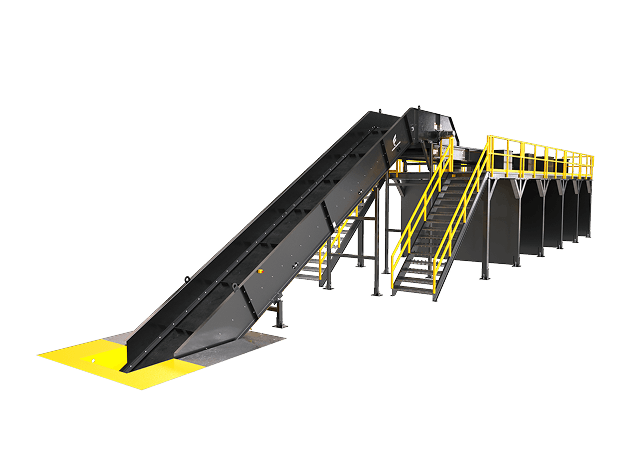
Worker-staffed conveyors for inspecting, sorting, and desprue picking of castings after cooling.
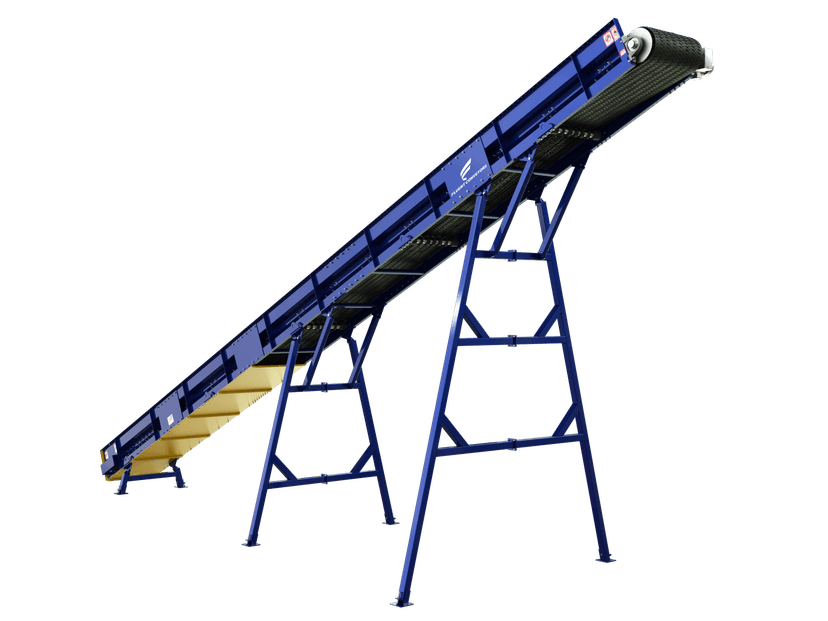
Idler-supported conveyors that move molds, cooler sand, and lighter castings at high throughput over distance.
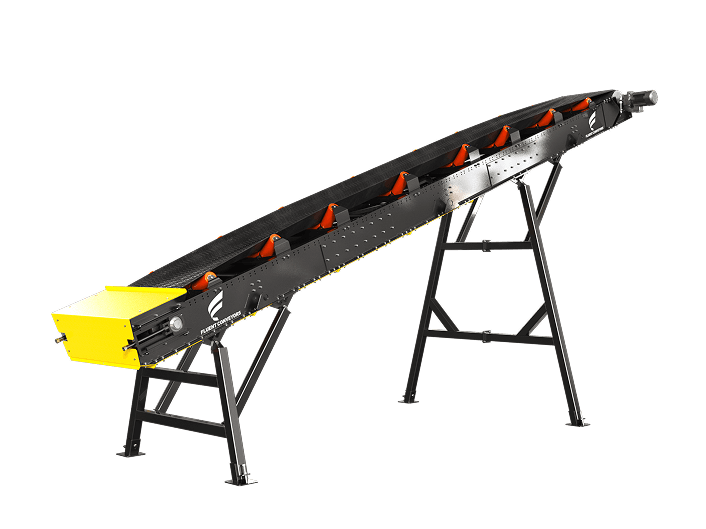
Troughed-belt conveyors that carry green sand, return sand, castings, and scrap, with the trough profile holding loose sand on the run.
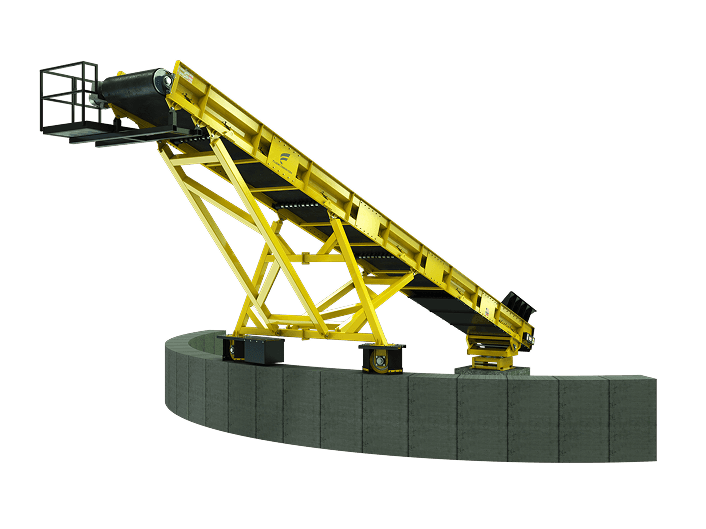
Pivoting incline conveyors that build stockpiles of prepared or return sand with a sweep boom.
Fluent designs and manufactures conveyors and conveyor systems for foundries, made in the USA and built to drop into your plant layout.
A foundry moves sand, scrap, molds, cores, and castings through a hot, abrasive, dusty process. Green sand, no-bake sand, reclaimed sand, hot sand off the shakeout, hot castings, sprues, gates, runners, and furnace-charge scrap each arrive with their own temperature, weight, and abrasiveness, and most of it passes through several conveyors between molding and finishing.
Fluent builds the belt and roller chain conveyors that move material into, through, and out of the foundry. That covers:
raw sand and scrap from rail and truck to silos and bins
metered sand and binder to the molding machines
molds to the pouring line
hot ladles to the pour
castings into the shakeout and on through cooling, blast, and cleaning
return sand to reclamation, and sprues, gates, and scrap back to the furnace charge
If your line moves sand from a silo to a mixer, castings from a shakeout to cooling, or scrap to the furnace, contact us.
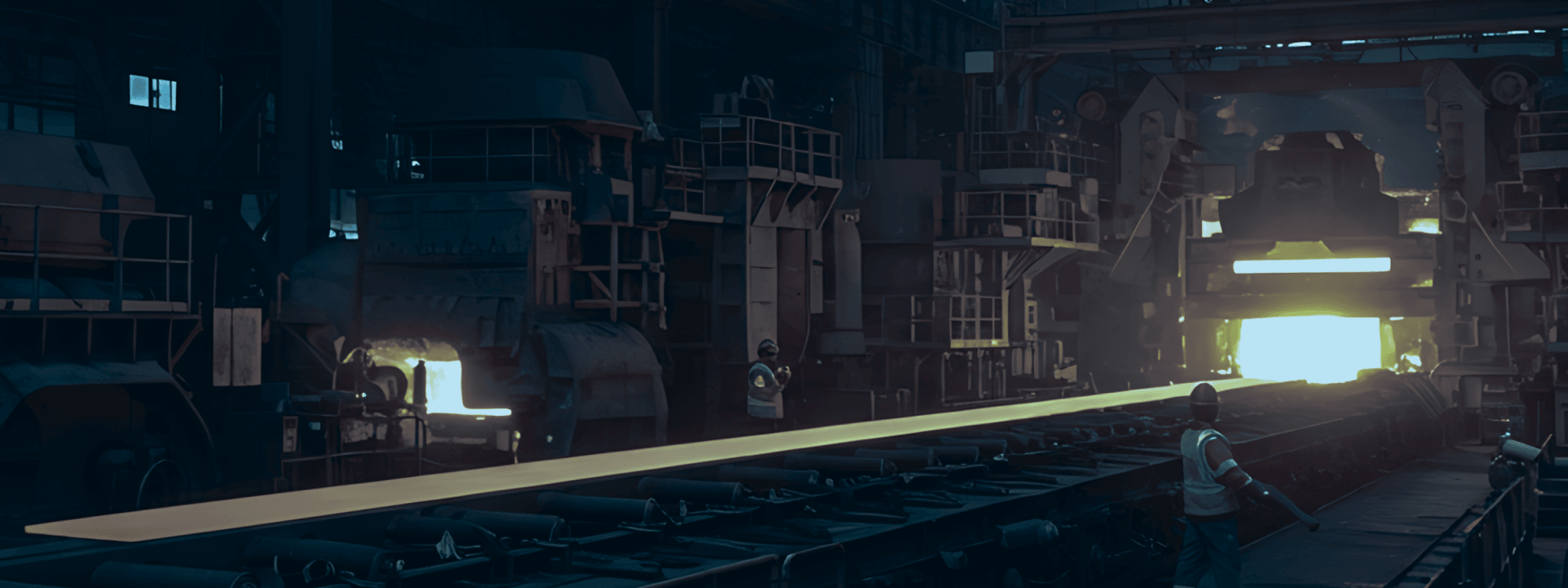
A foundry is a sequence of equipment. Each conveyor is chosen for the material it carries and where it sits in the process.
Six factors set the specification:
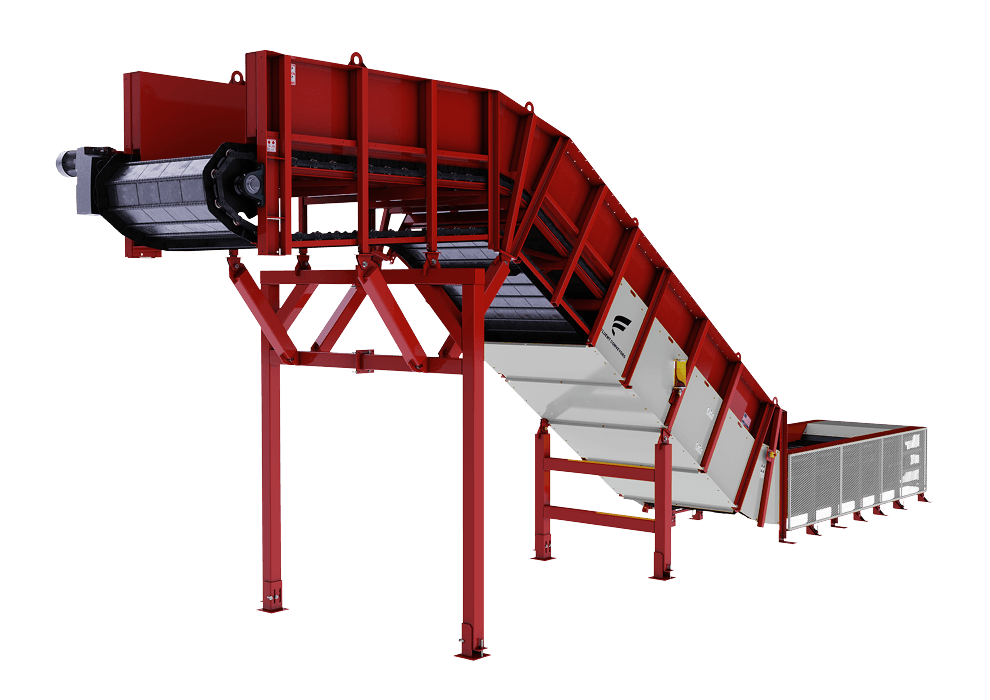
Below, we map conveyor types to their place in a foundry, explain why temperature and retention time drive casting quality and equipment life, and detail the belt, pan, and drive choices that hold up to hot, abrasive, dusty foundry material. Fluent designs and manufactures conveyors and conveyor systems for foundries, made in the USA and built to drop into your plant layout.

Material moves from raw sand and scrap handling, through molding and pouring, into shakeout, casting cooling, sand return, and finishing, with scrap and sprues returning to the furnace. Let's look at the conveyors a typical plant might use at each point.

Sand and scrap move from rail cars and trucks to silos, bins, and storage. Trough idler conveyors carry green sand and reclaimed sand over distance with the trough profile holding loose sand on the belt, and roller chain conveyors handle heavier scrap and charge material.
Prepared sand and binder are metered onto a feeder and conveyed to the molding machines. Slider bed and flat idler conveyors carry the prepared sand at a controlled rate so the molds form consistently.
Molds move to the pouring stations, and hot ladles move from the furnace to the pour. Flat idler or roller chain conveyors move molded frames between stations, and roller chain conveyors move and position the heavy ladles that carry molten metal.
Poured molds move into the shakeout, where castings separate from the sand. Roller chain conveyors with steel belts feed molds and castings into the shakeout and carry hot sand away, since sand off the shakeout runs hot enough to damage a rubber belt.
Castings move from the shakeout through a cooling run toward finishing. Steel-belt roller chain conveyors carry hot castings through the cooling stage at a controlled speed, and conveyor length and speed set the dwell time that lets each casting reach the right temperature before blast and cleaning.
After shakeout, sand returns for cooling, screening, and reclamation before it goes back to molding. Trough idler and flat idler conveyors carry return and reclaimed sand between the reclamation equipment, and radial stackers build stockpiles of prepared sand.
After cleaning and inspection, sprues, gates, runners, and rejected castings return as furnace charge. Sort stations give workers a station to inspect and desprue castings, and roller chain conveyors carry scrap and charge material to the furnace.
In a foundry, the belt has to survive the temperature at each stage; the length and speed determine how long castings and sand stay on the run, and the way sand is enclosed determines how much respirable dust the plant releases.
Four factors have the greatest effect on conveyor life, casting quality, and safety:
A variable-frequency drive on a shakeout or cooling conveyor sets and holds the speed that fixes retention time, so sand removal and casting temperature stay consistent under a varying load.
Hot, abrasive, dusty foundry material requires the belt and carrying surface matched to the temperature and load at each stage. Fluent specs the carrying surface to the material and stocks the conveyor belts for foundries to match.
Routine inspection and maintenance catch these early. Learn what causes wear and tear on a conveyor belt.
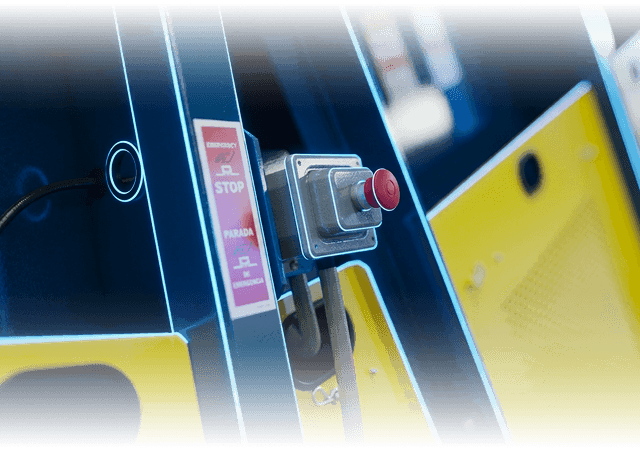
Foundry conveyors carry the hazards of moving belts, pinch points at pulleys and sprockets, exposed drives, and falling material, alongside hazards specific to foundry work: hot surfaces and hot material, molten metal near the pouring and ladle lines, and respirable crystalline silica from sand. Guarding, emergency stops, and pull cords are standard, and lockout/tagout access must be engineered for the frequent cleanout that hot sand, spillage, and dust require.
Every conveyor in a foundry should exceed the safety standards put forth by the relevant authority. See how to reduce conveyor hazards for the details.

Fluent designs and builds custom conveyors and conveyor systems for foundries.
Contact us to talk through your line, or send the material type, temperature, target capacity, and run dimensions, and our engineering team will scope a system to fit your plant and the rest of your foundry.
