





Copyright © 2026 Fluent Conveyors, LLC. All rights reserved.

The Fluent Conveyors logo is a registered trademark of Fluent Conveyors, LLC. Serial Number 97664258 Registered on Dec. 12, 2023


Copyright © 2026 Fluent Conveyors, LLC. All rights reserved.
The Fluent Conveyors logo is a registered trademark of Fluent Conveyors, LLC. Serial Number 97664258 Registered on Dec. 12, 2023

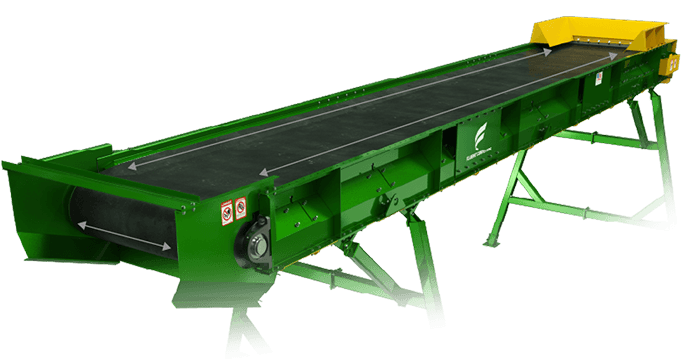
Flat idler belts describe all belts attached to flat (untroughed), pulley-driven conveyors. They are suitable for moving packaged goods, sortable items, recyclables, and small-lump bulk material.
This page covers what they are, how they're specified, common failure modes, and how to pick the right one for Fluent flat idler conveyors or general replacement.
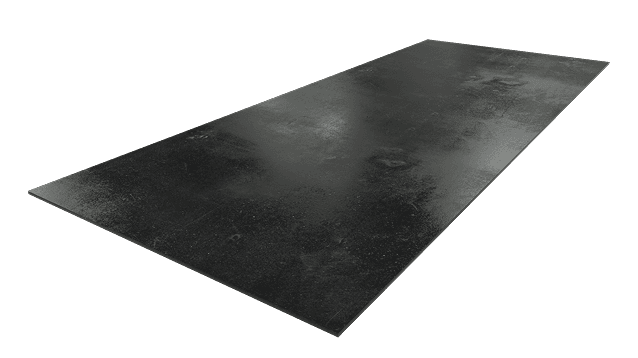


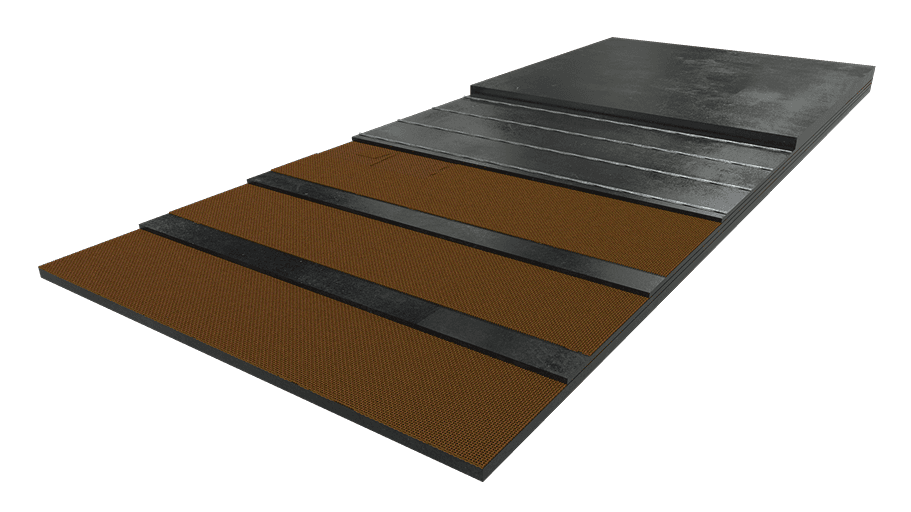

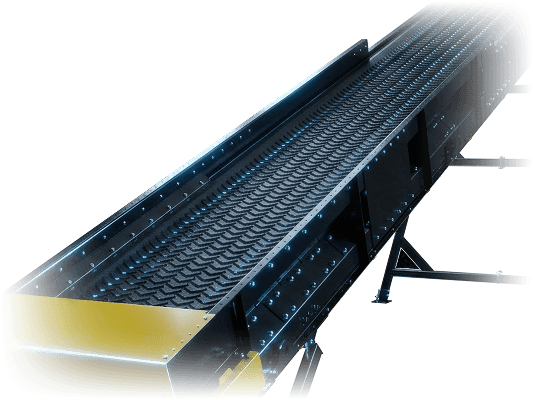
A flat idler belt is a continuous, pulley-driven belt that rides on horizontal carrying idlers. Unlike a troughed belt, which is bent into a V or U shape by angled idlers, a flat belt maintains a planar surface across its full width. That geometry optimizes it for unit goods, sortation, feeder applications, and lower-volume bulk conveying.

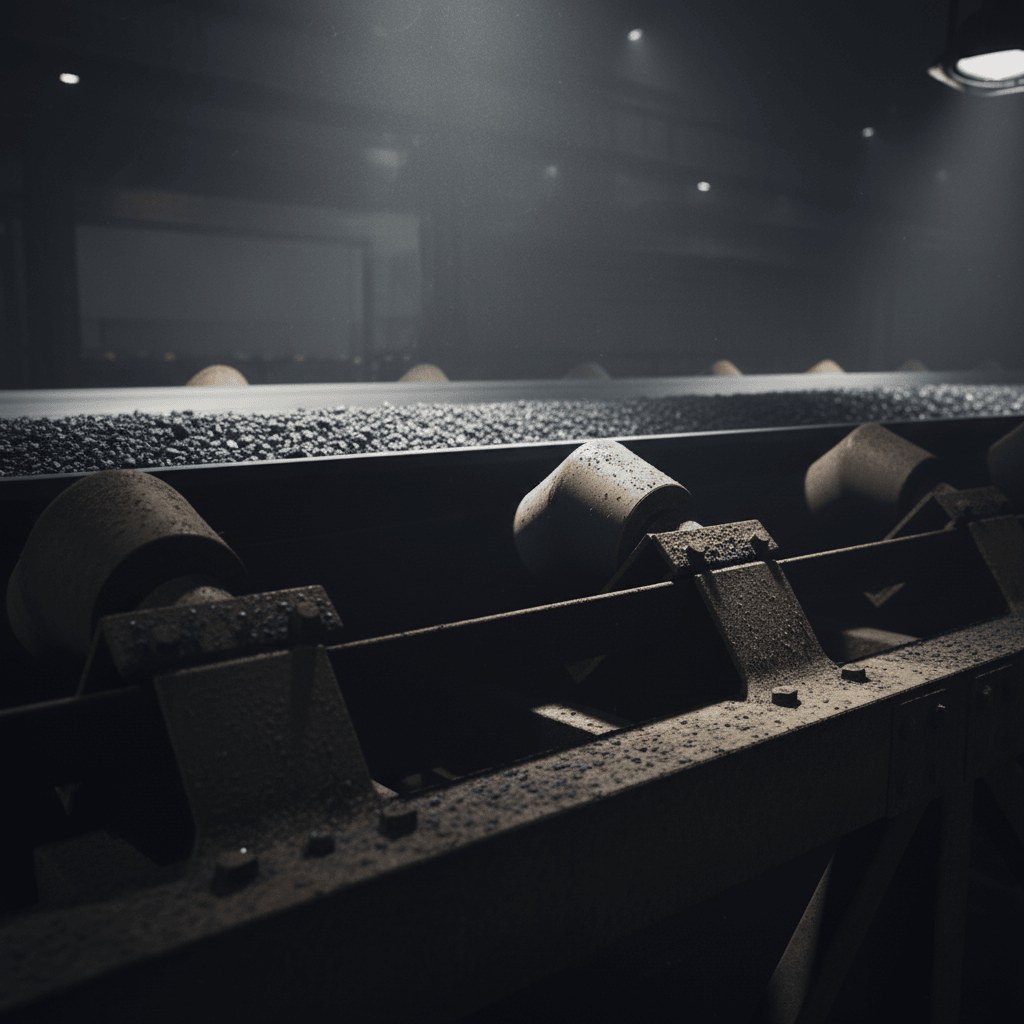
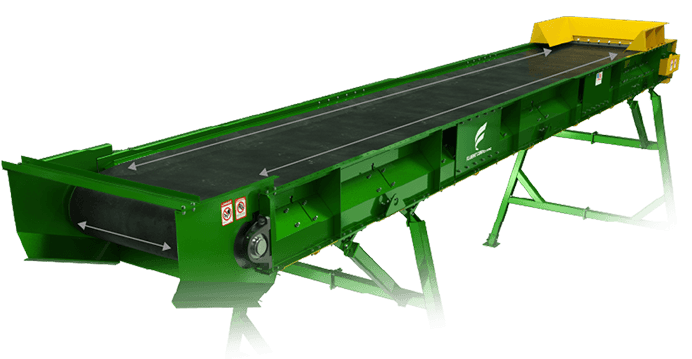
The drive pulley turns under motor power and pulls the belt through friction. Horizontal carrying idlers support the loaded side of the belt; return idlers carry the empty side back to the tail pulley. A take-up pulley maintains belt tension and compensates for stretch over time. Learn more about how conveyor belts work.
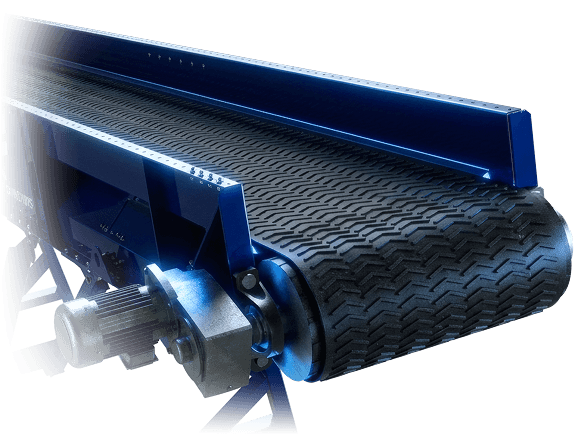
Flat idler belts are built around a tensioned fabric or steel-reinforced carcass with a top cover that contacts the load and a bottom cover that rides the idlers. The cover compound is the primary selection variable.
Beyond the cover compound, three carcass variables drive performance:
Ply count (2–3 for light-duty, 4–6+ for heavy loads and long spans)
Durometer (cover hardness, which affects grip and wear)
Tensile strength rating in PIW
The top cover thickness is sized according to abrasion and impact load. For specialty applications, see industrial belts.
continuous operation.
Carrying idlers are spaced close enough to keep the belt sag within a target range under load. If spacing is too wide, the belt sags between idlers, spills material, mistracks at the loading zone, and wears prematurely. If spacing is too tight, the conveyor carries unnecessary component cost and rolling resistance.
CEMA recommends that sag stay within 2–3% of idler spacing. Typical carrying idler spacing on flat belts is 3–5 feet; return idler spacing is 10–15 feet since the return side carries only the belt itself. Heavier loads, larger lump sizes, and higher belt speeds all push spacing tighter. See conveyor belt tensioning and our CEMA compliance page for more information
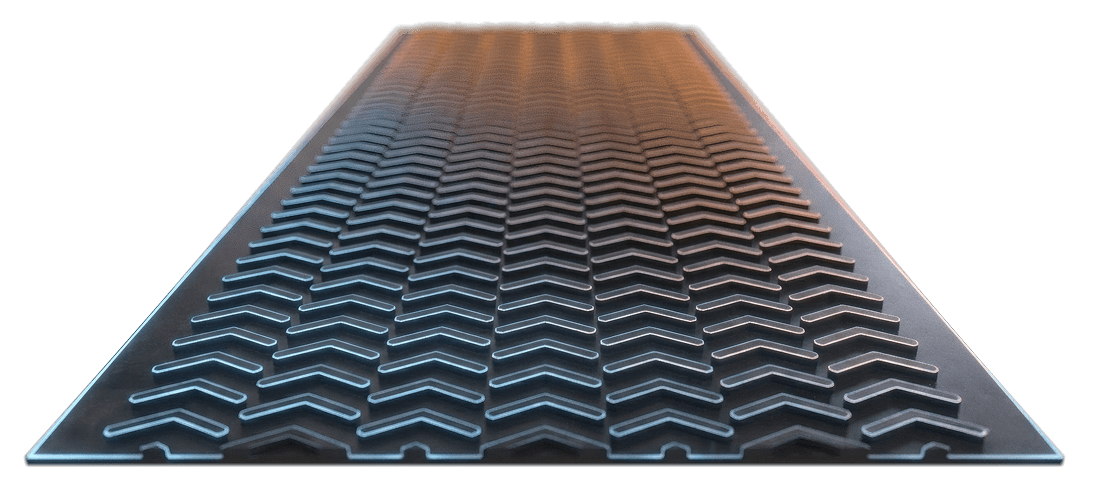
Most flat idler belt failure modes fit into four symptom groups.
Mistracking
The belt drifts toward one side of the conveyor. Causes include:
Uneven loading
Seized or worn rollers
Frame or idler misalignment
Imbalanced tension across the belt width
Material carryback building up on the pulleys
Edge wear
The belt fringes, frays, or develops damage concentrated at one or both edges. Causes include:
Chronic mistracking
A belt too narrow for the loading profile
Skirting set too tight or misaligned against the belt edge
Edge wear almost always points upstream to a tracking or loading problem that needs to be fixed before the belt is replaced.
Slippage
The belt stalls or slips at the drive pulley under load. Causes include:
Insufficient slack-side tension
Worn or contaminated pulley lagging
Wet or oily surfaces that reduce the friction coefficient between the belt and the pulley
Correct take-up adjustment and relagging usually resolve slippage. Browse replacement pulley lagging.
Carryback
Material sticks to the belt past the discharge point and drops off along the return side. Causes include:
Missing, worn, or improperly tensioned scrapers
Sticky material
Inadequate return-side cleanup.
Carryback builds up on return idlers and the tail pulley, which then drives mistracking. Specify primary and secondary belt scrapers for the material and belt cover in use.
A troughed belt carries roughly 2–3 times the volume of the same belt width run flat. That capacity difference is why bulk material at high tonnage almost always runs troughed.
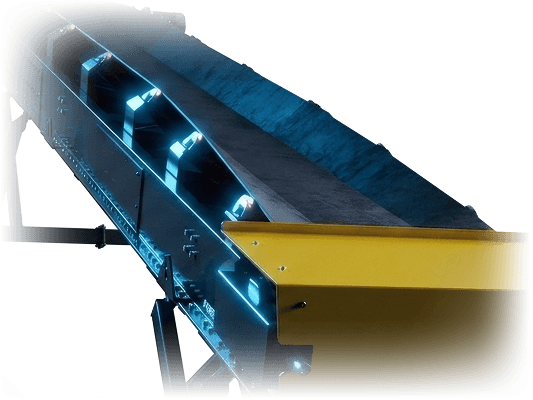
Flat belts have other advantages, including:
No transition zones at the head and tail (which eliminates a class of edge-stress and belt-life problems)
Clean discharge of unit goods
Easy intermediate discharge using plows or deflectors
Short flat-belt feeders also tolerate high-tension, heavy-load conditions that a troughed belt handles poorly.
Seven variables drive belt selection:
Still have questions? We can help.