









Copyright © 2026 Fluent Conveyors, LLC. All rights reserved.

The Fluent Conveyors logo is a registered trademark of Fluent Conveyors, LLC. Serial Number 97664258 Registered on Dec. 12, 2023


Copyright © 2026 Fluent Conveyors, LLC. All rights reserved.
The Fluent Conveyors logo is a registered trademark of Fluent Conveyors, LLC. Serial Number 97664258 Registered on Dec. 12, 2023
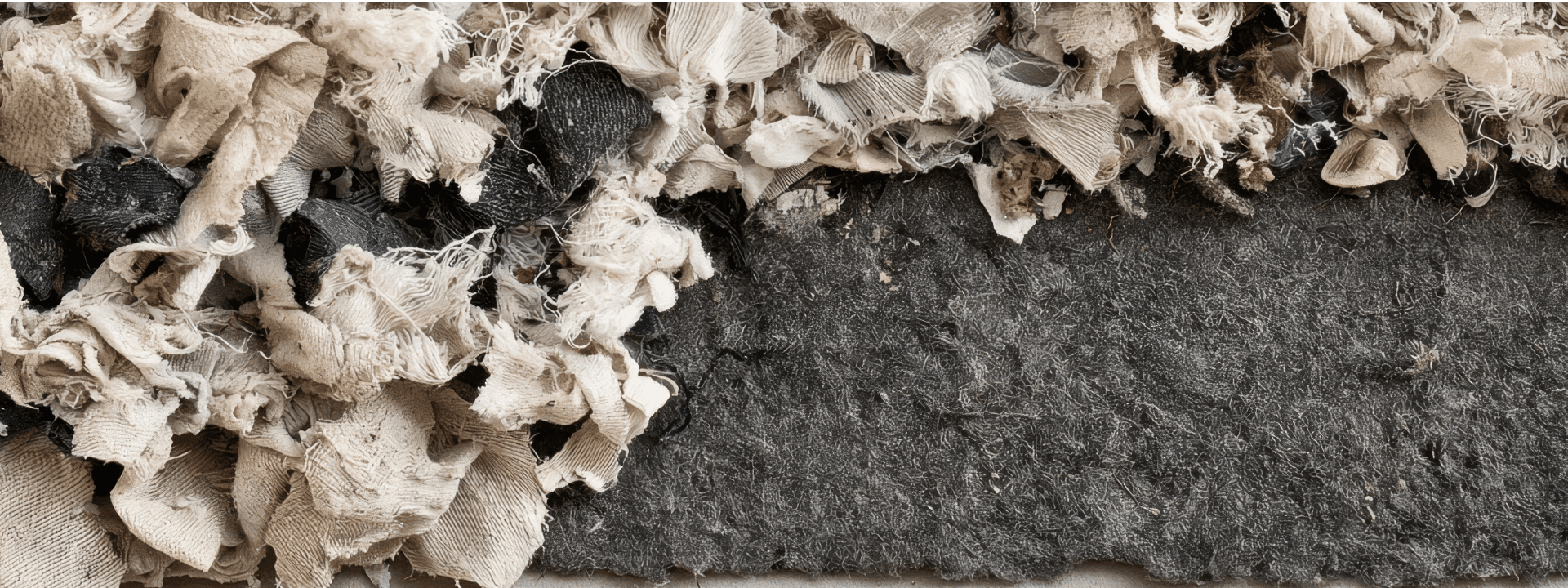
The best conveyors for recycling carpet are roller chain conveyors that take bulky rolls ahead of shredding, with trough idler and flat idler conveyors carrying shredded carpet, fiber, and backing between stages. A metered shredder feed conveyor sets the throughput of the whole line, and slider beds are low-cost feed conveyors for post-shedding recycling of light material streams.

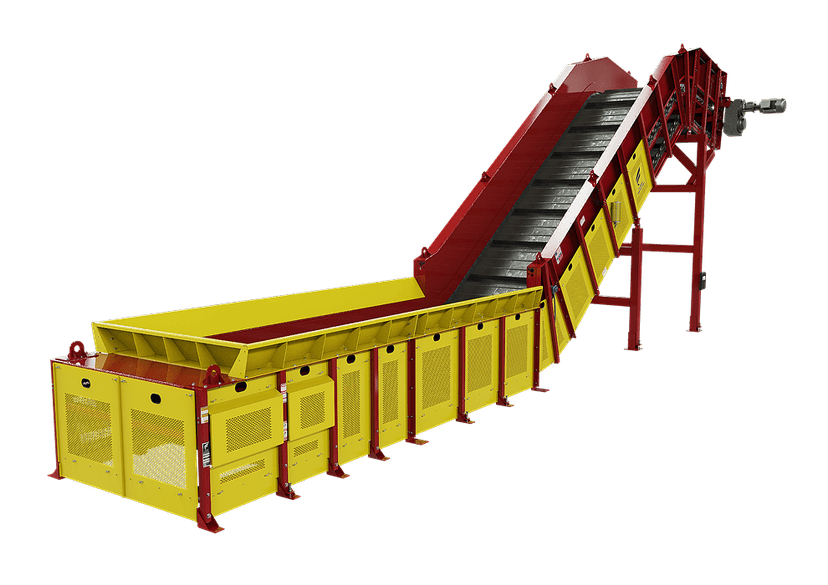
High-torque, no-slip steel-pan conveyors that take the weight and abrasion of bulky carpet rolls, padding, and contaminated infeed where a rubber belt would snag and tear.
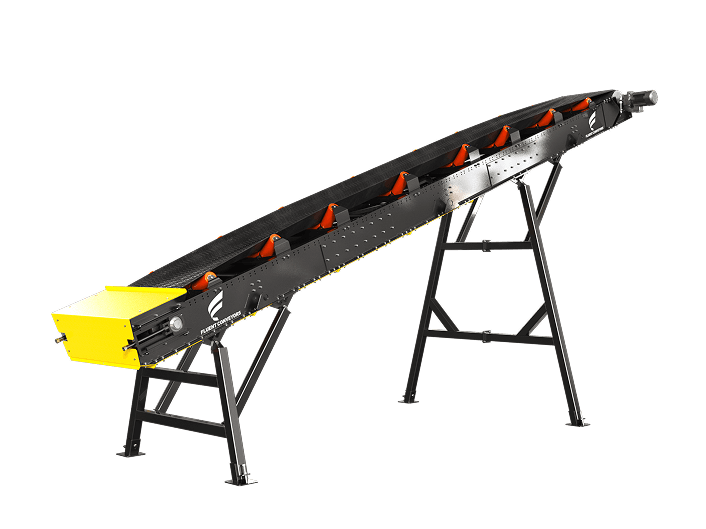
Troughed-belt transport for shredded carpet, loose fiber, and backing fractions across distance, with side curl that holds light, springy material on the run between stages.
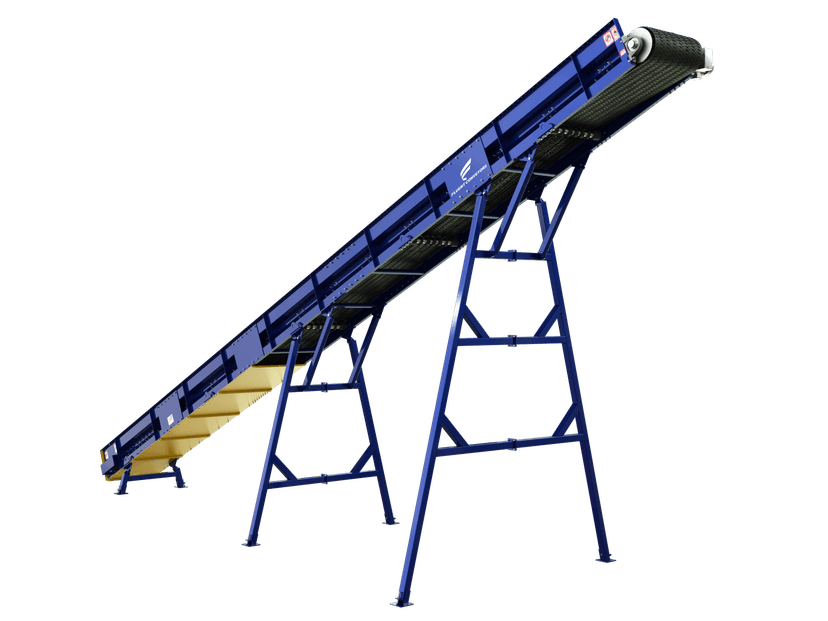
Flat-set idler frame that carries a thin, even burden for inspection, sorting, and fiber and backing separation, where a flat profile presents material better than a troughed one.
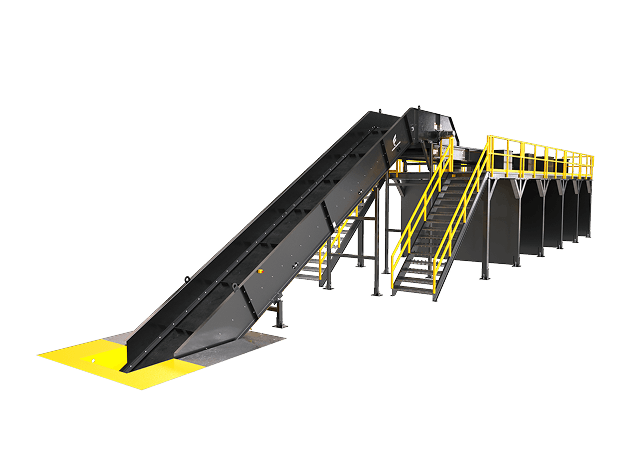
Worker-staffed sort stations for the manual pass that pulls tack strips, padding, and misrouted contaminants out of the stream before shredding or baling.
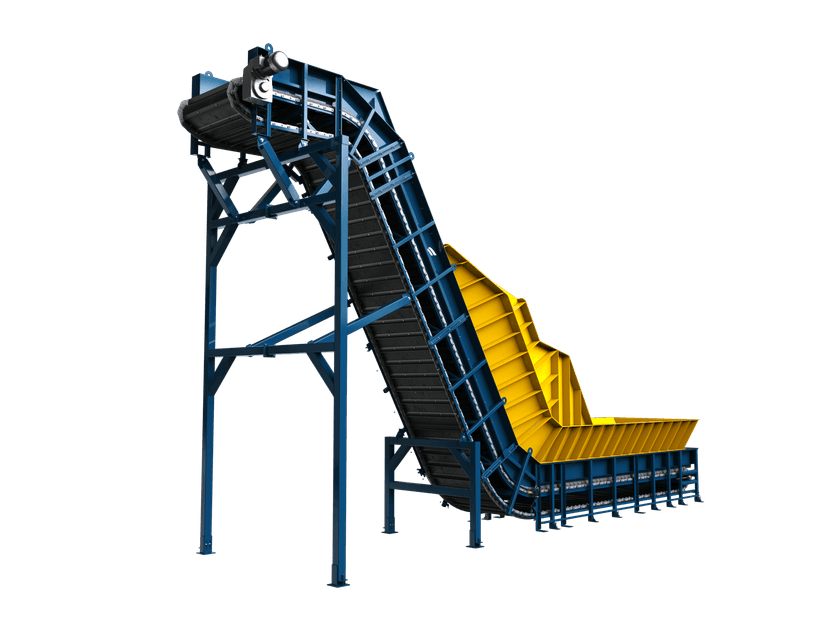
Fluent's primary roller chain metering conveyor features a steep incline with a cleated rubber combination belt that meters bulky carpet and shredded material.
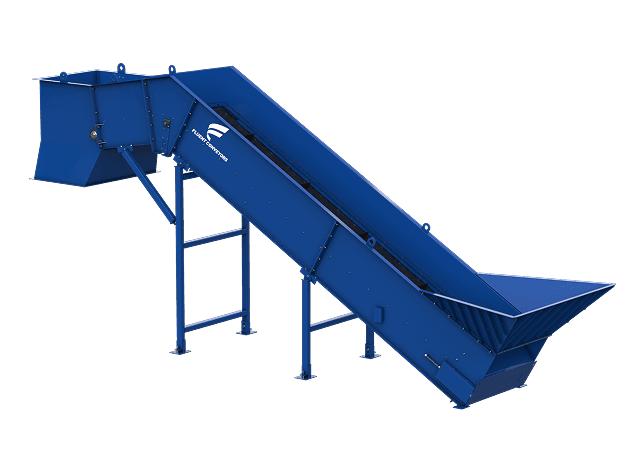
Low-cost, pulley-driven feed conveyors for light, post-shredding streams, carrying shredded carpet and loose fiber on shorter transfers between stages.
Fluent designs and manufactures conveyors and conveyor systems for carpet recycling lines, made in the USA and built to drop into your plant layout.
A carpet recycling operation processes post-consumer broadloom rolls, carpet tile, padding and cushion, and commercial off-cuts, then size-reduces and separates them into face fiber and backing. Each load arrives with dirt, moisture, tack strips, and embedded debris, and most carpets cross several conveyors before and after the shredder.
Fluent builds the conveyors that move carpet into, through, and out of the recycling line. That covers infeed off a receiving floor or trailer, transport between sorting and size reduction, the feed conveyor that meters carpet into the shredder, the discharge conveyors that carry shredded material and separated fractions clear, and the sorting conveyors that stage material for a manual QC pass.
For bulky or contaminated infeed, roller chain conveyors handle heavy carpet rolls, padding, and abrasive debris ahead of shredding.
If your line moves carpet from a receiving floor to a shredder, from a shredder to a separator, or from a separator split to a baler, contact us.
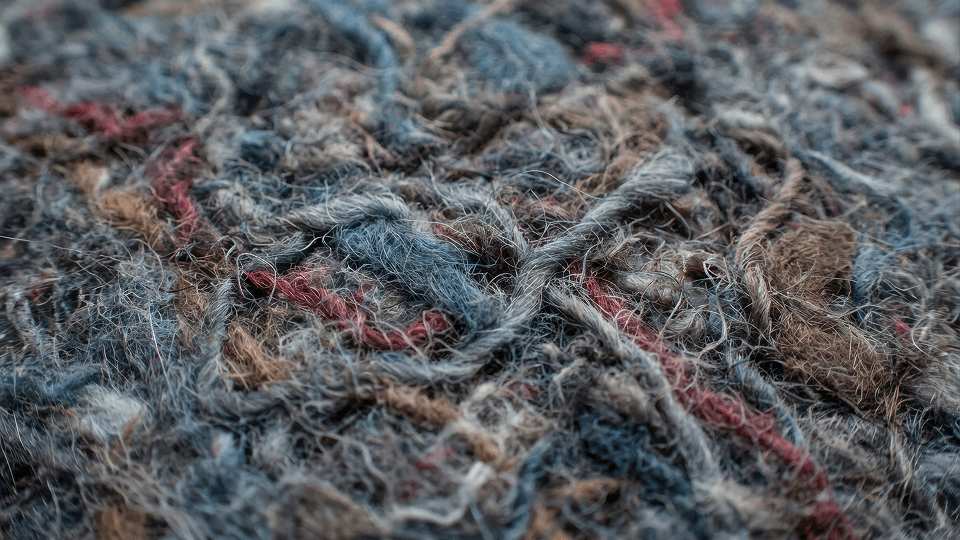
A carpet recycling plant is a sequence of equipment. Each conveyor is chosen for the material it carries and where it sits in that sequence.
Six factors set the specification:
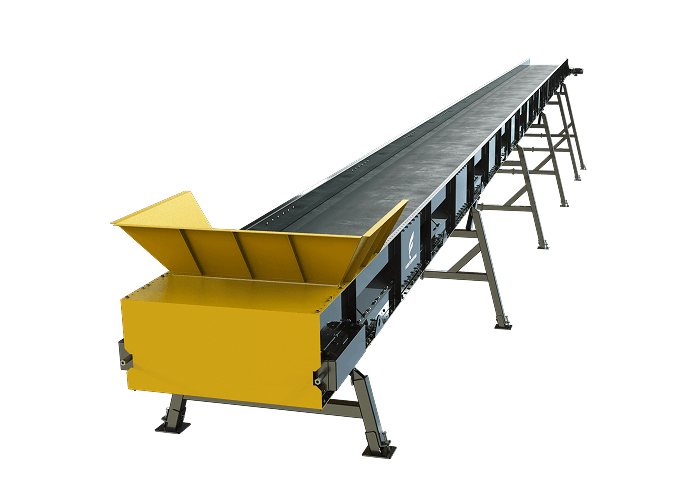
Below, we map conveyor types to their place in a carpet recycling line, explain why feed control drives throughput, and detail the belt, protection, and drive choices that hold up through abrasive, fibrous carpet streams.

Material moves from receiving and infeed, through inspection and contaminant removal, into size reduction at the shredder, then through fiber and backing separation, inclined transport, and a manual QC pass before baling or bunkering. Let's look at the conveyors a typical plant might utilize at each point.

Broadloom rolls, carpet tile, and padding move from the receiving floor or a trailer toward sorting and size reduction. Roller chain conveyors with rubber combo belts take the weight of bulky rolls dropped by a loader or forklift and feed them forward at a controlled, even rate without snagging.
Sorted and pre-cut material crosses the plant to inspection and the shredder. Trough idler conveyors carry loose strips and cut carpet over distance, with the troughed profile keeping loose, irregular pieces centered on the run between stages.
Tack strips, padding, and oversized debris are removed from the stream before it reaches the shredder. A recycling sort station gives workers a controlled area to pull contaminants and misrouted material by hand, and a magnetic head pulley or overband magnet over the infeed belt pulls the staples, nails, and tack-strip metal that would otherwise dull the shredder blades and contaminate the recovered fiber and backing.
Carpet is metered into the shredder on a feed conveyor, often with variable speed so the line can match feed rate to shredder capacity. This is the conveyor that decides how much material the line can process and how cleanly the shredder runs, because a steady, even feed keeps the rotor loaded without surging or bridging.
Shredded carpet drops off the shredder and moves into fiber and backing separation, where mechanical separators, screens, and air classification split the lighter face fiber from the heavier backing and calcium carbonate fines.
Discharge conveyors carry the shredded stream clear, and flat idler conveyors feed a separator or screen with an even, stable burden or present material for a picking pass. Slider bed and trough idler conveyors move the separated fiber and backing fractions toward storage or baling.
Separated fractions often have to climb to an elevated baler, screen deck, or bunker. Cleated belt conveyors carry loose fiber and shredded carpet up these runs, with raised cleats holding light material against rollback on the incline.
Recovered fiber and backing often move on to a final sorting pass that refines the stream by material type and cleanliness. Sorting conveyors present material at a stable speed and even spread, and custom recycling sort stations put workers on the line for the manual pass that pulls residual contaminants before baling.
The same conveyors serve the fibers recycling industry, where vehicle carpet, trim, and textiles move through similar size-reduction and separation steps.
The conveyor feeding the shredder sets the throughput ceiling for the whole line. A shredder runs cleanest on a steady, even feed; carpet dumped in surges or fed as a tangled pile bridges at the throat, stalls the shredder, and forces the operator to clear jams by hand.
Four feed variables influence throughput:
A speed sensor on the feed conveyor confirms the belt is holding the set speed under load, which keeps feed rate matched to shredder capacity.
Abrasive, fibrous, and often dusty carpet streams need application-specific belts and conveyor add-ons. Fluent specs the carrying surface to the stream and stocks the conveyor belts for carpet recycling to match.
Most carpet conveyor failures usually trace back to a feed conveyor that doesn’t properly feed a shredder, and can be avoided through awareness and equipment design.
Routine inspection and maintenance catch these early. Learn what causes wear and tear on a conveyor belt.
Carpet recycling conveyors carry the hazards of moving belts, pinch points at pulleys and sprockets, exposed drives, and falling material, alongside the dust and airborne fiber generated by handling and shredding fines. Guarding, emergency stops, and pull cords are standard, and lockout/tagout access must be engineered for cleaning and belt work.
Every conveyor in a recycling operation should exceed the safety standards put forth by the relevant authority. See how to reduce conveyor hazards for the details.
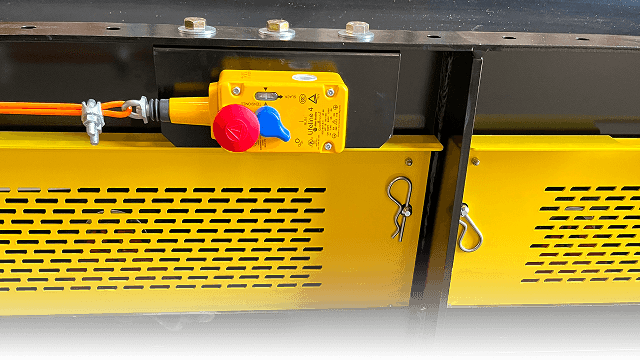

Fluent designs and builds custom conveyors and conveyor systems for carpet recycling lines.
Contact us to talk through your line, or send the material type, target capacity, and run dimensions, and our engineering team will scope a system to fit your plant and the rest of your carpet recycling line.
