








Copyright © 2026 Fluent Conveyors, LLC. All rights reserved.
The Fluent Conveyors logo is a registered trademark of Fluent Conveyors, LLC. Serial Number 97664258 Registered on Dec. 12, 2023


Copyright © 2026 Fluent Conveyors, LLC. All rights reserved.
The Fluent Conveyors logo is a registered trademark of Fluent Conveyors, LLC. Serial Number 97664258 Registered on Dec. 12, 2023
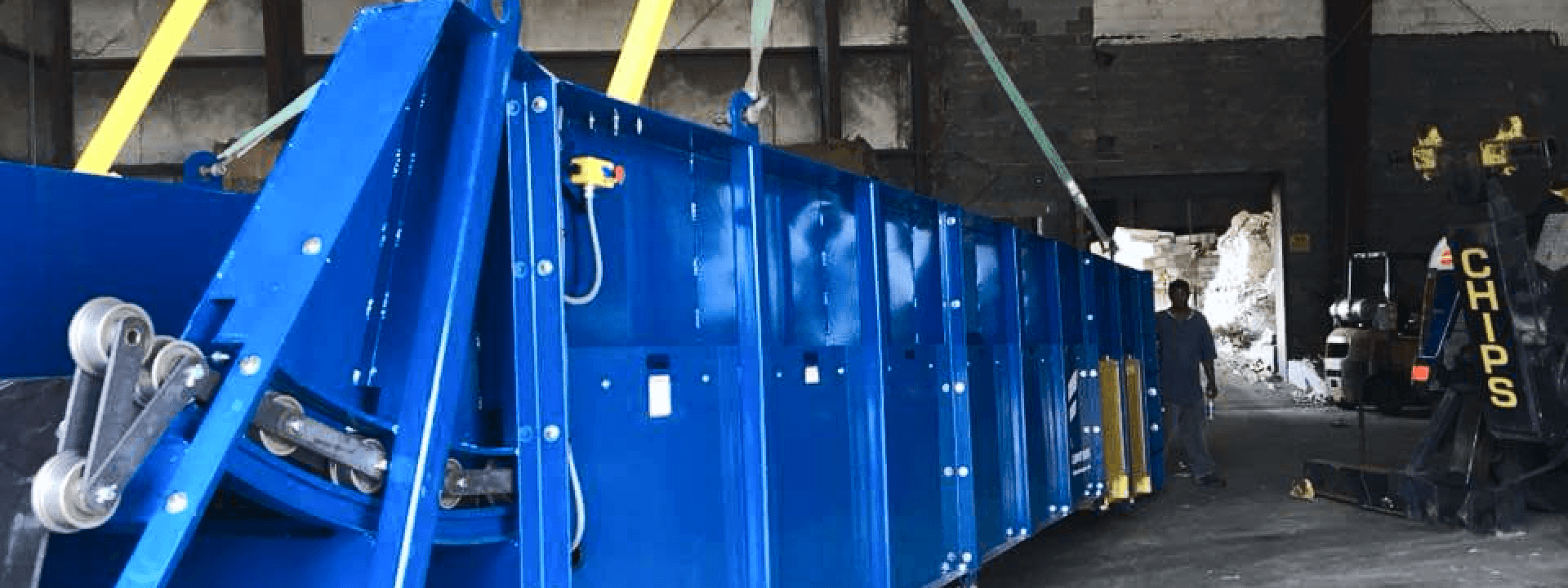
Specifications name CEMA idler classes because class is what lets an idler assembly from one manufacturer drop into another manufacturer's frame. CEMA publishes the dimensional and load rating criteria behind that interchange, along with the calculation methods behind conveyor capacity. We build to the documents that apply.

A trade association of conveyor manufacturers, integrators, and engineering firms, founded in 1933. CEMA is accredited by ANSI as a standards developer and maintains 13 American National Standards, alongside non-ANSI standards, brochures, and reference books.
CEMA writes and publishes. It operates no laboratory, issues no conformity mark, and certifies neither equipment nor companies. Manufacturers declare which class or criteria their designs meet.
When a specification reads ANSI/CEMA 402, CEMA authored the document, and ANSI approved it through a consensus process. The difference between a consensus standard, a regulation, and a third-party certification decides what a compliance claim means. Our standards overview discusses all three.
That structure puts conformity on the manufacturer. An idler manufacturer states which CEMA class its designs fall into, and no outside body audits the statement. The same is true for the ANSI and ASME documents governing conveyor safety and chain geometry, where neither body certifies conveying equipment. We build to the relevant CEMA documents, and we hold the drawings, calculations, and inspection records that support our claims.
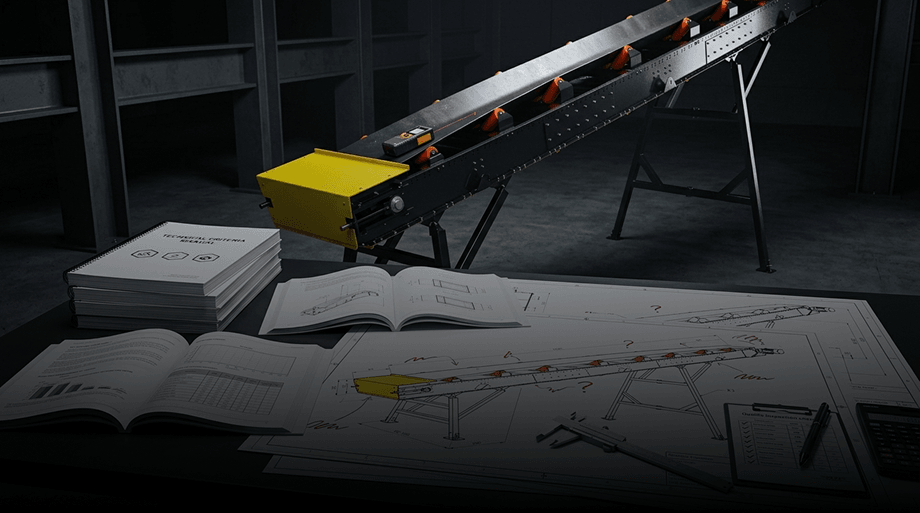
Capacity, component classification, material behavior, and label content exist in separate documents. A conveyor’s design and the material it carries determine which standards we apply.
ANSI/CEMA 102 supplies the vocabulary the rest of the documents use. Drawings, quotes, and specifications that agree on definitions of pitch, trough angle, and carrying run help avoid ambiguity.
The following CEMA topics have the greatest impact on our design and manufacturing processes.
We supply idlers across the full range of CEMA classes, picking idlers on sort lines included.
Classes fix clearance, mounting dimensions, and load ratings so a complete idler assembly interchanges between manufacturers. Class follows belt width, lump size, and calculated load.
ANSI/CEMA 550 assigns a code covering density, lump size, flowability, and abrasiveness. Those codes drive trough angle, idler spacing, and belt construction on recycling streams.
We build standards into our conveyors through a sequence of controlled steps.
Applicable standards and customer requirements
Application and hazard review
Mechanical and controls engineering
Drawing and manufacturability review
Fabrication and assembly controls
Guarding and safety device verification
Operational testing and QA records
Manuals, drawings, customer handoff
Installation, commissioning, and employer procedures
Engineering works in 3D CAD from material, bulk density, throughput, incline, and operating environment. Material classification and duty expectations sent with the RFQ let idler class, pulley rating, and belt construction be selected for your facility and application at the start.
Fabrication controls follow the released drawings. Guards, safety devices, and labels are installed as part of assembly.
Each conveyor is assembled and run for more than 10 hours while we check speed, tracking, alignment, noise, safety stops, and electrical function. See our conveyor quality assurance page for details.
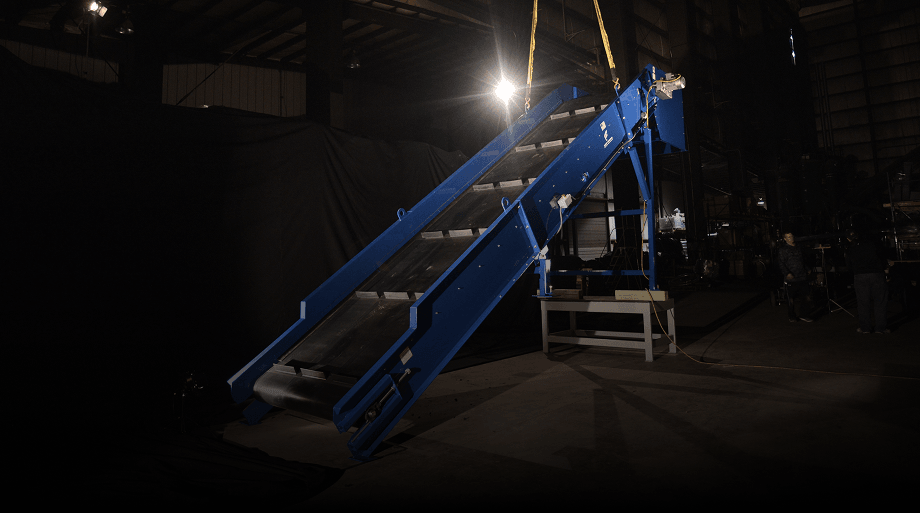
A conforming conveyor can become a noncompliant installation. Responsibility divides across parties based on the project, especially projects that involve installation coordinated across vendors.
Scope boundaries also shape what our obligation covers. Running a machine outside its rated capacity or with guarding removed, for example, sits outside the warranty coverage terms.
Manuals name the components a maintenance planner reorders, idler class and pulley designation included. The trough idler conveyor owner's manual shows the format.
On engineered projects, documentation and reporting expectations are set out under quality, safety, and regulatory compliance.

Standards requirements get priced into the quote. Send your desired conveyor type, material and its classification, throughput, operating environment, controls scope, and any internal specification you are held to, and our engineering team will identify which CEMA documents govern the machine and which criteria apply.