









Copyright © 2026 Fluent Conveyors, LLC. All rights reserved.

The Fluent Conveyors logo is a registered trademark of Fluent Conveyors, LLC. Serial Number 97664258 Registered on Dec. 12, 2023


Copyright © 2026 Fluent Conveyors, LLC. All rights reserved.
The Fluent Conveyors logo is a registered trademark of Fluent Conveyors, LLC. Serial Number 97664258 Registered on Dec. 12, 2023
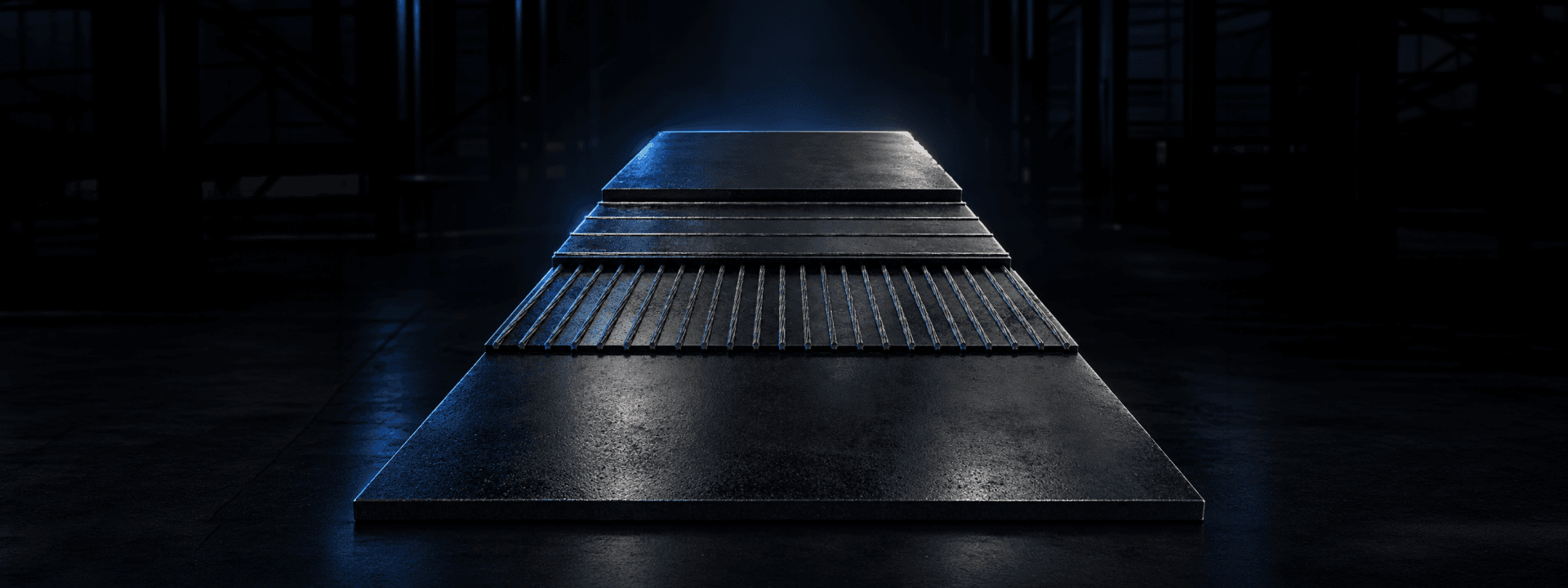
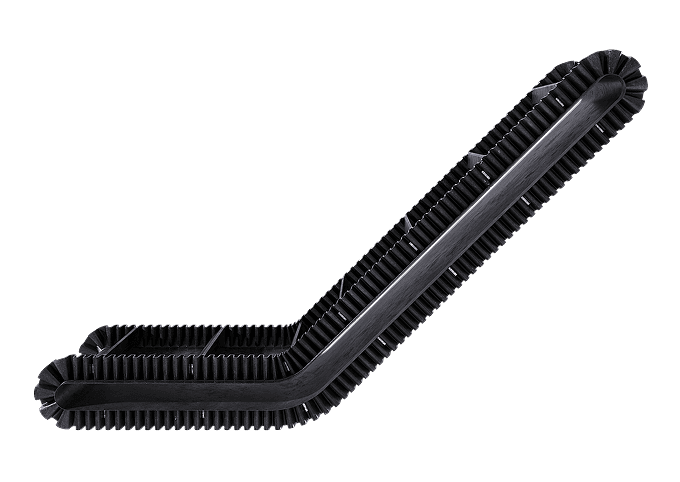
Self-extinguishing conveyor belts are available in common constructions including rubber, PVC, neoprene, steel-cord, cleated, and sidewall belts. They are designed to stop burning once the ignition source is removed. A belt qualifies through its flame-resistant compound and a passing result on a recognized flame test, such as MSHA Part 14 approval in the US.
Below, we explain which belt types qualify, how flame tests work, what US rules require, and how to verify a rating before you buy.

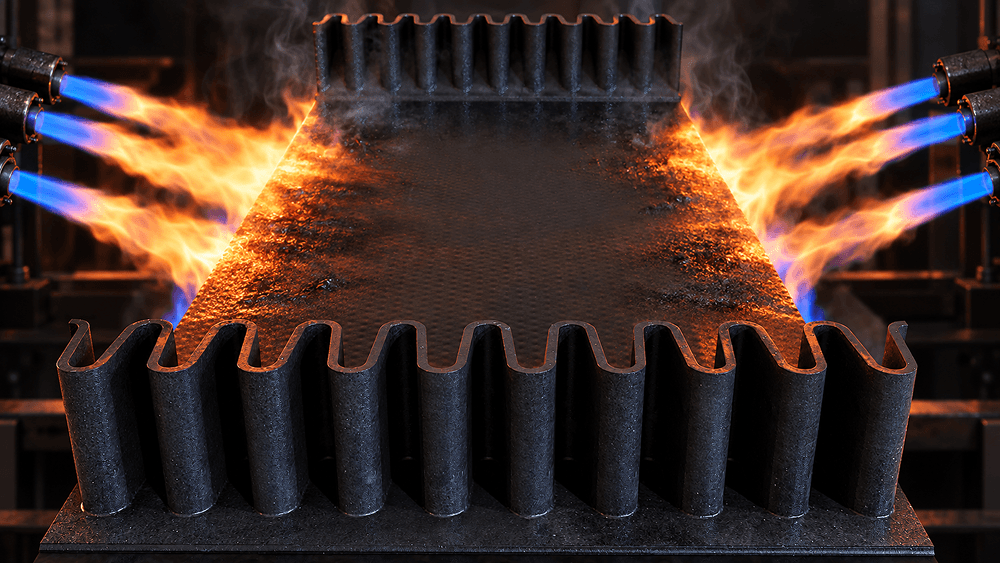
A self-extinguishing belt stops burning after the ignition source is removed. The area exposed to the flame may char, but the fire does not spread across the belt. NIOSH researchers describe a belt that meets MSHA's laboratory and large-scale test criteria as unable to sustain a fire, allowing the flame to self-extinguish.
Performance depends on the belt construction. Flame-retardant ingredients in the rubber or PVC compound slow combustion, thicker covers help protect the carcass, and carcass fabric can add fuel. Changing one layer can change the fire performance, which is why two belts made from the same base rubber can have very different characteristics.
These terms overlap and are often used loosely. The table below defines the terms so you can use the right ones on your spec sheet.
On a spec sheet, treat "FR," "fire-resistant," and "self-extinguishing" as claims until you see the test or standard behind them.
Common conveyor belt types are available in self-extinguishing versions. The rating depends on the compound and the tested construction.
Base material doesn’t define flame performance. In a Bureau of Mines comparison, 11 of 13 rubber belts burned completely in a laboratory tunnel test, while PVC belts split evenly, with four passing and four failing. The data dates to 1990 and compounds have improved, but the principle still applies: judge the belt by the test it passed, not the base material.
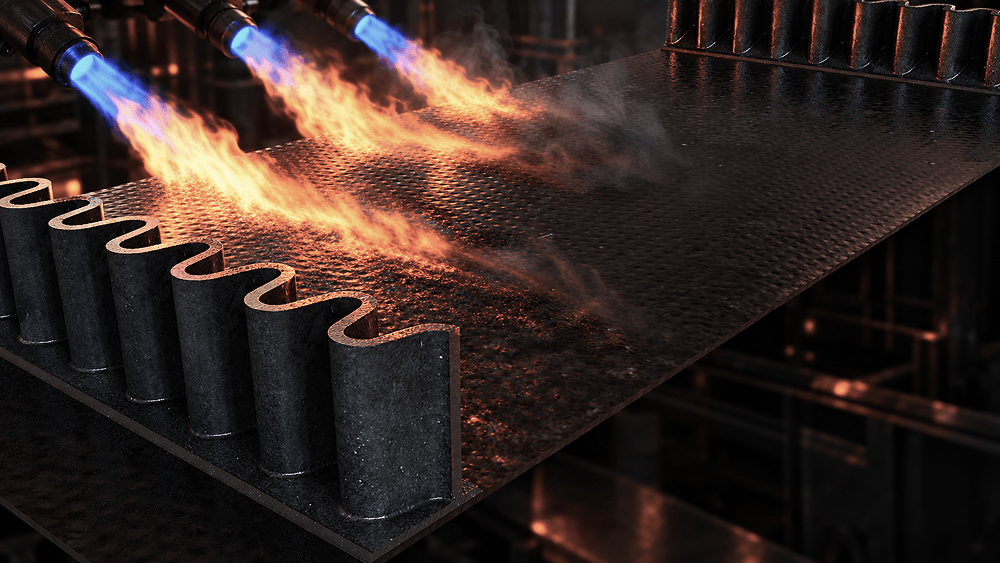
The Belt Evaluation Laboratory Test, or BELT, is the US benchmark for self-extinguishing conveyor-belt performance. It is written into the Part 14 approval rule.
The test works as follows:
Three samples are cut to 60 inches long by 9 inches wide and conditioned at 70°F (±10°F) for at least 24 hours.
Each sample is mounted in a ventilated tunnel with airflow maintained at 200 feet per minute.
A methane burner flowing 1.2 cubic feet per minute is applied to the front edge for 5 minutes, then shut off.
The belt continues burning until the flames extinguish on their own.
The belt passes only if every sample retains an undamaged section across its full width.
Airflow is controlled because moving air affects flame spread. In NIOSH's full-scale tests, flame spread on an older-rated SBR belt was fastest at 400 feet per minute, the worst of the four airflows tested.
Before Part 14, MSHA accepted belts under the 2G test in 30 CFR 18.65, which had been in use since 1955. The 2G test used a much smaller exposure.
Passing the 2G test did not reliably predict performance in larger fires. In Bureau of Mines gallery tests, 11 of 16 belts that passed 2G still spread flame beyond the ignition zone.
In later NIOSH full-scale fire tests, researchers ignited 36-foot lengths of 72-inch-wide belt in a ventilated tunnel designed to simulate mine conditions. They measured flame travel and peak heat release in megawatts (MW):
Imported belts often cite ISO or EN ratings instead of MSHA. ISO 340 is the laboratory flame test for textile and steel-cord conveyor belts.
European classes under EN 12882 add another distinction: class 2A, often called K grade, is tested with covers on, while class 2B, or S grade, passes with and without covers. That difference matters as covers wear and expose the carcass. Our page on ISO conveyor belt standards covers these methods in more detail.
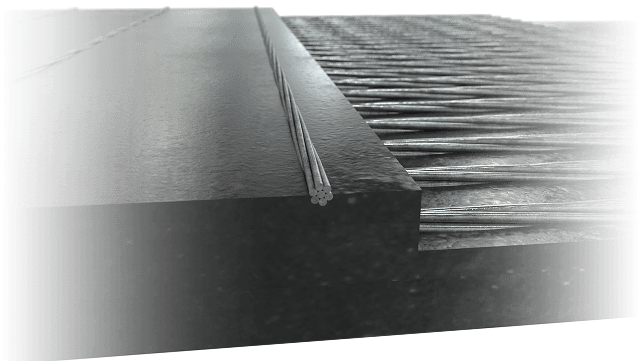


Federal rules require every conveyor belt used in an underground coal mine to be approved under Part 14. The requirement went into effect in 2009 and has applied to every belt in use since December 31, 2018. A 2026 amendment removed the phase-in dates while retaining the requirement.
You can check approved belts on site. The rule requires the MSHA approval number to be printed at least 1/2 inch tall, at intervals of 60 feet or less, and repeated at least once every foot across the belt width. MSHA also publishes a list of approved belts, including steel-cord constructions.
The rating also affects the required sprinkler zone. MSHA's sprinkler policy covers 50 feet of fire-resistant belt next to the belt drive, compared with 150 feet when the belt is not fire-resistant.
These mines do not have a federal belt-approval rule. 30 CFR 57.4263 requires fire protection at the head, tail, drive, and take-up conveyor pulleys, along with a way to extinguish fires along the beltline.
A Part 14 belt can still provide a straightforward way to document flame performance when required by a safety plan or insurer.
OSHA does not have a general flame standard for conveyor belts. Its grain handling rule requires conductive belts inside bucket elevators, with surface resistance no higher than 300 megohms. That requirement addresses static electricity rather than flame resistance.
NFPA 61, the fire code for agricultural and food facilities, calls for fire- and oil-resistant belts in bucket elevators.
For recycling facilities, surface mines, and manufacturing plants, no federal rule sets conveyor-belt flame performance. Requirements usually come from an insurer, local fire marshal, or facility risk review. Our OSHA compliance overview covers applicable conveyor rules.
Outside underground coal mines, the belt decision depends on the material and operating environment. Self-extinguishing belts are worth specifying for:
Yes. The UK Health and Safety Executive notes that fire-resistant belting can burn when another fuel keeps the fire going. Coal fines, dust, grease, paper, and wood can all feed the fire, as can fibers worn from a misaligned belt rubbing against the structure.
An ignition source is also required. In HSE's review of 120 underground conveyor fires from 1986 to 1991, collapsed idlers caused 33%, other bearing defects 19%, belt friction 20%, mechanical friction 17%, and brakes 11%. The data is old, but these remain common conveyor failure points. Replacing worn conveyor idlers and bearings addresses several of the leading ignition sources.
Friction heat is separate from flame-spread performance. In the same NIOSH drum-friction study, all six belts tested exceeded the 617°F (325°C) temperature limit and failed, even though none produced a sustained flame.
Recycling introduces another ignition and fuel source. The EPA counted 245 lithium-ion battery fires at 64 US waste facilities from 2013 to 2020, with MRFs accounting for the largest share. A burning battery supplies its own heat, so it can continue burning on a self-extinguishing belt. The belt rating can limit how far the fire travels along MRF conveyors, but detection and suppression are still required to extinguish it.
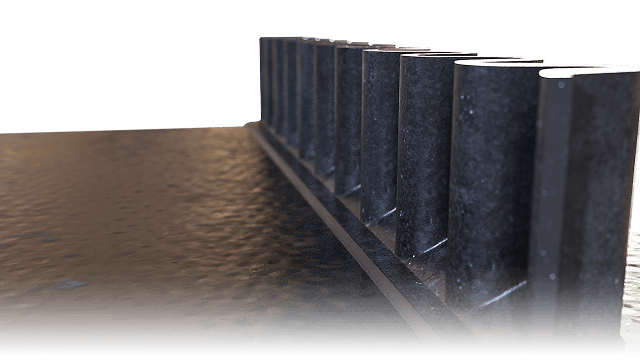
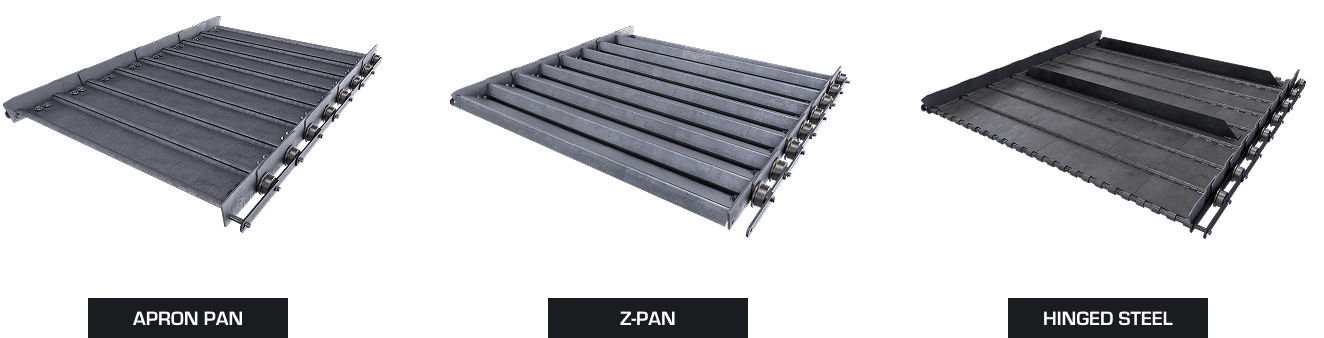
Apron pan, hinged steel, and Z-pan belts use steel pans mounted to roller chain, so the belt itself has no combustible belt body. On infeed conveyors beneath tipping floors, where hot loads and hidden batteries often arrive first, a steel belt removes the belt itself as a fuel source.
Material carried on steel conveyor belts can still burn, and debris packed beneath the pans can smolder, so clean-out and spill control remain important. Rubber combination belts are the exception in this family. They use rubber with steel reinforcement at the mounting points, so specify a flame-resistant compound where fire risk is a concern.
Six details help you select the correct belt and document its flame performance:
For the rest of the specification, our guide to choosing the correct conveyor belt covers load, speed, and cover selection.

Meeting a flame standard requires both the correct belt and documentation for the tested construction.
Fluent Conveyors builds custom conveyors in the USA for recycling, waste, mining, and heavy industry, and we supply replacement belts for our systems and other manufacturers' conveyors. We source self-extinguishing belting in every construction covered on this page, from multi-ply rubber to steel cord, and provide the accompanying test documentation, including MSHA approval numbers where applicable. Send us your belt specifications or the standard you need to meet, and we'll match the construction.
