










Copyright © 2026 Fluent Conveyors, LLC. All rights reserved.

The Fluent Conveyors logo is a registered trademark of Fluent Conveyors, LLC. Serial Number 97664258 Registered on Dec. 12, 2023


Copyright © 2026 Fluent Conveyors, LLC. All rights reserved.
The Fluent Conveyors logo is a registered trademark of Fluent Conveyors, LLC. Serial Number 97664258 Registered on Dec. 12, 2023

A chlorobutyl conveyor belt uses a rubber cover made from chlorobutyl (CIIR), a chlorinated butyl rubber that slows heat aging when hauling hot bulk material. Chlorobutyl compounds are listed from −40°F to 302°F (−40°C to 150°C), depending on how they are cured. Learn how the material works and how to read the temperature rating on a chlorobutyl belt.

Chlorobutyl (CIIR) is butyl rubber with a small amount of chlorine bonded into the polymer. Belt manufacturers use it in cover compounds because it resists heat aging, ozone, and weather better than the general-purpose rubbers used across standard conveyor belt types.
Chlorine content is low and varies by grade. ExxonMobil lists 1.25% chlorine by weight for its Chlorobutyl 1066 grade and 1.50% for its Chlorobutyl 5066 grade. Reliance Sibur specifies 1.15–1.35% for its IMPRAMER C1139 grade. So two belts sold as "chlorobutyl" can start with different polymer grades and finish with different properties.
Chlorine also makes chlorobutyl a practical belt material. Chlorobutyl can cure together with other rubbers, which plain butyl does poorly, allowing the cover to bond to the rubber layers beneath it.
Chlorobutyl and neoprene are different materials. Both contain chlorine, which is the usual source of confusion.
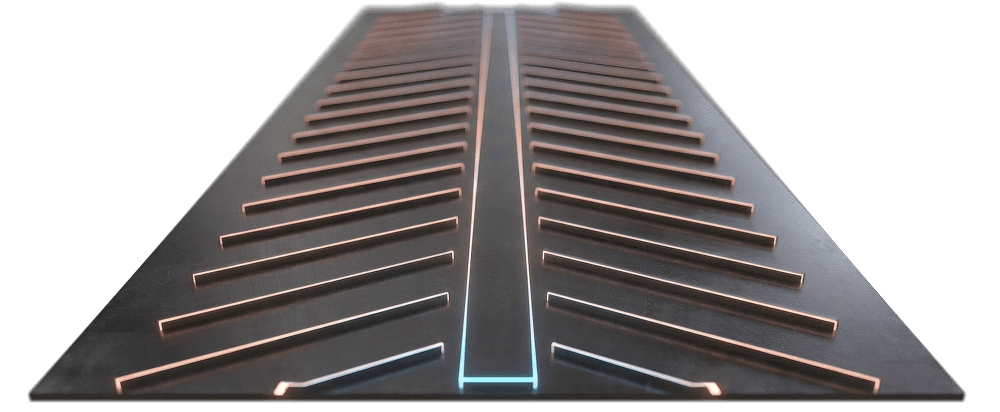
A chlorobutyl conveyor belt is a layered construction, with the chlorobutyl concentrated in the covers:
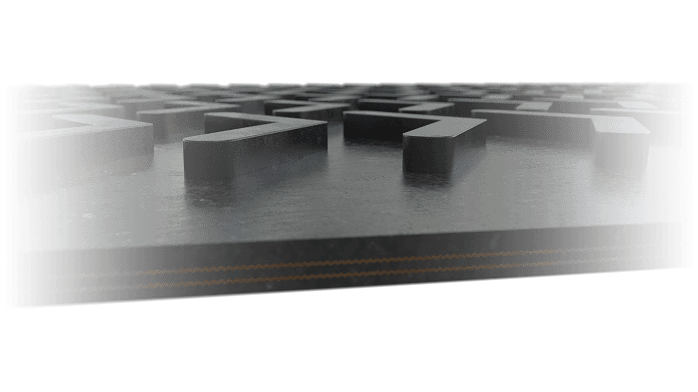
The carcass determines the belt's strength rating, while the cover protects it. Hot-service belts commonly use polyester-nylon (EP) plies. See our guide to fabric conveyor belt types for a comparison of common carcass constructions.
The cover is a compound, not pure chlorobutyl polymer. For example, a published chlorobutyl conveyor-cover recipe combines 100 parts of chlorobutyl rubber with 50 parts of reinforcing carbon black, plus curing agents. Fillers, curatives, and blend ratios vary by manufacturer, and many hot-service covers also combine butyl-family rubber with EPDM. For a broader look at belt materials, see what conveyor belts are made of.
Bonding can be the difficult part. One US belt maker says chlorobutyl needs special fabric treatments to bond well. Under severe heat, the bond line or fabric can fail before the cover, so those components need their own heat-rating check.
Heat gradually ages rubber. The cover becomes harder, weaker, and less elastic, and once it can no longer flex properly around conveyor pulleys, cracks begin to form. Chlorobutyl slows this process.
A published chlorobutyl conveyor-cover compound shows the effect. The table compares laboratory samples before and after 16 hours in a 381°F (194°C) oven.
The sample lost about three-quarters of its tensile strength and more than two-thirds of its elongation. A belt exposed to excessive heat for too long can follow the same pattern in service, developing a hard, glazed surface that eventually cracks around the pulleys.
These figures are laboratory results for one compound published in 1999. The 381°F oven exposure is a short, extreme aging test, not a working-temperature rating. Likewise, the 307°F (153°C) cure temperature listed for the same compound is not an operating limit. Elongation at break describes the rubber sample itself and is unrelated to belt stretch in service.
The answer comes from the belt's data sheet. Four temperatures appear in heat-resistant belt specs.
The cover surface usually remains cooler than the material it carries. A European belt maker's heat-resistant product sheet notes a major gap between product temperature and cover surface temperature, and that difference changes with belt speed, conveyor length, and ambient air.
Particle size also affects performance. Fine hot material packs tightly against the cover and transfers more heat than coarse lumps at the same temperature, so give your supplier the material temperature and particle size.
The international test standard for these covers is ISO 4195:2026, published in August 2026. It grades covers according to changes in hardness, tensile strength, and elongation after heat exposure and applies only to belts with a top cover at least 4 mm thick, or about 5/32 inch. The standard compares compounds; it does not establish a guaranteed working temperature.
Our page on heat-resistant conveyor belts covers the cover classes in more detail.
Belt makers publish different continuous and peak limits for chlorobutyl compounds, so check the test behind each number when comparing quotes. Our ISO conveyor belt standards page explains the standards used to evaluate rubber belt properties.
Chlorobutyl covers make the most sense on steady streams of hot, dry bulk material where standard SBR covers age too quickly. Common applications include:
No ranking universally places chlorobutyl above or below EPDM for heat resistance. One US belt maker tops its hot-material line with an all-chlorobutyl compound, while a European belt maker uses EPDM for its highest heat range and a butyl/EPDM blend where chemical resistance is also required.
The specific formulation determines performance, so compare finished compound data sheets rather than polymer names.


Parker's O-ring handbook rates butyl rubber, the parent of chlorobutyl, as unsuitable for mineral oil, fuels, and chlorinated hydrocarbons. Hot material that also contains oil, such as hot asphalt or oily scrap, requires a compound rated for temperature and oil exposure.
Our guide to oil-resistant conveyor belts covers those options.
A heat-resistant cover slows aging caused by hot material. Flame resistance is a separate property with its own test methods, so specify it separately if your site requires it.
We supply flame-resistant belting and pass through test documentation such as MSHA approval numbers.
Hot castings, slag, and other loads above the temperature rating of any rubber cover belong on steel. Apron pan belts carry hot, heavy material, eliminating the rubber cover.
We build roller chain conveyors in the USA, including hinged steel belt conveyors for hot, heavy, and sharp material in scrap, recycling, and foundry applications.
For a side-by-side comparison of rubber, steel, and other belt types by temperature, see our guide to the best conveyor belts for high temperatures.
Once cracks reach the carcass, plan the replacement before the belt fails on the line. Our conveyor belt replacement guide outlines the general process.
Include these details in your RFQ to help us specify the right hot-service belt:

Our belt quotes identify the supplier's compound so you can compare it with the data sheet before buying. For the full selection process, see how to choose the correct conveyor belt.
We source chlorobutyl and other heat-resistant covers across most rubber belt families, including trough idler belts for hot bulk lines.

Fluent builds conveyors in the USA and supplies replacement belts in chlorobutyl and other heat-resistant compounds. Send us the material, its temperature, and your belt size, and we'll match the cover, carcass, and splice to the application.
You can also browse our full line of replacement conveyor belts.
