









Copyright © 2026 Fluent Conveyors, LLC. All rights reserved.

The Fluent Conveyors logo is a registered trademark of Fluent Conveyors, LLC. Serial Number 97664258 Registered on Dec. 12, 2023


Copyright © 2026 Fluent Conveyors, LLC. All rights reserved.
The Fluent Conveyors logo is a registered trademark of Fluent Conveyors, LLC. Serial Number 97664258 Registered on Dec. 12, 2023
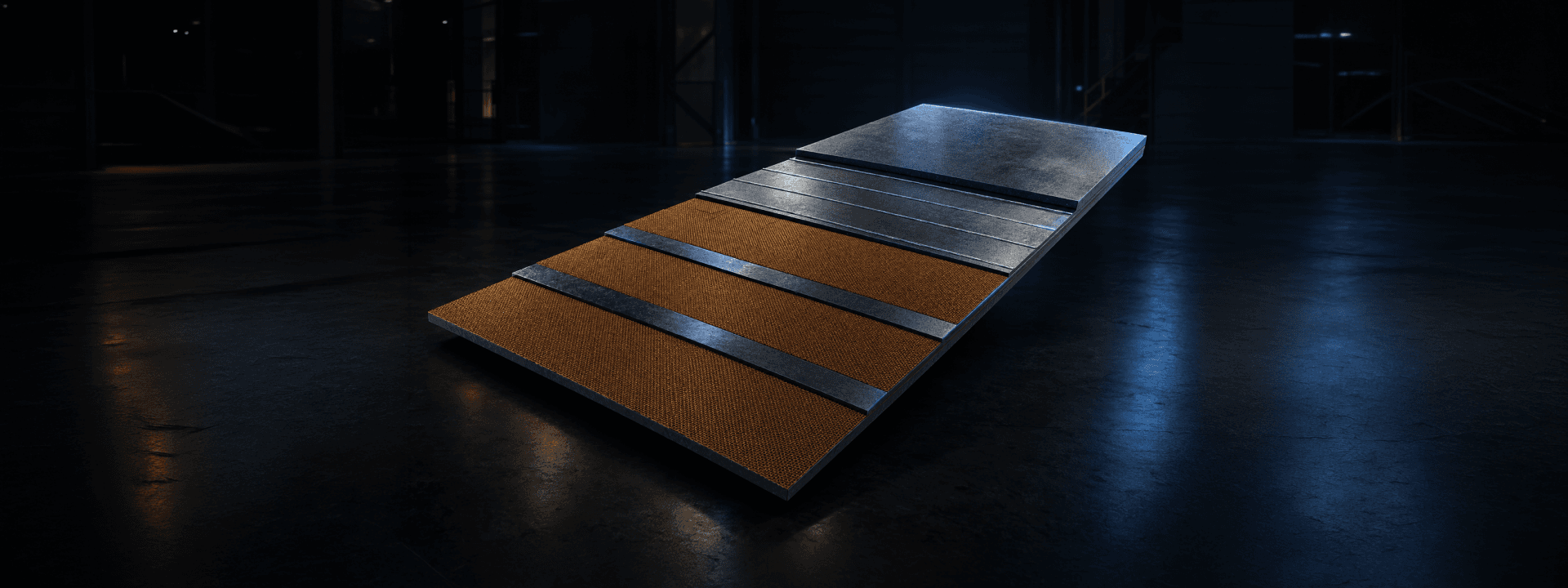
Fabric conveyor belts are classified by carcass material, such as EP, NN, aramid, or cotton, and by construction, such as plied, solid woven, straight warp, or cross-rigid. EP plied belts handle most bulk material applications. This guide explains use cases for each type, shortcomings, and how to read belt ratings.

Every fabric belt for conveyors carries tension through a woven textile carcass bonded between a top cover and bottom cover. Warp yarns run lengthwise and carry the belt tension. Weft yarns run across the belt and provide lateral strength, tear resistance, and grip for mechanical fasteners.
In everyday jargon, a “rubber conveyor belt” usually describes a rubber-covered fabric belt, with steel cord belts as an exception. Most PVC belts also contain a synthetic fabric carcass. Terms such as EP, PVC, 3-ply, and chevron describe different parts of the belt. Four choices define the complete construction:
Carcass fabric: The fibers used in the warp and weft, such as EP or NN.
Carcass construction: How the fabric is assembled, such as stacked plies or a single woven carcass.
Covers: The compound and thickness on each face, including compounds for heat, oil, flame, or static.
Surface profile: The carrying surface, such as smooth top, cleated, or corrugated sidewall.
The carcass determines strength, stretch, flexibility, and minimum pulley size; this guide focuses on that part of the belt. Covers and profiles are matched to the material and incline once the carcass fits the conveyor.

Heavy-duty textile belts carry bulk material on flat or troughed idlers, and ISO 14890 sets their requirements.
ISO 21183-1 describes light fabric belts as those whose strength comes mainly from synthetic fabric plies, with coatings ranging from none to thick PVC, urethane, or rubber. They run on package handling conveyors and slider beds carrying cartons and other unit loads, where a thin, flexible carcass is preferred to one with resistance to impact, abrasion, chemicals, etc.
The rest of this guide focuses on heavy-duty fabric belts for bulk handling. For light belting, see our breakdown of PVC conveyor belt types.

The letter code on a fabric belt identifies the warp fiber first and the weft fiber second. E is polyester, P is polyamide (nylon), and D is aramid. An EP belt therefore uses polyester lengthwise and nylon across the width. Nylon-nylon belts may appear as NN or PP, while some specifications use PN for EP or write out polyester/nylon.
Polyester stretches less than nylon under load, so an EP belt shows less belt stretch, uses less take-up travel, and requires fewer tension adjustments. That stability makes EP the common choice for bulk handling. The nylon weft allows the belt to bend across its width into a trough while adding impact resistance and fastener grip.
NN uses nylon in the warp as well, so the carcass flexes more and absorbs more shock at hard loading points. This suits shorter conveyors where loaders or crushers drop heavy material onto the belt. The tradeoff is greater in-service stretch and more required travel in the take-up.
When changing carcass fabrics on a conveyor, recheck the take-up and load zone. An NN belt replacing an EP belt can use up the available take-up travel, while an EP belt replacing an NN belt may need better impact protection where material lands.
Aramid is the high-strength outlier. For the same strength, aramid fiber weighs about one-fifth as much as steel and one-third as much as polyester, while belt stretch approaches steel cord levels, according to research published in Bulk Solids Handling. Learn more about aramid conveyor belts.
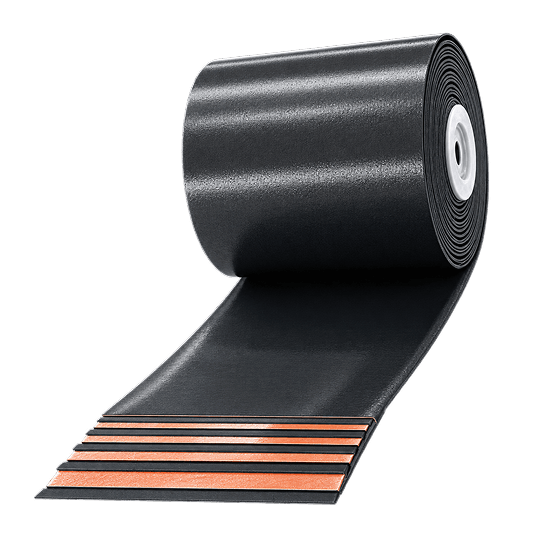
The same fabric can be built into several carcass constructions. That construction affects how the belt handles impact, rips, fasteners, troughing, and small pulleys.
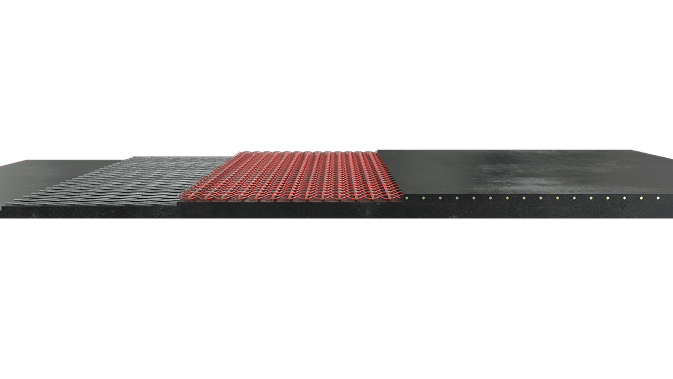
Multi-ply belts stack fabric plies with thin rubber skims between them. The belt rating is the combined rating of those plies. Three plies rated at 110 pounds per inch of width (PIW) each make a 330 PIW belt, for example. Two belts can carry the same overall rating while using different ply counts and individual ply strengths, so they will not behave the same.
Each additional ply also stiffens the belt. Minimum bend radius depends on ply count, carcass material, rated tension, and cover thickness. A thicker replacement belt installed on a conveyor designed for a thinner belt may therefore require larger pulleys.
Crosswise stiffness affects troughing capabilities. A belt that is too stiff may not settle onto the center roll when running empty, which can cause tracking problems. Manufacturers measure this with the ISO 703 troughability test and publish maximum ply counts for specific belt widths and trough angles.
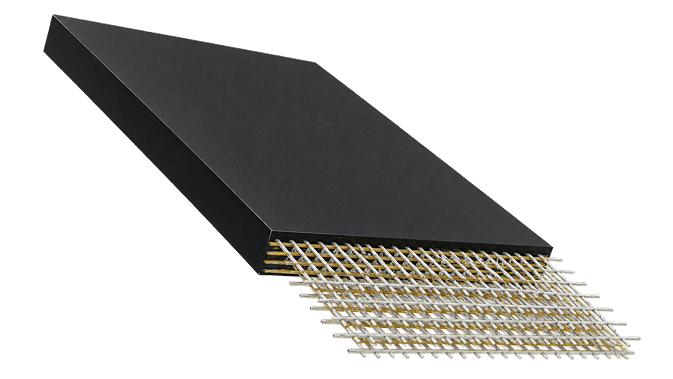
A solid woven carcass is one integrally woven fabric structure, with binder yarns locking its layers together. It is usually dipped in PVC and finished with PVC covers for a PVC belt or rubber covers for a PVG belt. With no separate plies to delaminate, the construction resists tearing and impact.
Solid woven belts are the standard construction for many underground coal applications, where fire and static rules dictate belt selection. Above ground, rubber-covered plied belts are more common, while solid woven construction remains a specialty option for fire-rated service.
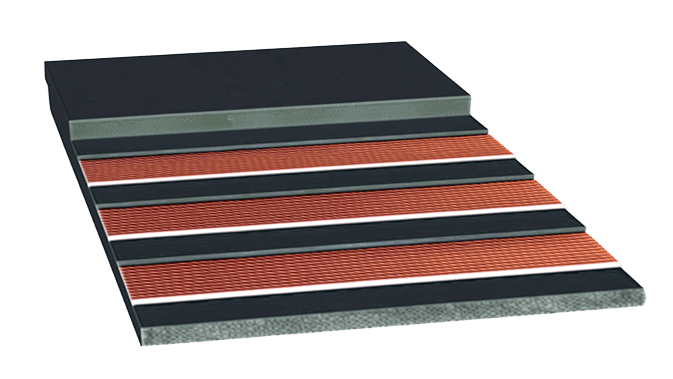
Straight warp belts have flat lengthwise tension yarns, with crosswise fill yarns above and below them and binder yarns holding the structure together. This produces a low-stretch carcass with strong load support and high resistance to rips and impact. Straight warp belts are often built as single- or double-unit constructions instead of using several conventional plies.
They suit primary crusher discharge, hard rock, and heavy aggregate conveyors.
Fastener series and splice methods must match the specific carcass, so confirm both before switching constructions. For added rip protection on a conventional plied belt, ripstop belts add fabric or steel breakers beneath the top cover.

Cross-rigid belts use a stiff weft, such as polyester monofilament, fiberglass, or steel, to keep the belt flat across its width while still allowing it to bend around pulleys. That self-supporting base is what corrugated sidewall belts use on steep inclines.
The same lateral stiffness prevents the belt from troughing, so cross-rigid belts belong on flat carrying runs rather than troughing idlers.
Metric designations follow the ISO and DIN pattern. EP 400/3 4+2 means an EP carcass with a full-belt breaking strength of 400 newtons per millimeter (N/mm), three plies, a 4 mm top cover, and a 2 mm bottom cover. Belt width often appears first, while a cover grade letter may appear last, as in 1000 EP 630/4 6+2 Y.
U.S. designations rate the belt by working tension instead. A 330/3 belt with 3/16 × 1/16-inch covers is rated to run at 330 PIW, with three plies, a 3/16-inch top cover, and a 1/16-inch bottom cover. Bare means there is no cover on that face, as in a 2-ply, 150 PIW, 1/32 × bare belt.
PIW describes the tension a belt is designed to operate under, while metric ratings describe the force required to break it, as Martin Engineering’s Foundations reference explains.
A simple unit conversion does not bridge the two rating systems. One N/mm equals about 5.71 lb per inch of width, so EP 400 breaks at about 2,284 PIW, but its working rating depends on the service factor applied by the belt manufacturer. Published service factors for polyester-warp belts range from about 7:1 to 12:1, while nylon-warp belts range from about 10:1 to 18:1. At 7:1, that EP 400 belt works out near 326 PIW; at 12:1, it is near 190 PIW.
When matching a belt across rating systems, use the manufacturer’s stated working tension rather than a converted value. That working rating also determines your splice options because mechanical splice kits carry PIW ratings along with belt-thickness and pulley-diameter limits.
The conveyor imposes limits before the material does. Belt support, underside contact, and pulley diameter all affect which carcass will work. Here is how those constraints map to fabric belt types on the conveyors we build.
On long, high-tension conveyors, fabric stretch consumes take-up travel, while reaching the required strength can require a thick, many-ply carcass and larger pulleys. Steel cord belts stretch far less at high tensions, which is why they are used for long hauls and heavy loads.
Some materials are too demanding for fabric carcasses. Sharp scrap can cut through covers, heavy drops can punch through to the plies, and high temperatures degrade rubber. For these applications, roller chain conveyors use steel roller chain belts, including apron pan, hinged steel, and Z-pan belts, which tolerate impact and heat that a rubber-covered fabric belt cannot.
A rubber combination belt bridges fabric and metal belt construction on roller chain conveyors. It bolts fabric-ply rubber belting, typically 2-ply 220 or 3-ply 330, to steel channels on roller chains. The chains carry the pull while the belting creates a sealed, impact-absorbing surface. This works well for fines, wet fiber, and metering conveyors.
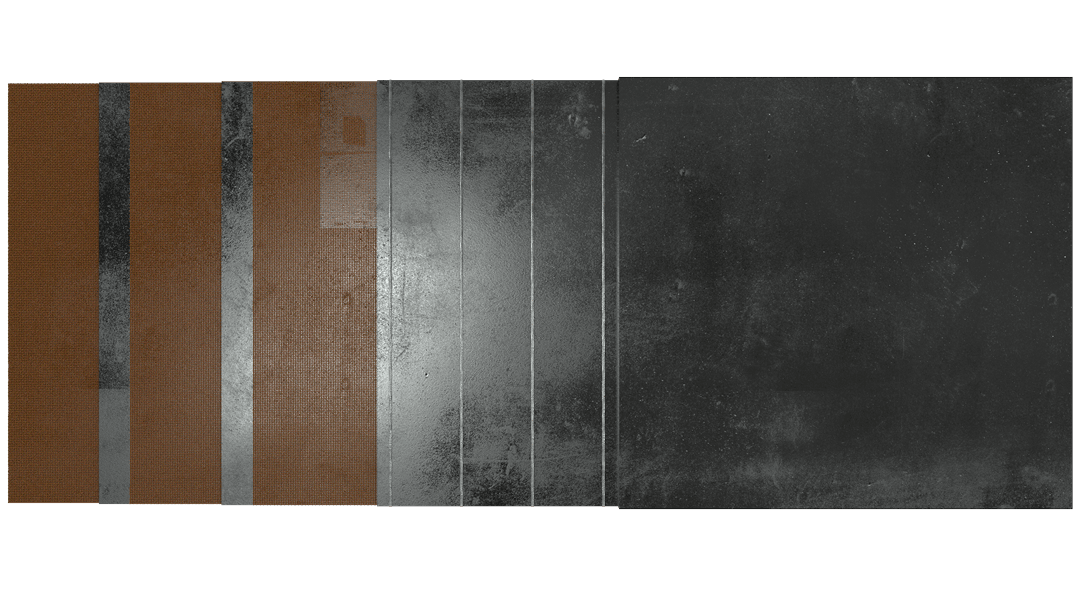
For a full breakdown, see our guide to choosing the correct conveyor belt. In short, match the existing carcass, then confirm that the conveyor can accommodate the belt you plan to order.
Understand these details to get the right fabric belt replacement:

Fluent designs and builds custom conveyors that withstand continuous duty in the world's most challenging environments. Our engineers specify replacement belts based on real-world performance experience.
Send us the details from the checklist above, or photos of the belt markings and a clean cut edge, and we can match the carcass, rating, covers, and splice.
We source common fabric belt configurations for Fluent conveyors and conveyors from other manufacturers.