









Copyright © 2026 Fluent Conveyors, LLC. All rights reserved.

The Fluent Conveyors logo is a registered trademark of Fluent Conveyors, LLC. Serial Number 97664258 Registered on Dec. 12, 2023


Copyright © 2026 Fluent Conveyors, LLC. All rights reserved.
The Fluent Conveyors logo is a registered trademark of Fluent Conveyors, LLC. Serial Number 97664258 Registered on Dec. 12, 2023
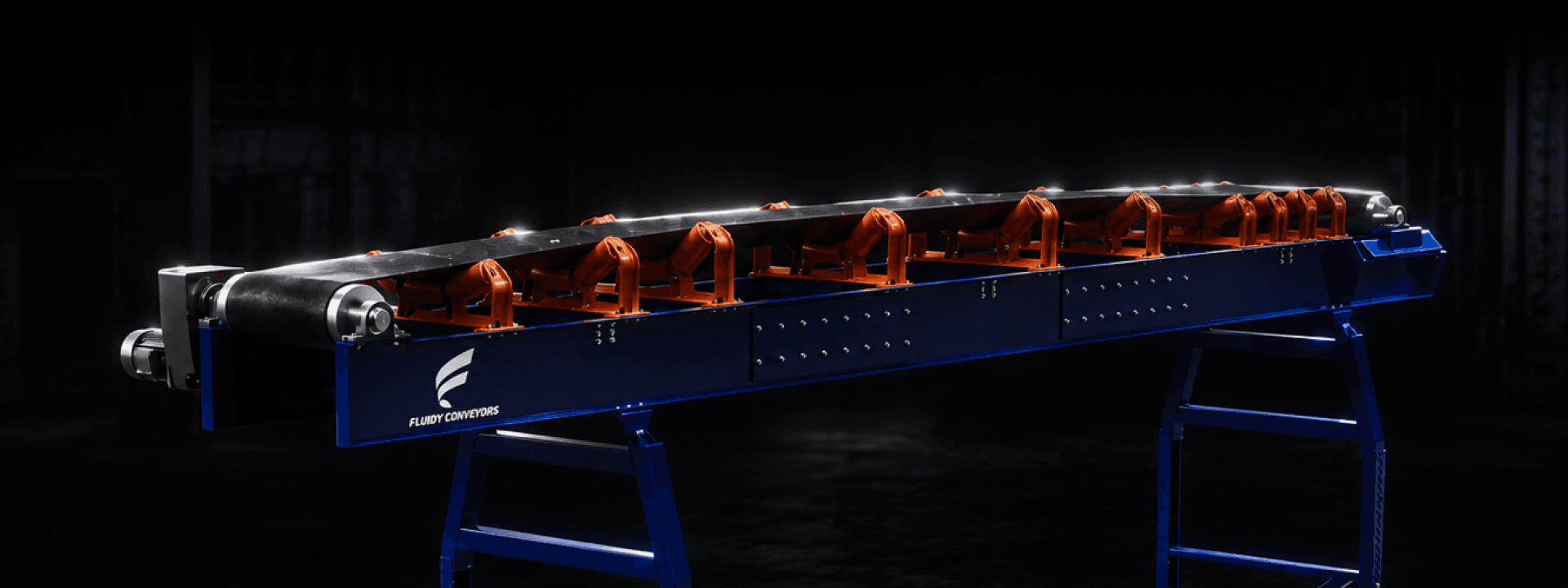
A CEMA rating is an idler classification under CEMA Standard 502, set by load rating and roll diameter. Class fixes clearance and mounting dimensions, so an assembly from one supplier connects to a frame built for another. Fluent specifies idlers by class on the belt machines we build and match class on replacement orders.

CEMA 502 covers troughing idlers, return rollers, and picking idlers on bulk material belt conveyors. It publishes dimensional standards and selection guidance for 20-, 35-, and 45-degree troughing sets and for 10- and 15-degree vee returns. Within the CEMA conveyor standards library, capacity, component rating, and material behavior are discussed in different documents.
Each manufacturer declares which class its designs fall into, and CEMA doesn’t audit those declarations. Adjacent classes overlap as a result, since construction varies from one supplier to the next.
Class governs carrying and return assemblies on our trough idler and flat idler conveyors. It also covers the picking idlers under a sort line.
Roller chain conveyors don’t use idlers. They run chain on ASCE railroad rail, so if a specification cites an idler class against one, it has been misapplied.
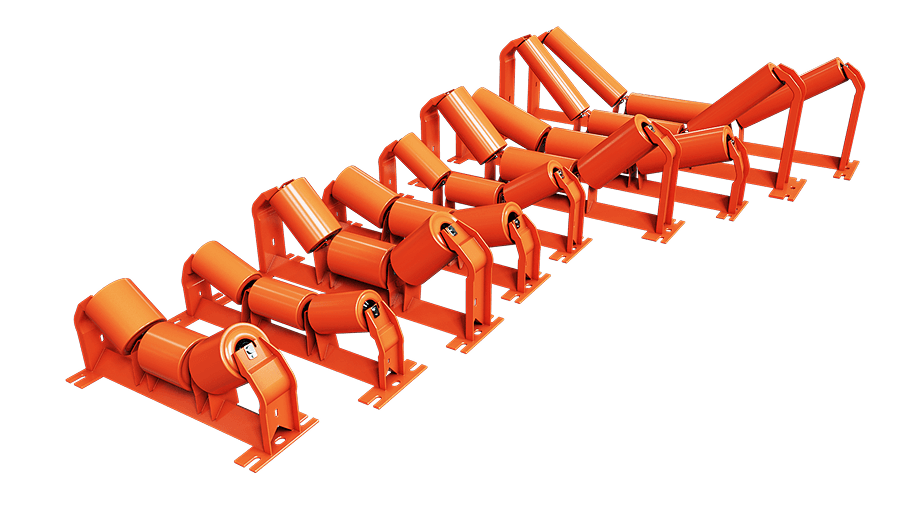
Current classes run B through F. Each has a number naming roll diameter, so a full designation reads B4 or E7, for example. That number is what a replacement order requires.
Classes A4 and A5 were withdrawn on October 1, 1996. A catalog or drawing still listing Class A predates that change, as does one using series numbers II through VI, which map onto the current letters.
You can find load ratings in the CEMA’s licensed tables. We work from them during selection and publish the class rather than the figures. Our replacement idlers span the range above.
The rating basis is bearing L10 life at 500 rpm, meaning the hours 90 percent of an identical bearing population reaches before fatigue appears. That makes it a comparison basis between classes rather than a service life figure for your conveyor.
Seals, contamination, temperature, and lubrication practice frequently govern real idler life more than bearing capacity does. A correctly classed roll with a bad seal will often fail before a mis-classed idler, which is why idler seals get specified separately based on application.
Class does not specify belt speed rating either. A 500 rpm reference converts to a different speed ceiling at each roll diameter, so a 5-inch idler in a given class turns slower than a 4-inch idler and lasts longer at the same belt speed. Our guide to calculating conveyor belt speed covers the arithmetic.
Spacing, trough angle, and capacity come from calculation rather than classification. Belt Conveyors for Bulk Materials produces the tension, power, and load figures that class selection follows, working from the bulk material classification code for density, lump size, flowability, and abrasiveness.
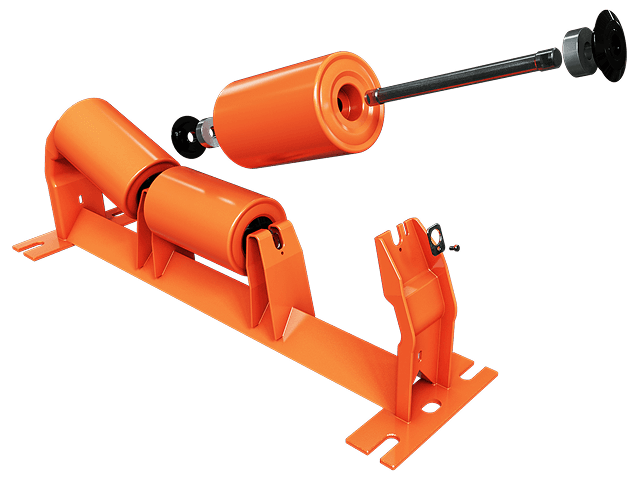
Idlers and pulleys are classified under different documents. Drum pulleys are specified against ANSI/CEMA B105.1 and wing pulleys against ANSI/CEMA 501.1, both of which publish load ratings and dimensions without lettered classes.
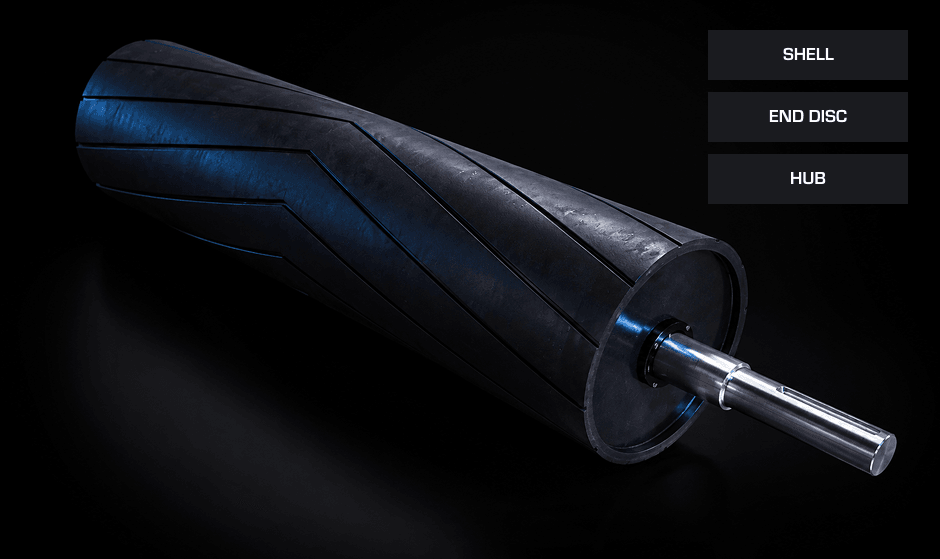
Mine duty and super duty are construction grades set by the pulley manufacturer. A quote for CEMA duty conveyor pulleys and a quote for mine duty answers a different question, and the distinction can be seen in shell thickness, end disc, and hub arrangement. Our standards and compliance page outlines the divisions of topics relevant to Fluent processes.
Class appears on the as-built drawing and in the parts list inside your owner's manual. If you don’t have the original paperwork, use these six measurements, along with your conveyor serial number, to get the order placed:
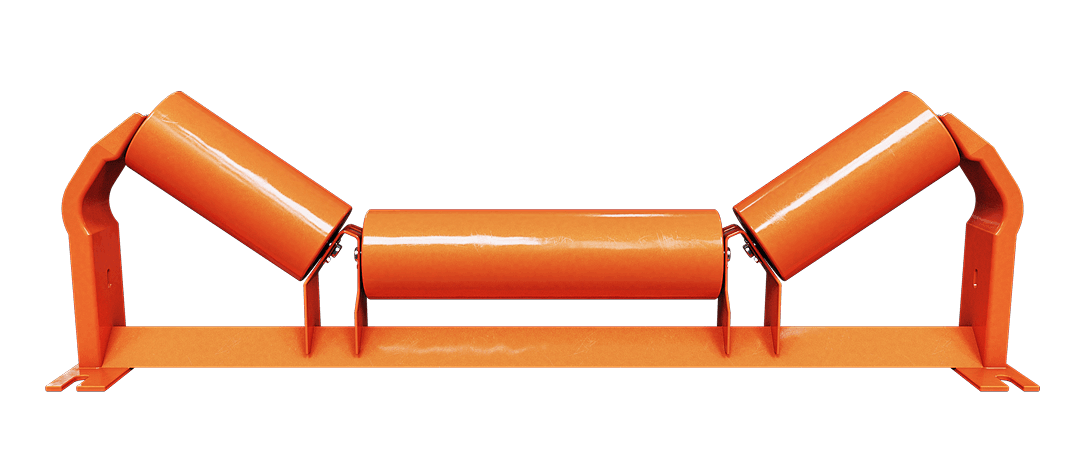

Idler class selection is part of the quote process. Send the measurements above with the OEM part number (if one is still legible), and our engineers will confirm the class and issue approval drawings.