








Copyright © 2026 Fluent Conveyors, LLC. All rights reserved.
The Fluent Conveyors logo is a registered trademark of Fluent Conveyors, LLC. Serial Number 97664258 Registered on Dec. 12, 2023


Copyright © 2026 Fluent Conveyors, LLC. All rights reserved.
The Fluent Conveyors logo is a registered trademark of Fluent Conveyors, LLC. Serial Number 97664258 Registered on Dec. 12, 2023
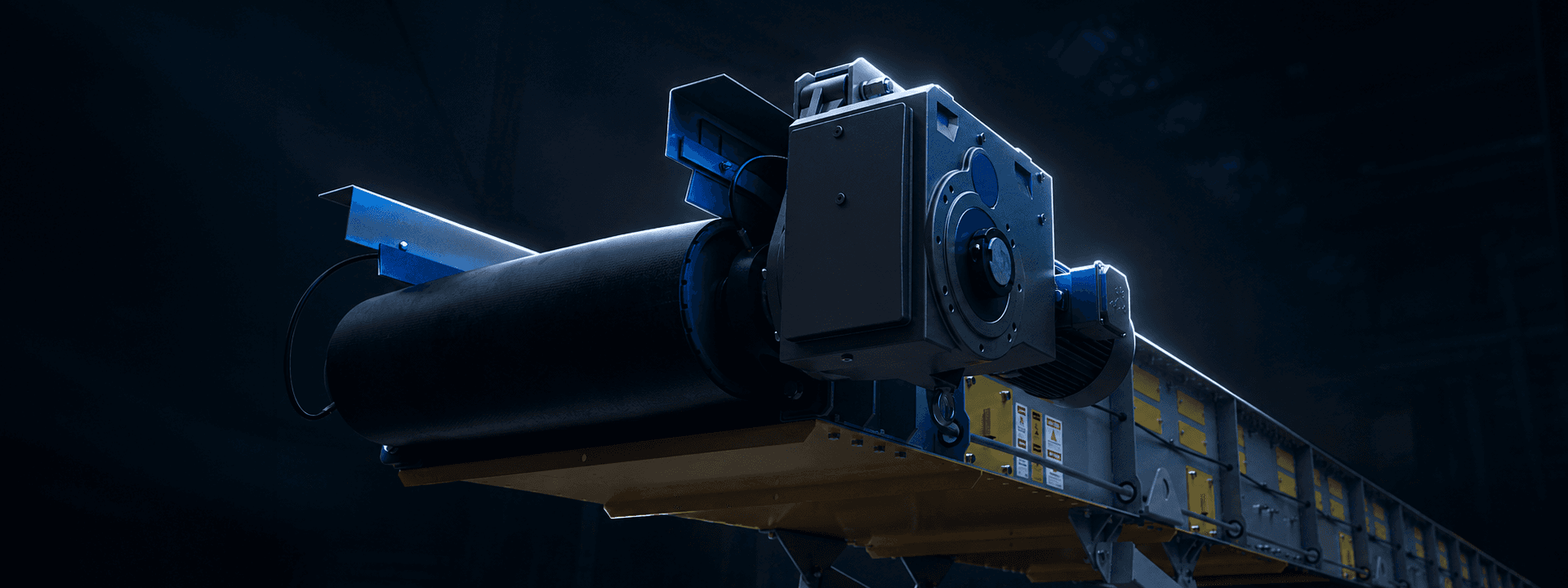
When you see "CEMA rated pulley" in a specification, it’s pointing to ANSI/CEMA B105.1, which publishes load ratings, dimensions, and selection criteria for welded steel pulleys with compression-type hubs. It covers one construction, not every pulley on a conveyor. We specify to CEMA B105.1 when specifying relevant pulleys.

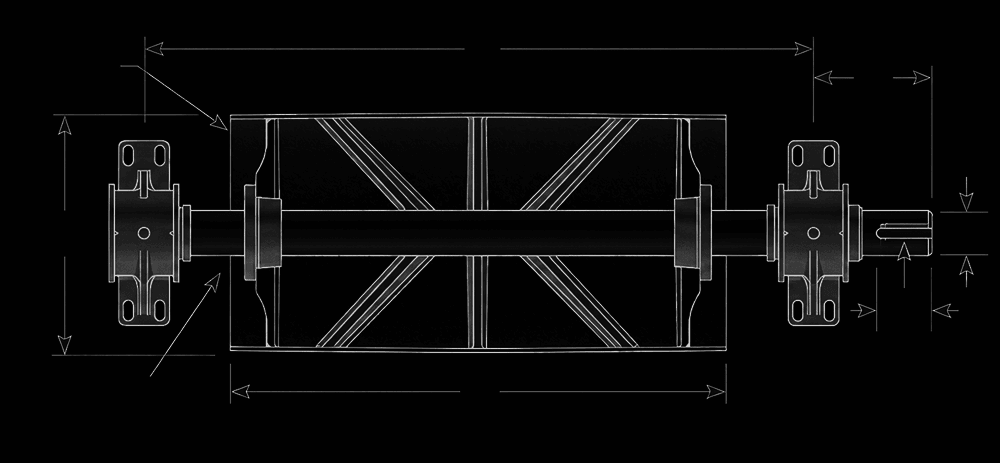
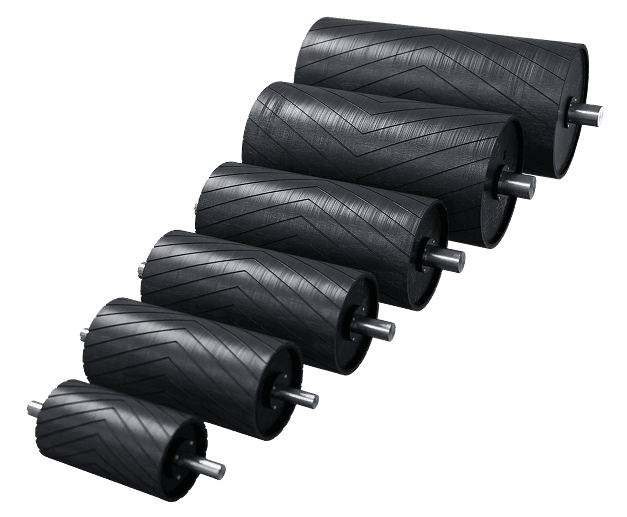
B105.1 applies to straight face and crowned face welded steel conveyor pulleys with a continuous rim and two end discs, each carrying a compression-type hub that clamps onto the shaft. Diameter, face width, crown, and rim construction fit that description, and our drum pulleys are specified against it.
The clamp fit is the defining condition. A pulley qualifies because a bushing or locking device grips the shaft. Taper-lock, XT, QD, and keyless locking devices all produce that fit, which is why pulley bushings are also specified against B105.1.
CEMA publishes B105.1 as one of the 13 American National Standards it maintains. This fact doesn’t produce a certificate, because no conformity mark exists for a conveyor pulley.
Scope exclusions decide whether the designation belongs in a specification at all. Five categories fall outside it.
A bid line reading "all pulleys to CEMA B105.1" over-claims on most bulk handling machines, because a herringbone wing tail pulley and a keyed take-up drum sit in the same conveyor as a compression hub head pulley. Name the construction per position to avoid ambiguity.
That last row reaches further than buyers expect. ANSI/CEMA 402 removed its own shaft size determination charts and defers to B105.1.
Bore and step dimensions then determine the replacement shafts that fit, and deflection limits decide bearing centers.
Duty language on a pulley quote comes from two different places. Mixed language causes most of the confusion we encounter at RFQ.
Naming a duty tier and naming B105.1 in the same clause is not redundant: one fixes the ratings, the other names the construction sitting above them. Idler class behaves the same way, which is why CEMA rating tables correspond to part numbers.
We manufacture custom conveyors. Pulleys come from partner manufacturers who build to B105.1. On pulley-driven machines, selection follows belt width, speed, tension, arc of contact, material load, and operating environment.
B105.1 ratings attach to the nominal bare diameter, and lagging thickness adds to the finished outside diameter on top of it.
The standard applies to our slider bed, flat idler, and trough idler lines plus the radial stackers built on them. Our roller chain conveyors are sprocket-driven and carry no drum pulleys.
The standard gives ratings and dimensions. It does not describe what is already running in your conveyor. Include these eight items in your quote:
Position and function: drive, tail, bend, snub, or take-up
Bare drum diameter and face width
Overall shaft length, bearing center distance, and step dimensions
Shaft diameters and keyway detail
Hub or bushing type, with the size stamped on the existing bushing
Belt width, construction, and speed
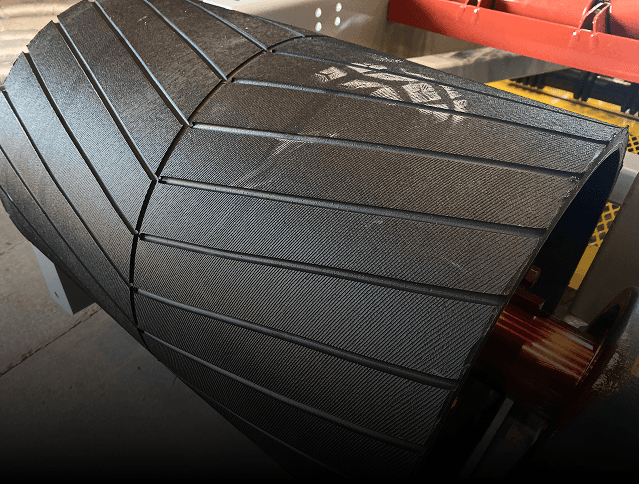
Lagging pattern, compound, and thickness
Material handled, plus photographs and any drawing or serial number
Send what is available and our engineers work from there. You can find diameter ranges, hub classes, and the full option set on our replacement conveyor pulleys page, and the pulley pricing page covers common variables.
The current edition is ANSI/CEMA B105.1-2021, a 54-page revision of the 2015 edition, which followed printings in 2009 and 2003. Cite the current edition, or name one and add "or current edition at time of order," a phrasing our RFQ writing guide treats in detail.
edition at time of order," a phrasing our RFQ writing guide treats in detail.
The designation shows up as B105-1 and B105 1 in specifications and search results. B105.1 is the form CEMA publishes, and it belongs in the clause even when internal documents spell it differently.

Pulley construction gets priced into our quotes. Send the details listed above with any existing drawing, and our engineers will confirm which construction and duty class the application needs.
