









Copyright © 2026 Fluent Conveyors, LLC. All rights reserved.

The Fluent Conveyors logo is a registered trademark of Fluent Conveyors, LLC. Serial Number 97664258 Registered on Dec. 12, 2023


Copyright © 2026 Fluent Conveyors, LLC. All rights reserved.
The Fluent Conveyors logo is a registered trademark of Fluent Conveyors, LLC. Serial Number 97664258 Registered on Dec. 12, 2023
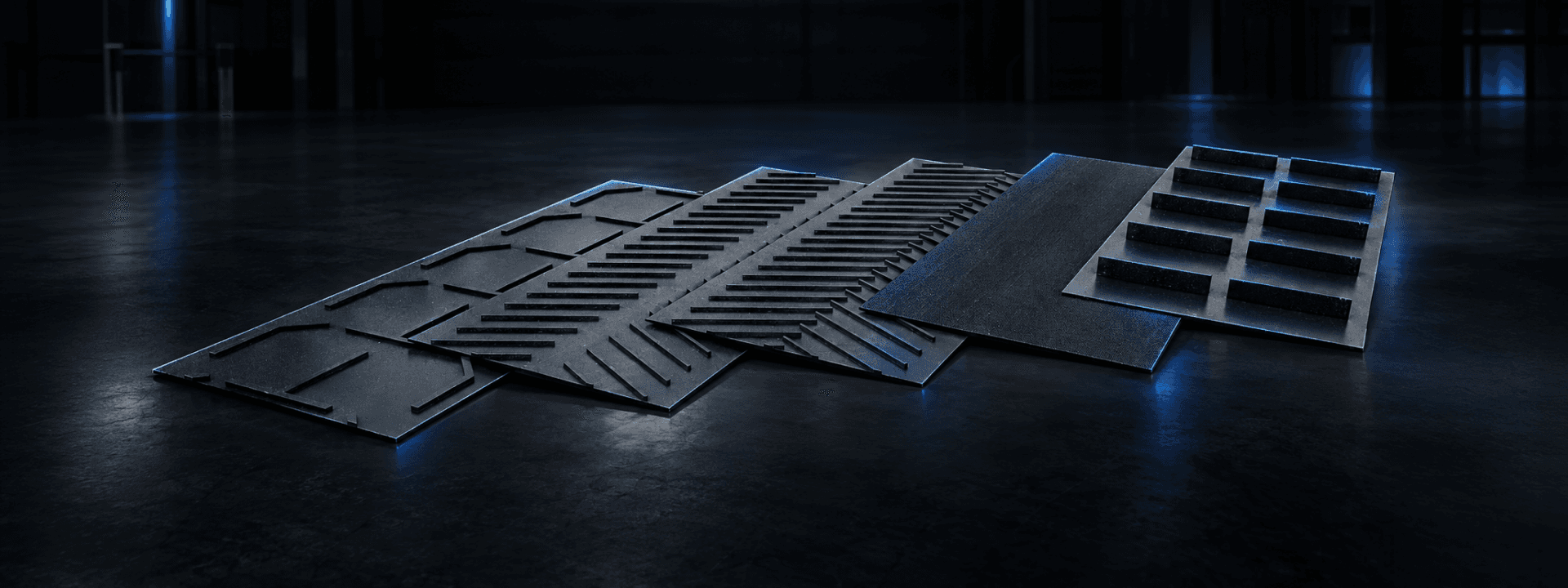
A Hypalon conveyor belt uses a chlorosulfonated polyethylene (CSM) rubber cover to resist ozone, sunlight, and many acids. Although DuPont ended Hypalon production in 2010, other companies still produce CSM, and belts made with it remain available. Learn where a CSM cover works well, where it doesn't, and what to look for when replacing one.

A Hypalon belt is a rubber conveyor belt with a cover made from CSM, also called CSPE. DuPont introduced Hypalon as a trademark in 1951. Other suppliers continued producing CSPE after DuPont stopped.
You'll also see the Hypalon name on inflatable boat fabrics and roofing membranes. They use similar rubber chemistry, but their performance ratings don't apply to conveyor belts that repeatedly flex around pulleys.
Today, quotes identify the cover as CSM or by the supplier's compound name. If an older belt is marked "Hypalon," its cover chemistry and carcass rating can still be used to find a replacement.
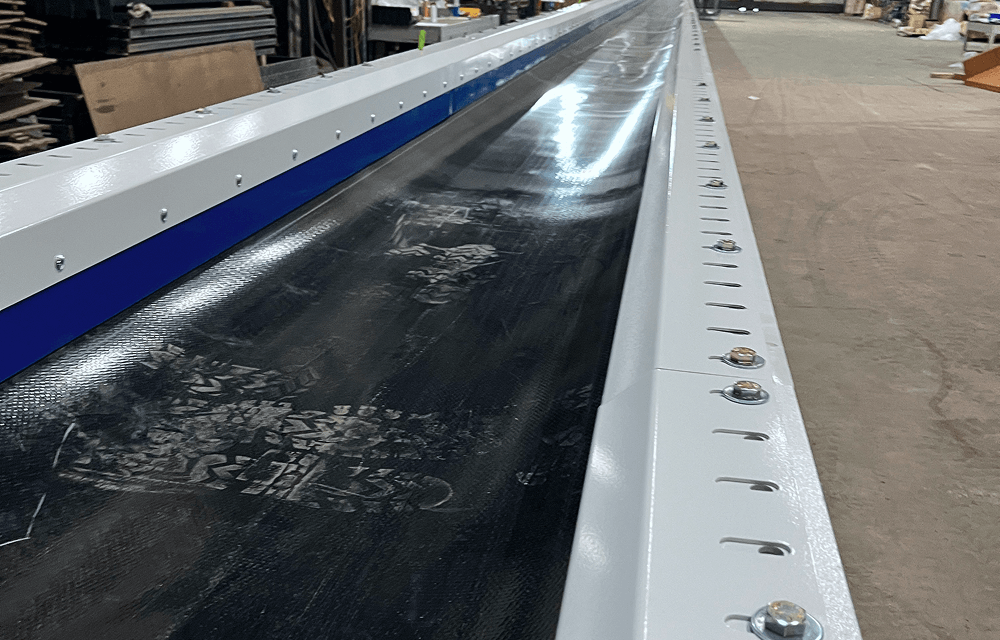
On fabric-reinforced Hypalon belts, the CSM cover protects the belt while the carcass carries the belt tension. On solid CSM stretch belts, the rubber carries the load. The three main constructions are:
Belting Industries lists unsupported Hypalon stretch belts for paper transport and capstan winding. These are different from belts used for bulk material handling. On conventional pulley-driven bulk conveyors, CSM is generally a cover over fabric plies.
Cover strength doesn't tell you how much tension the belt can carry. Ames reports a CSM tensile strength range of 1,000–2,900 psi. But on a fabric conveyor belt, the carcass plies carry the tension and determine the belt's strength rating.
CSM performs against weather and several chemicals, but its resistance depends on the specific formulation. The table summarizes ratings from the Ames CSM datasheet, Parker O-Ring Handbook, and Tosoh laboratory tests. These are compound-level findings, not guaranteed ratings for a finished belt.
Sunlight and ozone eventually crack many general-purpose rubber covers. CSM resists both. In one ozone test, a CSM compound showed no cracking after 360 hours. That makes it an effective option for year-round outdoor conveyors, including radial stackers.
CSM resists dilute acids, alkalis, and many oxidizing chemicals. Certain compounds are also used in process equipment linings exposed to concentrated phosphoric acid and chlorine-saturated sulfuric acid.
Magnesia-cured CSM offers the best acid resistance but poor water resistance; litharge-cured CSM has the opposite trade-off. For wet, acidic loads, ask for chemical compatibility data for the exact cover compound. Our guide to chemical-resistant belts covers other available materials.
Published CSM temperature limits differ because the sources describe different compounds and operating conditions.
The static figures refer to applications such as seals and gaskets, not covers that repeatedly bend around pulleys. Heat gradually stiffens a moving belt's cover. In one heat-aging test, a CSM compound lost 35% of its elongation at break after 72 hours at 248°F (120°C).
The NASA/JPL materials guide noted CSM's poor performance in the cold. Tosoh later developed a separate family of CSM compounds to improve cold-weather and flexing performance.
Compare the belt's ambient and material temperatures separately, and distinguish continuous operating limits from brief peaks. For conveyors carrying very hot loads, a dedicated heat-resistant conveyor belt is generally a better choice than a standard CSM cover.
Petroleum products, certain solvents, and cold-weather flexing are the main concerns when selecting CSM.
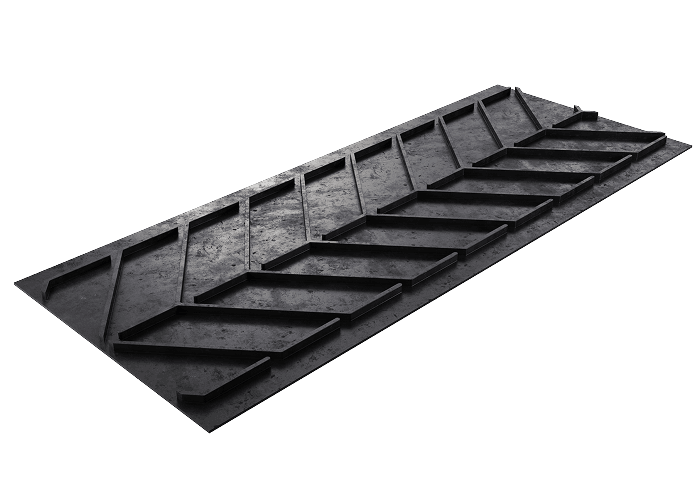
CSM is a good fit where exposure to weather, acids, or oxidizing chemicals presents the greatest risk to the cover. Applications include:
For recycling and waste conveyors, the material stream dictates compound selection. Food waste, auto shred, and scrap metal often contain oil or grease, making nitrile a better option. CSM may be suitable where the conveyor operates outdoors or handles material wet with dilute acids.
No cover compound handles every exposure equally well. The comparisons below summarize general properties from the Parker O-Ring Handbook. The selected belt's compound data should determine the final choice.
Include these nine details when requesting a replacement:
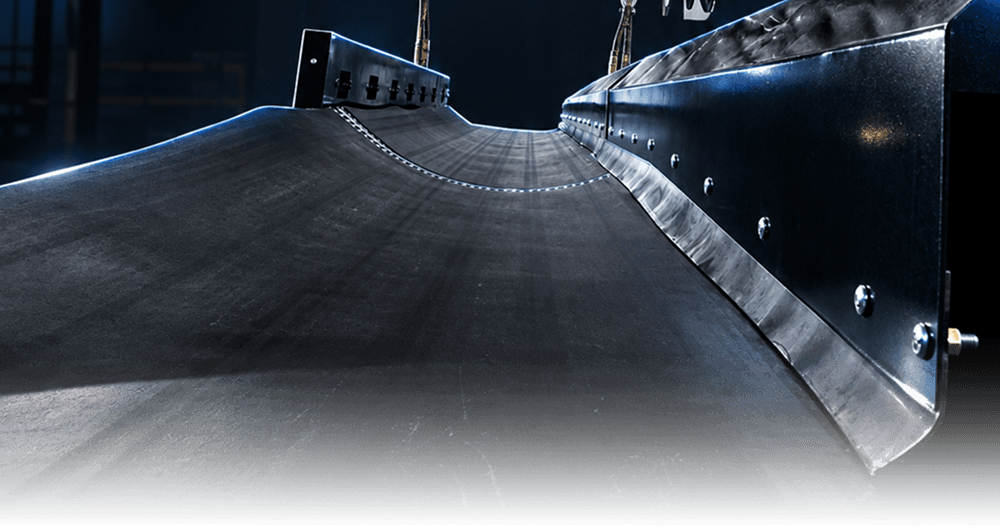
We quote CSM belts under the supplier's compound name and include its data sheet. If your operating conditions have changed since the old belt was installed, a different rubber may be more suitable. Our guide to choosing a conveyor belt explains the other specifications to weigh.
When your new belt arrives, use our guide to replacing a conveyor belt.

If you're replacing a belt marked Hypalon, start with its printed specifications.
Fluent builds flat idler, slider bed, and trough idler conveyors and selects the right belt cover for your application. We also source CSM-covered belting in multi-ply, light, cleated, and sidewall constructions for Fluent equipment and other manufacturers' conveyors. Send photos of the belt markings and a cut edge, your chemical list, and the belt dimensions, and we'll match the CSM compound, carcass, and splice to your conveyor.
