









Copyright © 2026 Fluent Conveyors, LLC. All rights reserved.

The Fluent Conveyors logo is a registered trademark of Fluent Conveyors, LLC. Serial Number 97664258 Registered on Dec. 12, 2023


Copyright © 2026 Fluent Conveyors, LLC. All rights reserved.
The Fluent Conveyors logo is a registered trademark of Fluent Conveyors, LLC. Serial Number 97664258 Registered on Dec. 12, 2023
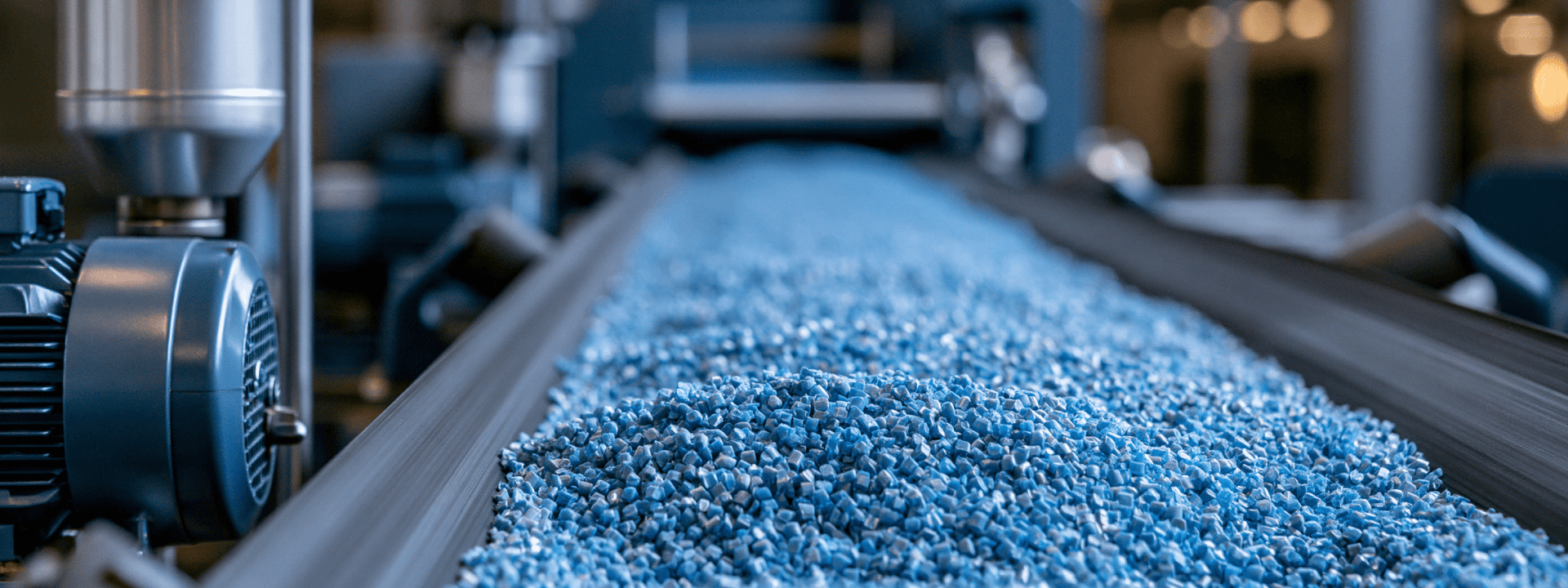
The best conveyors for handling chemical bulk materials are roller chain conveyors for abrasive and dense feedstock, and trough idler, flat idler, and radial stacker conveyors for pellets, granules, and blended dry product. Fine powders move through enclosed systems instead of belt conveyors.

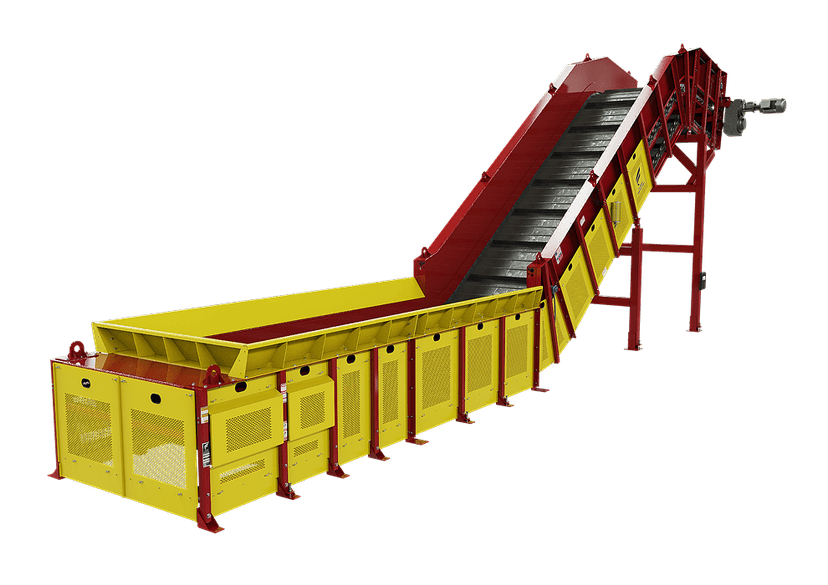
High-torque, no-slip steel-pan conveyors carry abrasive crystals, dense pellets, and gritty feedstock where a rubber belt would wear through.
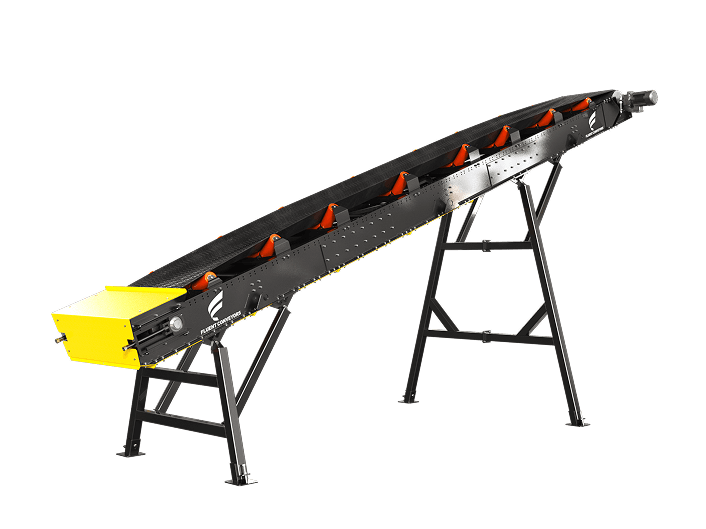
Troughed-belt transport for granules, prills, and flakes across distance, with side curl that contains loose material on long plant runs.
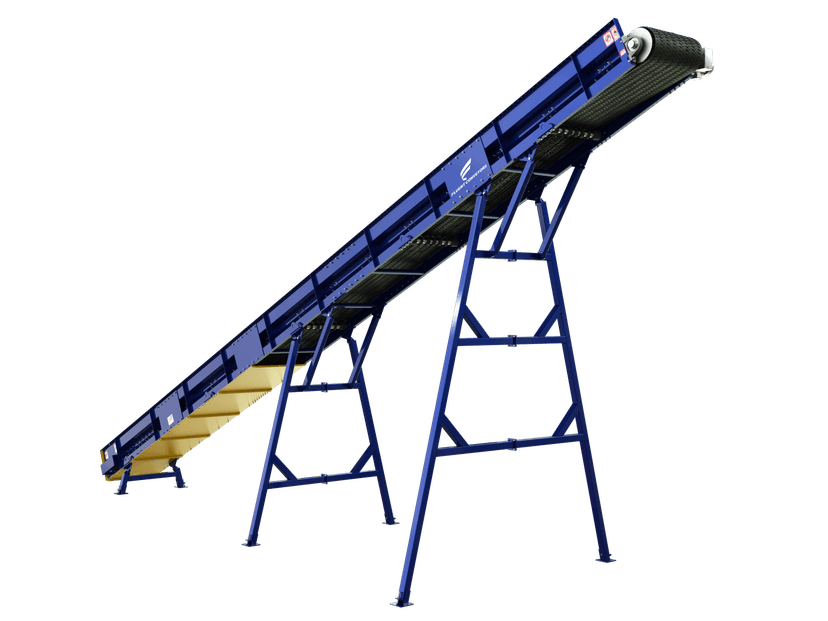
Flat-set idler frame for steady transport of granular product and recovered material across distance where a troughed profile is not required.
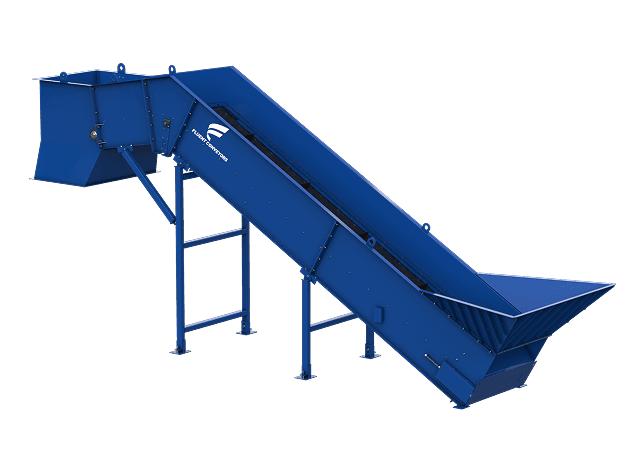
Flat belt-on-bed surface for bagged, drummed, and boxed chemical products where material sits flat and needs no containment.
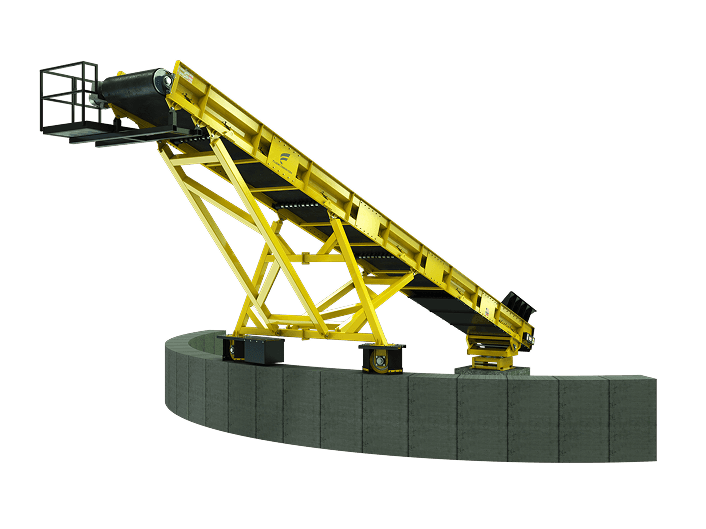
Pivoting conveyors that build large stockpiles of granular feedstock, fertilizer, or blended product from a single feed point. Troughed or flat.
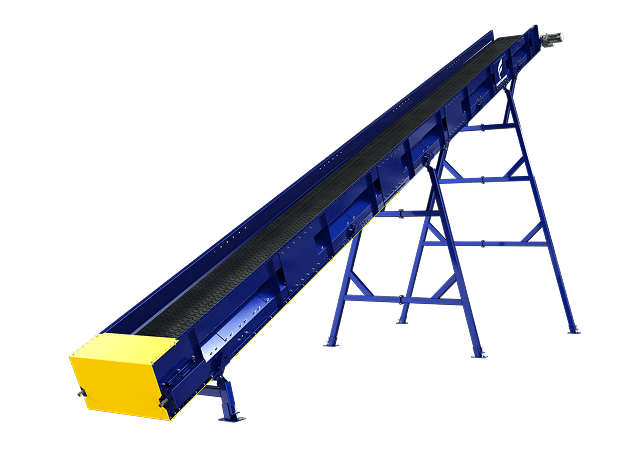
Elevating conveyors that lift granular product between stages, cleated or troughed to hold material on the climb.
Fluent designs and manufactures conveyors and conveyor systems for the abrasive, corrosive, and heavy bulk side of chemical material handling, made in the USA and matched to your plant.
Chemical plants process two broad categories of bulk material. Fine, dry, or hazardous powders, dusts, and many reactive solids move through pneumatic conveying, screw conveyors, tubular drag, aero-mechanical systems, and bucket elevators. Those are enclosed or air-assisted systems built around dust containment, inerting, and operator isolation.
Fluent builds for the granular, abrasive, and heavy material that belt and chain conveyors handle. That covers plastic resin pellets, prilled and granulated fertilizer, salt and mineral crystals, soda ash, sulfur, flaked and pelletized intermediates, blended dry product, and bagged, drummed, or palletized finished goods.
If it involves resin pellets moving to an extruder, fertilizer crossing a blending plant, or sacked product crossing a warehouse, contact us.
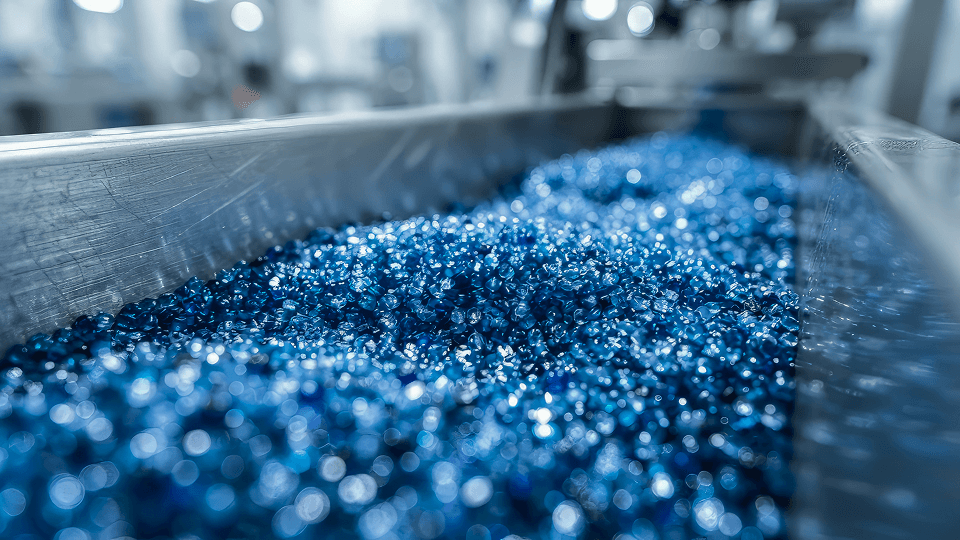
A chemical operation is a network of equipment. You choose each conveyor based on the material it carries and where it sits in the process. A roller chain conveyor under an abrasive crystallizer discharge and a trough idler that carries resin pellets across a plant both move chemical-plant material, but they face different abrasion and corrosion levels and distances.
Five factors set the specification:
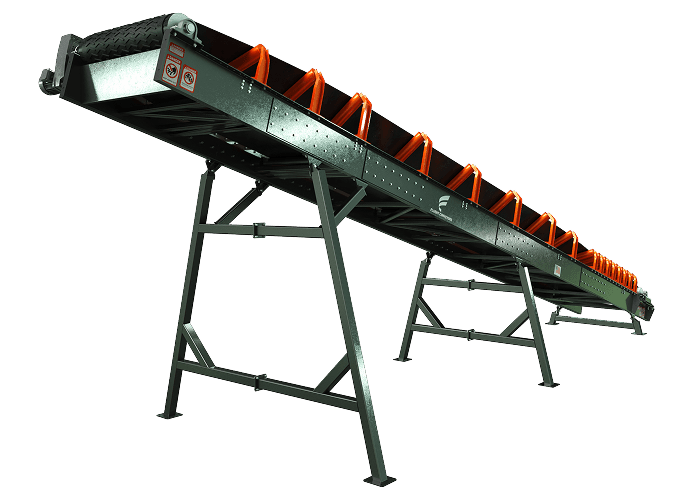
Below, we map conveyor types to their place in a chemical operation, then cover the belt, protection, and drive choices that keep a conveyor running through abrasive and corrosive duty.

Material moves from raw feedstock receiving, through reaction and processing, into intermediate handling, then to storage, blending, and finally finished-product packaging. Roller chain conveyors handle the abrasive, heavy end of the line, while pulley-driven trough idler and flat idler conveyors carry granular product and bagged goods over distance.

Granular and pelletized feedstock moves from receiving, rail, or bulk bag unloading toward processing equipment. Trough idler conveyors carry these materials over long distances, with the troughed profile containing loose product on long runs. Flat idler conveyors handle the same task where a troughed profile is not required.
After a reaction or processing step, intermediate material moves between equipment, screens, and dryers. Incline conveyors handle these transfers, with cleated or troughed surfaces holding material on grades up to the next stage.
Material leaving a crystallizer, dryer, or mill is often dense and sharp. Roller chain conveyors with hinged-steel, apron-pan, or Z-pan belting withstand the abrasion that wears through a rubber belt as material moves toward blending or storage.
Pellets, granules, and dry additives feed blenders and mixers. Roller chain and trough idler conveyors meter these materials toward the blending circuit at a steady burden depth so that downstream equipment reads the stream consistently.
Granular feedstock, fertilizer, and blended product build into stockpiles or storage. Radial stacker conveyors pivot from a single feed point to build large piles, troughed for granular material or flat where the stream sits level.
Bagged, drummed, or palletized product moves to the loading area. Slider bed conveyors present sacked and unit-load product across level transport and shorter inclines, where material sits flat.
The same equipment serves the cement industry and other heavy bulk operations, where abrasion and dust call for similar conveyor configurations.
Abrasive, corrosive, and dust-generating chemical material requires application-specific belts and conveyor add-ons. Fluent specs the carrying surface to the stream and stocks the chemically-resistant conveyor belts to match.
Chemical plant operations are hard on equipment, but most conveyor failures trace back to a belt or load zone specified for lighter service than the stream actually carries. You can avoid common issues through awareness and equipment design.
Routine inspection and maintenance catch these issues early. Learn what causes wear and tear on a belt.
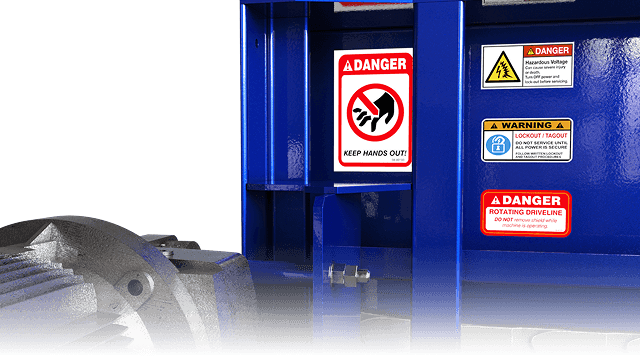
Chemical bulk conveyors carry the hazards of moving belts, pinch points at pulleys and sprockets, exposed drives, and airborne dust, on top of whatever the conveyed material itself presents. Guarding, emergency stops, and pull cords are standard requirements, and lockout/tagout access has to be engineered for cleaning and belt work, especially where dust accumulation or corrosive residue calls for frequent cleanout.
Every conveyor in a chemical operation should exceed the safety standards put forth by the relevant authority. See how to reduce conveyor hazards for the details.

Fluent designs and builds custom conveyors and conveyor systems for the abrasive, corrosive, and heavy bulk side of chemical material handling.
Contact us to talk through your project, or send the material type, target capacity, and run dimensions, and our engineering team will scope a system to fit your requirements.
