









Copyright © 2026 Fluent Conveyors, LLC. All rights reserved.

The Fluent Conveyors logo is a registered trademark of Fluent Conveyors, LLC. Serial Number 97664258 Registered on Dec. 12, 2023


Copyright © 2026 Fluent Conveyors, LLC. All rights reserved.
The Fluent Conveyors logo is a registered trademark of Fluent Conveyors, LLC. Serial Number 97664258 Registered on Dec. 12, 2023

The best conveyors for recycling glass are roller chain conveyors that take whole bottles and abrasive mixed-glass infeed with minimal breakage, with trough idler and flat idler conveyors moving cullet and recovered fractions between crushing, screening, and sorting. A flat idler conveyor that presents an even, single layer sets the accuracy of the optical sorters reading the stream behind it.

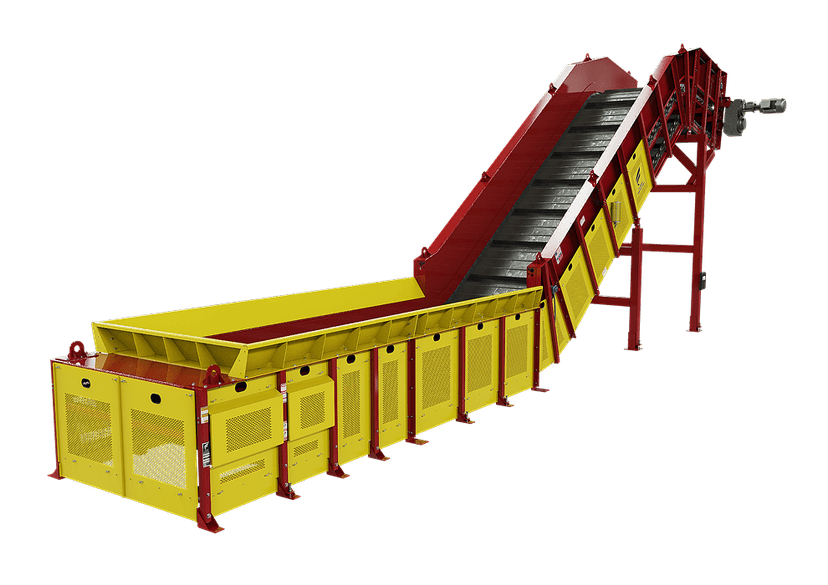
High-torque, no-slip steel-pan conveyors that take the weight and abrasion of whole bottles, gaylords, and mixed-glass infeed with minimal breakage before crushing.
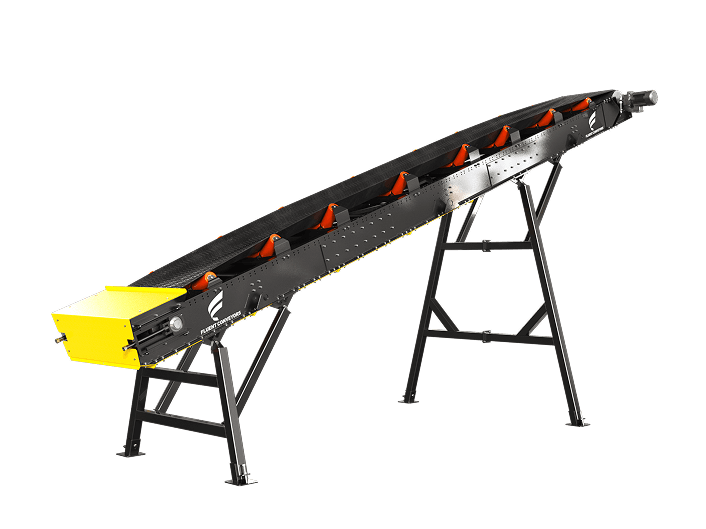
Troughed-belt transport for crushed cullet and broken glass across distance, with side curl that holds loose material on the run between crushing, screening, and sorting.
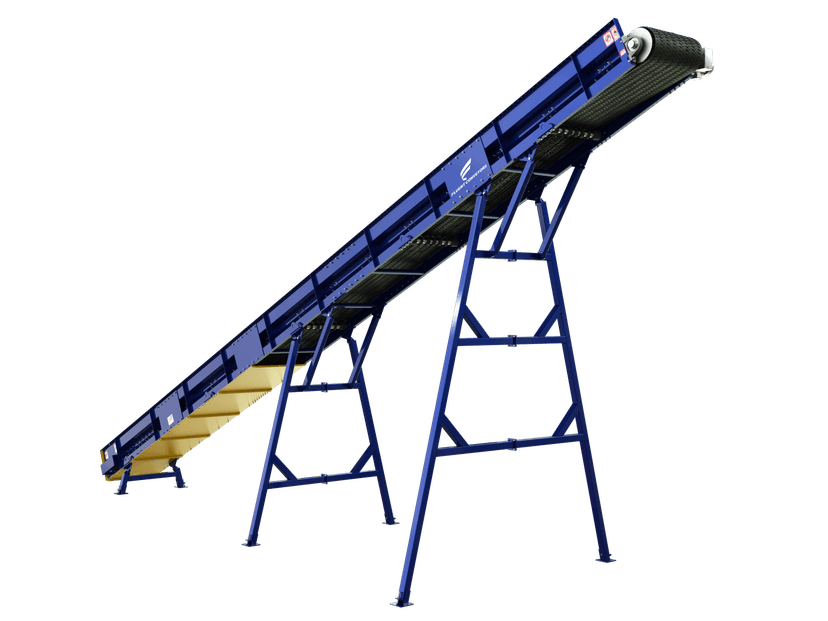
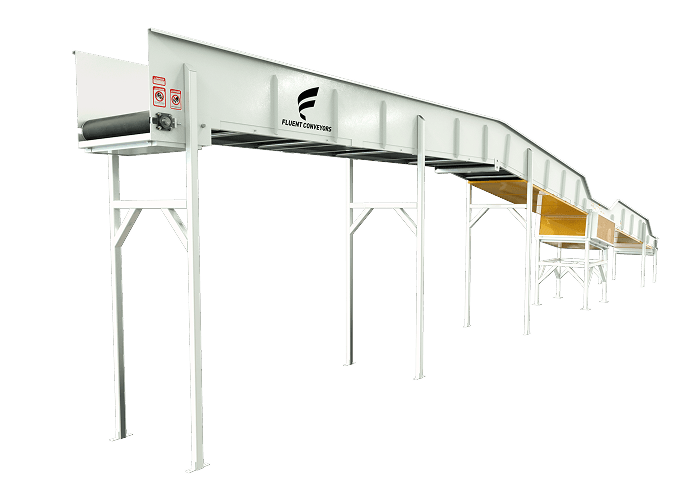
Flat-set idler frame that presents an even, single-layer burden at a stable speed for screening, color sorting, and the optical sorters that read the stream.
Worker-staffed sort stations for the manual pass that pulls ceramics, stones, porcelain, and large contaminants out of the stream.

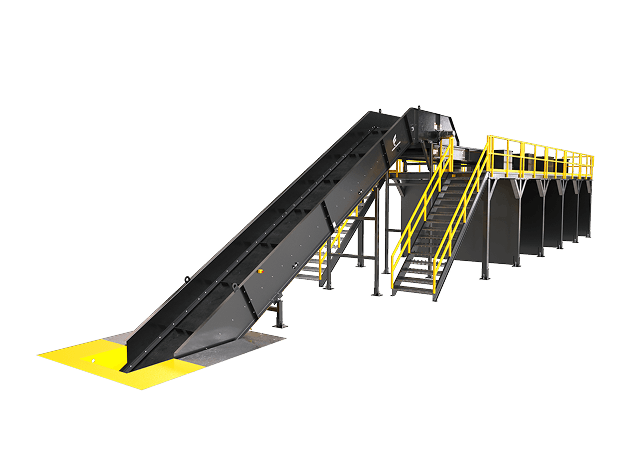
Raised-cleat belts that carry cullet up inclined runs to crushers, screen decks, bunkers, and sorter feed without rollback.
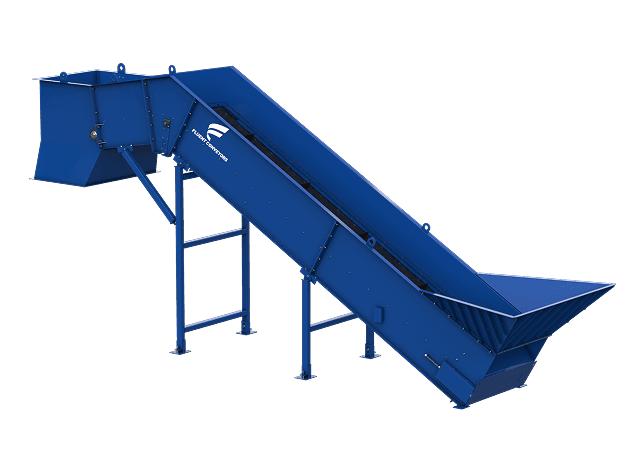
Low-cost, pulley-driven conveyors for light, post-crush transfers of cullet through screens, separators, and other specialty processes.
Fluent designs and manufactures conveyors and conveyor systems for glass recycling lines, made in the USA and built to drop into your plant layout.
A glass recycling operation processes whole bottles and jars, broken container glass, mixed glass recovered from single-stream and MRF residue, and crushed cullet at sizes ranging from coarse pieces down to fines. Each stream arrives with its own size, cleanliness, and abrasiveness, and most of it passes through conveyors before and after crushing.
Fluent builds the conveyors that move glass into, through, and out of the recycling line. That covers infeed off a tipping floor or receiving bunker, transport between crushing, screening, and sorting, the feed conveyors that meter glass into crushers and present an even layer to screens and optical sorters, the discharge conveyors that carry cullet clear, and the sorting conveyors that stage material for a manual QC pass.
If your line moves glass from a tipping floor to a crusher, from a screen to a sorter, or from a sorter to a bunker, contact us.

A glass recycling plant is a sequence of equipment. Each conveyor is chosen for the material it carries and where it sits in the process.
Six factors set the specification:
Below, we map conveyor types to their place in a glass recycling line, explain why feed presentation drives both throughput and sorting accuracy, and detail the belt, liner, and drive choices that hold up through sharp, abrasive, dusty cullet.

Material moves from receiving and infeed, through manual sorting and contaminant removal, into crushing, then screening, metal separation, optical sorting, and a final QC pass before storage or shipment. Let's look at the conveyors a typical plant might utilize at each point.

Whole bottles, Gaylords, and mixed glass move from the tipping floor or a receiving bunker toward sorting and crushing. Roller chain conveyors with rubber belting take the weight of bottles and bulk glass dropped by a loader and feed it forward at a controlled, even rate with minimal breakage.
Sorted and crushed material crosses the plant to screens, separators, and sorters. Trough idler conveyors carry broken glass and cullet over distance, with the troughed profile forcing loose material toward the center of the belt to prevent spillage on the run.
Ceramics, stones, porcelain, metal, and other non-glass debris come out of the stream before and during processing. A recycling sort station gives workers a controlled area to pull large contaminants by hand, a magnet over the belt lifts ferrous metal, and an eddy current separator throws non-ferrous metal clear, all of which protect downstream equipment and keep the recovered cullet clean.
Glass is metered into crushers and screens on a feed conveyor, often with variable speed so the line can match feed rate to equipment capacity. A steady, even feed keeps the crusher loaded without surging and limits the jams and excess fines that come from dumping glass in all at once.
This is one of two conveyors that decide how cleanly the line runs, while the other is the conveyor that presents glass to the optical sorters, covered below.
Crushed cullet drops off the crusher and moves on to screening, metal separation, or sorting. Flat idler conveyors carry an even burden between machines, and slider bed conveyors (a low-cost option for light, post-crush streams) handle the short transfers that move cullet through magnetic separators, screens, and other specialty processes.
Cullet and recovered fractions often have to climb to an elevated screen deck, sorter, or storage bunker. Cleated belt conveyors carry cullet up these runs, with raised cleats holding material against rollback on the incline.
Recovered glass moves on to a final sorting pass that refines the stream by color and removes ceramics, stones, and porcelain. Flat idler conveyors present material as a stable, single layer for screens, color sorters, and optical sorters to read accurately, and custom recycling sort stations put workers on the line for the manual pass that pulls residual contaminants before storage or shipment.
The same conveyor types are often used in scrap metal recycling, where abrasive, impact-heavy material requires reinforced infeed equipment, durable belting, protected transfer points, and controlled movement before sorting, separation, or discharge.
The conveyor feeding the crusher sets the throughput ceiling for the line, and the conveyor feeding the optical sorters sets how accurately the line separates glass by color and pulls ceramics, stones, and porcelain.
Four feed variables affect throughput and sorting accuracy:
A speed sensor on the feed conveyor confirms the belt is holding the set speed under load, which keeps feed rate matched to crusher capacity and keeps the optical sorter's timing accurate.
Sharp, abrasive, dusty cullet requires application-specific belts, liners, and conveyor add-ons. Fluent specs the carrying surface to the stream and stocks the conveyor belts for glass recycling to match.
Routine inspection and maintenance catch these early. Learn what causes wear and tear on a conveyor belt.
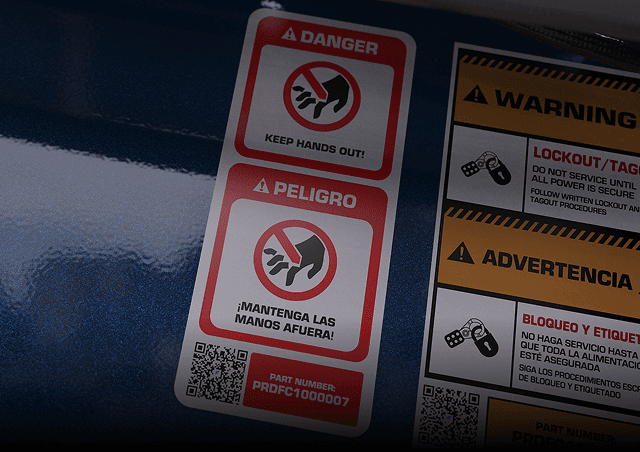
Glass recycling operations introduce specific hazards, like sharp cullet and respirable glass dust. Guarding, emergency stops, and pull cords are standard, and lockout/tagout access must be engineered for the frequent cleanout that dust and spillage require.
Every conveyor in a recycling operation should exceed the safety standards put forth by the relevant authority. See how to reduce conveyor hazards for the details.

Fluent designs and builds custom conveyors and conveyor systems for glass recycling lines.
Contact us to talk through your line, or send the material type, target capacity, and run dimensions, and our engineering team will scope a system to fit your plant and the rest of your glass recycling line.
