









Copyright © 2026 Fluent Conveyors, LLC. All rights reserved.

The Fluent Conveyors logo is a registered trademark of Fluent Conveyors, LLC. Serial Number 97664258 Registered on Dec. 12, 2023


Copyright © 2026 Fluent Conveyors, LLC. All rights reserved.
The Fluent Conveyors logo is a registered trademark of Fluent Conveyors, LLC. Serial Number 97664258 Registered on Dec. 12, 2023
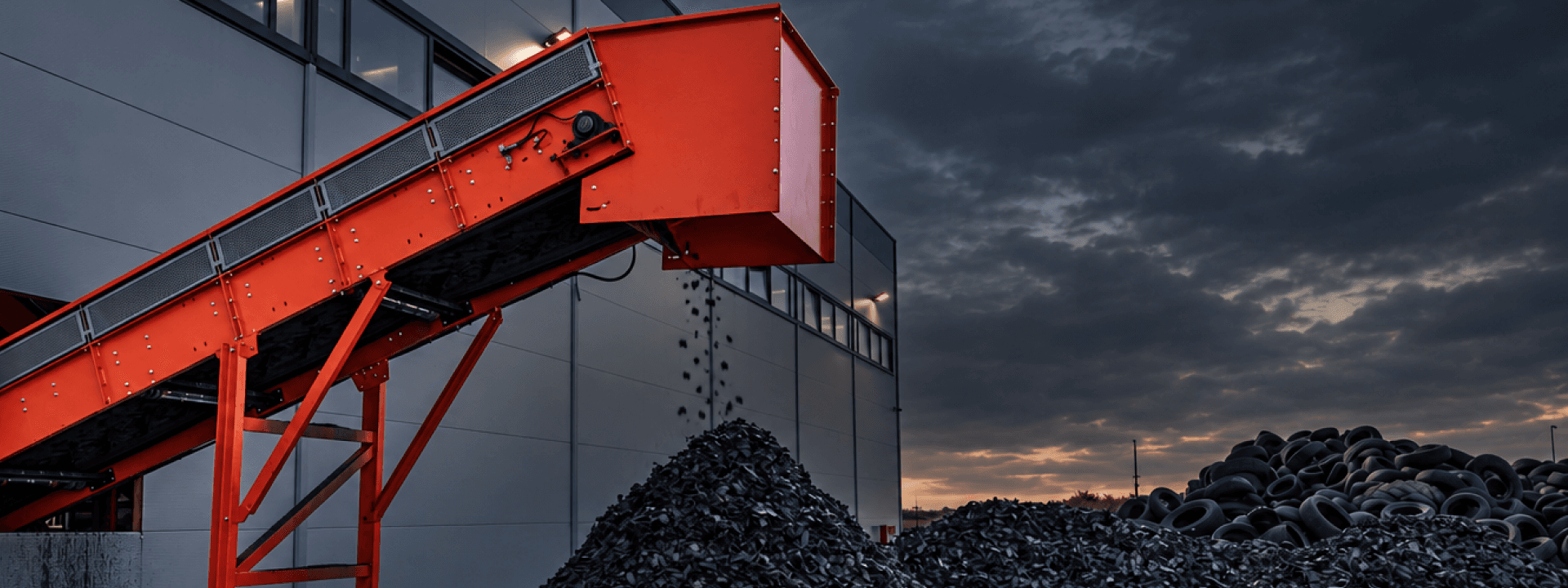
The best conveyors for recycling rubber change with the material as it moves down the line. Heavy-duty roller chain conveyors with steel or cut-resistant belts take whole tires, shredder feed, and steel-contaminated shreds, and flat idler conveyors present a thin, even layer to the magnets that pull the steel wire clear. Because rubber changes from whole products to shreds, granules, and crumb, the conveyor is matched to the material state at each stage rather than to the plant as a whole.

Explore conveyor solutions designed for efficient rubber recycling, material handling, and seamless plant integration.
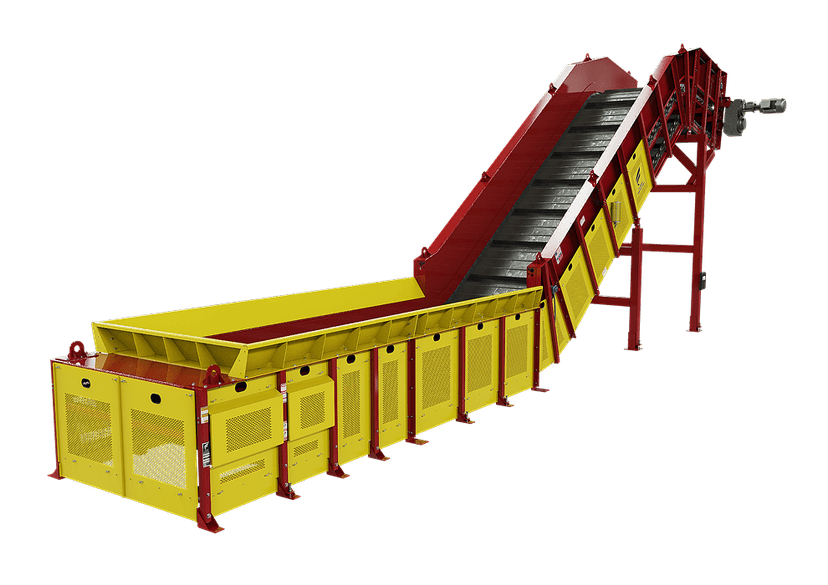
High-torque, no-slip steel-belt conveyors that take whole tires, shredder feed and discharge, and the impact and exposed wire of steel-contaminated shreds.
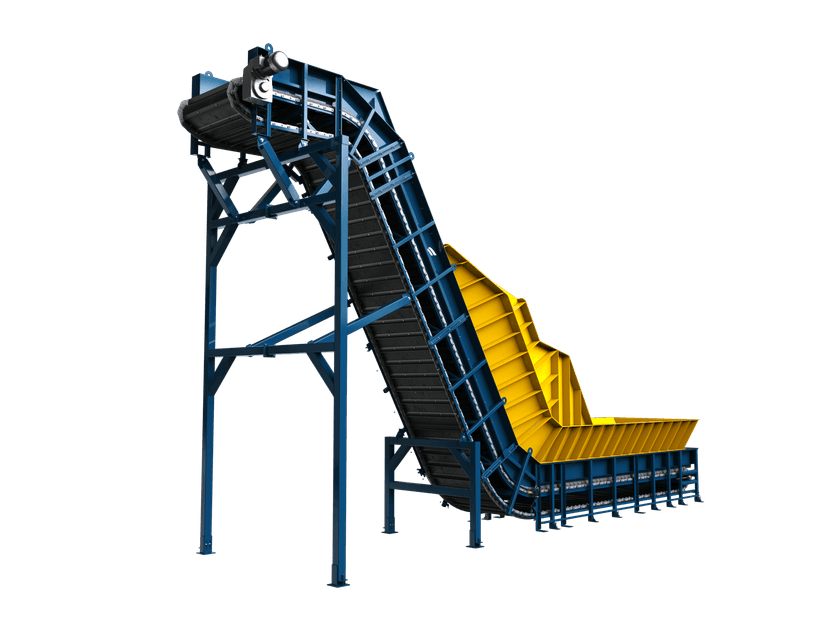
Inclined roller chain conveyors that meter tires and bulky rubber into a shredder at a controlled rate to prevent overfeeding and jams.
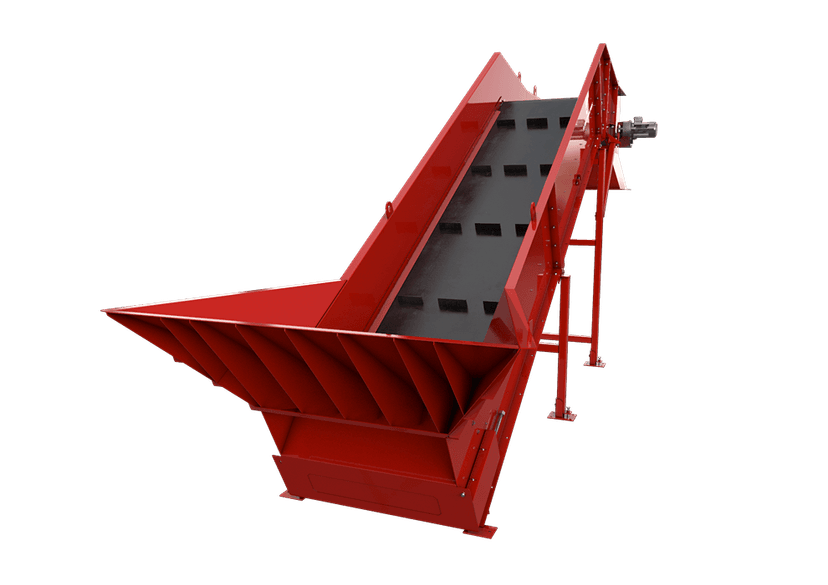
Raised-cleat belts that carry chips and granules up inclines between size-reduction and screening without rollback.
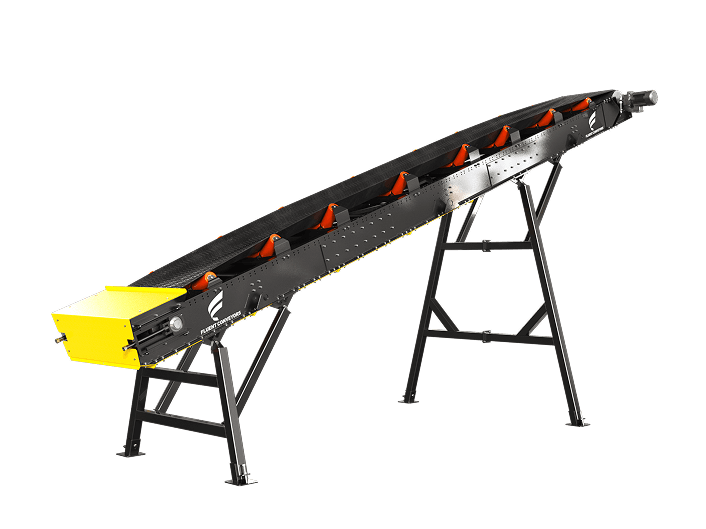
Troughed-belt conveyors that move larger volumes of shredded rubber and mixed fractions over distance.
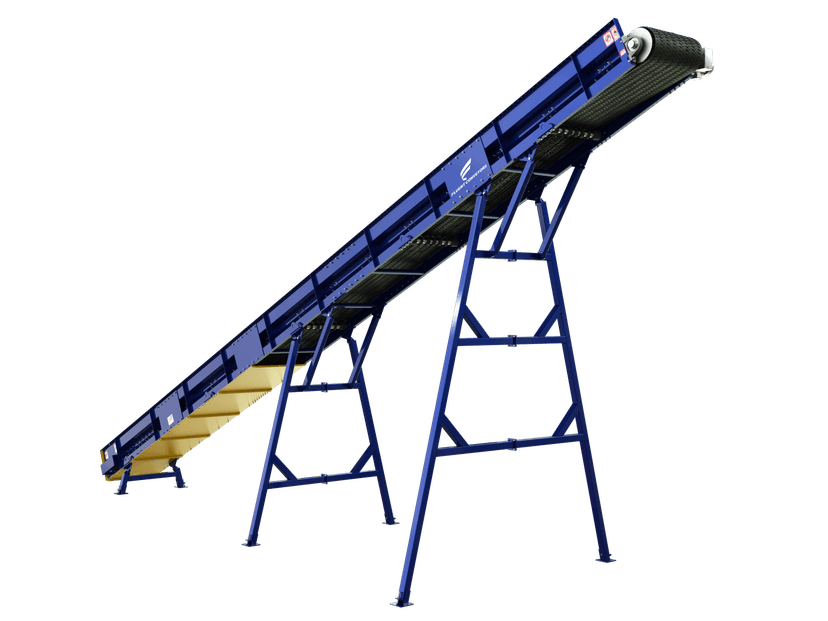
Idler-supported conveyors that carry whole tires and sheets and present a thin, even layer for magnetic separation and screening.
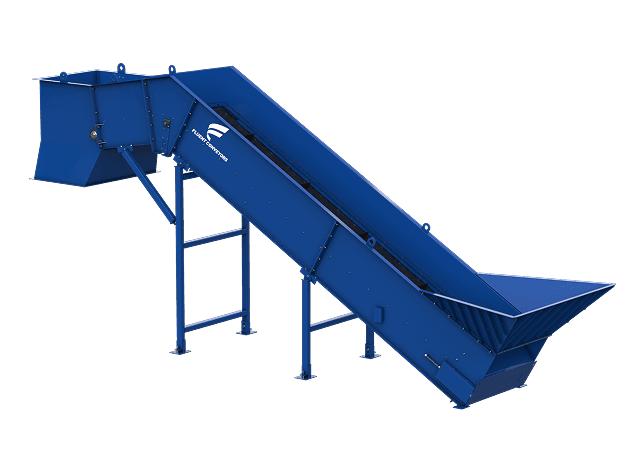
Pulley-driven conveyors for the short transfers that move rubber through magnetic separators and screens.
Fluent designs and manufactures conveyors and conveyor systems for rubber recycling lines, made in the USA and built to drop into your plant layout.
A rubber recycling operation reduces whole tires and scrap rubber to shreds, granules, crumb, and powder, and the material handles differently at every stage. Whole tires, rubber sheets, hoses, and industrial rubber arrive bulky and steel-reinforced. Shreds carry exposed steel wire and fiber, and granules and crumb behave like a bulk granular material. Rubber passes through several conveyors between the shredder and the finished fraction.
Fluent builds the belt and roller chain conveyors that move rubber through the front and middle of the line. That covers receiving and sorting of whole tires, metered feeding into the shredder, shredder discharge, transport of shreds and the rubber-and-steel mixture, presentation to magnetic separation and screening, and the inclined transfers between size-reduction stages. Fine crumb and powder move on from there through the enclosed conveying that granular rubber requires.
If your line moves tires from receiving to a shredder, shreds from a shredder to a magnet, or granules to a screen, contact us.
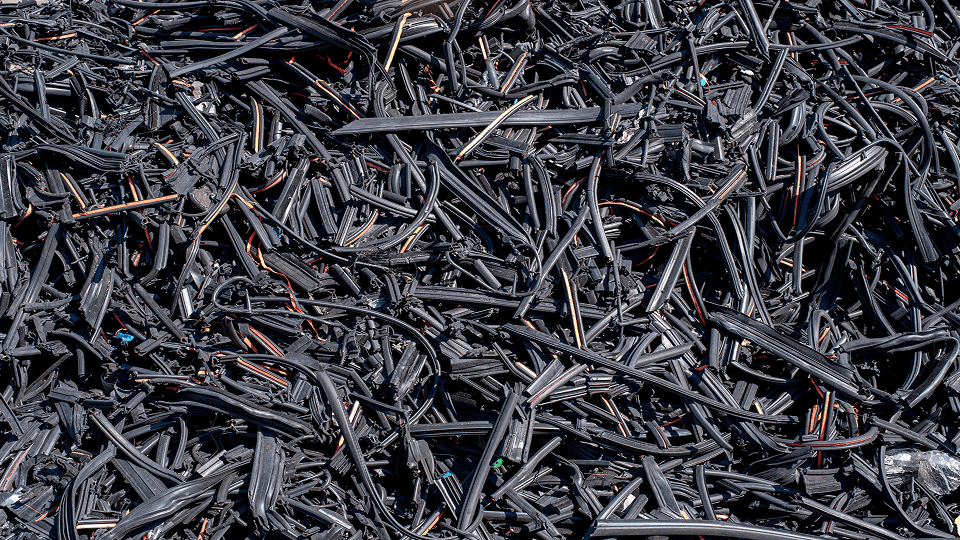
A rubber recycling plant is a sequence of equipment, and the material changes state as it moves through it. Each conveyor is chosen for the material it carries and where it sits in the process.
Six factors set the specification:
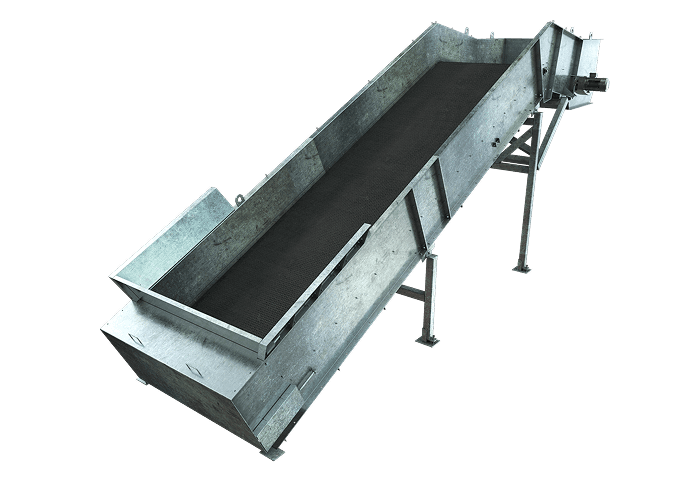
Below, we map conveyor types to their place in a rubber recycling line, explain why feed stability and separation presentation drive throughput and rubber purity, and detail the belt and drive choices that hold up to steel-bearing, abrasive rubber.

Material moves from whole-tire receiving, through metered shredding, into discharge, magnetic separation, granulation, and screening, with crumb and powder moving on to enclosed conveying. Let's look at the conveyors a typical plant might utilize at each point.

Whole tires, rubber sheets, and large rubber parts move from receiving toward the shredder. Roller chain and flat idler conveyors carry the bulky, irregular load, with heavy-duty steel belts taking the weight and delivering it to the shredder infeed.
Tires and bulky rubber are metered into the shredder so it stays loaded without overfeeding. Tumble-back conveyors meter the feed at a set rate and incline, since a surge overfeeds and jams the shredder while a gap starves it and the separators downstream. This is one of two conveyors that decide how the line runs, while the other presents shredded rubber to the magnets, covered below.
Rubber chips and shreds, still carrying steel wire and fiber, drop off the shredder onto a discharge conveyor. Cut- and abrasion-resistant belts or steel pans take the impact and the exposed wire, and troughed belts carry the shreds over distance to the next stage.
Trough idler conveyors carry the larger volumes of shredded rubber and mixed fractions over the longer runs between the shredder and the separators, with the trough profile holding loose material toward the center of the belt.
The shredded stream passes under overband or crossbelt magnets that pull steel wire clear. Flat idler conveyors present the rubber as a thin, even layer so the magnet reaches the wire, since a deep or bunched bed buries steel and leaves it in the rubber.
Slider bed conveyors handle the shorter transfers that move the stream through the magnetic separators and screens between size-reduction stages.
Screened shreds move on to granulation and rasping, and cleated belt conveyors carry chips and granules up the inclines between size-reduction and screening without rollback. A second magnetic pass and screening refine the stream as the particle size falls.
Reduced to crumb and fine powder, rubber flows, segregates, and dusts like a bulk granular material and moves on to storage and bagging. Fluent's belt and roller chain conveyors carry the stream through size reduction and separation and hand it to the enclosed conveying that fine crumb and powder require.
Fiber pulled from the stream, oversize rejects returned for reprocessing, and finished fractions routed to bins and silos move on short transfer conveyors that keep the recovered rubber clean.
The same heavy-duty conveyors handle the tires and mixed material that come off vehicles in automotive recycling, where whole-unit weight and steel content demand the same reinforced infeed.
The conveyor feeding the shredder sets how steadily the shredder runs and how much the line recirculates, and the conveyor feeding the magnets sets how much steel comes out and how pure the recovered rubber is.
Four feed variables affect throughput and purity:
A speed sensor or belt scale on the shredder infeed confirms belt speed and load under a varying feed, which keeps mass flow steady and keeps the shredder from overfeeding.
Steel-bearing, abrasive rubber needs the belt and carrying surface matched to the material state at each stage. Fluent specs the carrying surface to the material and stocks the conveyor belts for recycling rubber to match.
Routine inspection and maintenance catch these early. Learn what causes wear and tear on a conveyor belt.
Rubber recycling conveyors carry the hazards of moving belts, pinch points at pulleys and sprockets, exposed drives, and falling material, alongside hazards specific to rubber: sharp exposed steel wire that cuts during cleaning and clearing, and combustible rubber dust that rises as the particle size falls and calls for ignition-source control and extraction at the fine end. Guarding, emergency stops, and pull cords are standard, and lockout/tagout access must be engineered for the frequent cleanout that wire, dust, and carryback require.
Every conveyor in a recycling operation should exceed the safety standards put forth by the relevant authority. See how to reduce conveyor hazards for the details.
No Image

Fluent designs and builds custom conveyors and conveyor systems for rubber recycling lines.
Contact us to talk through your line, or send the material type and state, target capacity, and run dimensions, and our engineering team will scope a system to fit your plant and the rest of your rubber recycling line.
