









Copyright © 2026 Fluent Conveyors, LLC. All rights reserved.

The Fluent Conveyors logo is a registered trademark of Fluent Conveyors, LLC. Serial Number 97664258 Registered on Dec. 12, 2023


Copyright © 2026 Fluent Conveyors, LLC. All rights reserved.
The Fluent Conveyors logo is a registered trademark of Fluent Conveyors, LLC. Serial Number 97664258 Registered on Dec. 12, 2023
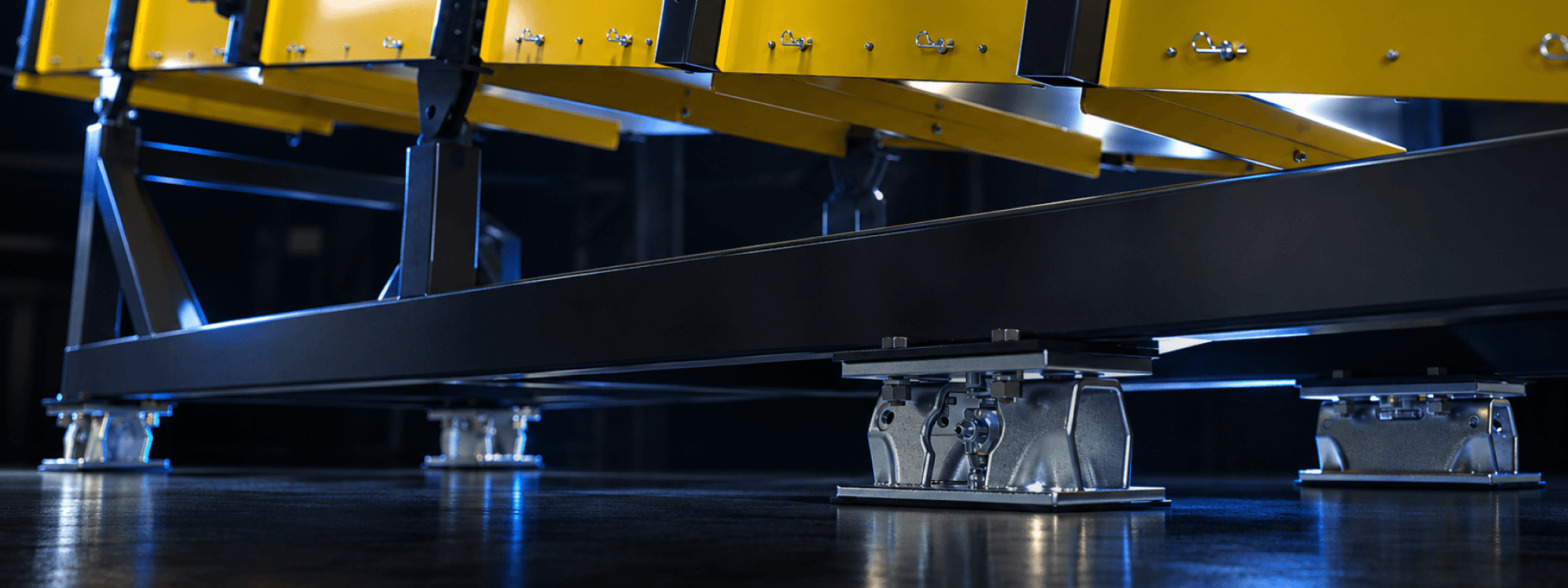
A weigh module combines a load cell with mounting hardware that supports weight, restrains side forces, and prevents uplift. We’ll explain how to select and size modules for conveyors, bins, and hoppers, and how to tell when a belt scale is a better choice.

Identify what you're weighing and whether it moves during measurement. Weigh modules measure stationary loads, including material on a conveyor stopped for weighing. A belt scale measures bulk material on a running belt by combining belt load with belt speed.
The distinction appears in NIST Handbook 44. Section 2.20 covers scales built with weighing elements; Section 2.21 covers belt-conveyor scales and excludes individual items weighed in motion.
A belt scale requires more than a weigh idler. It also takes a speed sensor input, and legal-for-trade installations must meet layout requirements.
NIST's belt-conveyor scale code places the first weigh idler at least 20 feet or five idler spaces, whichever is greater, from the loading point, skirting, pulleys, or a convex curve. Check the available layout before requesting a quote.
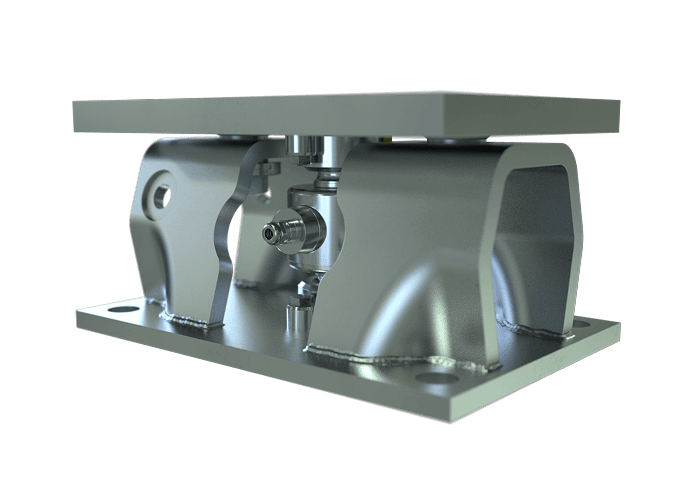
A weigh module assembly includes a load cell, top and base plates, a load pin or rocker that allows the top plate to float, side restraints, an uplift stop, and the cell cable. Some kits also include a summing junction box.
If you’re replacing and the sensor has failed but the mounting hardware is sound, just replace the load cell. Otherwise, order complete weigh module assemblies so the restraints and stops match the replacement cell's height and rating.
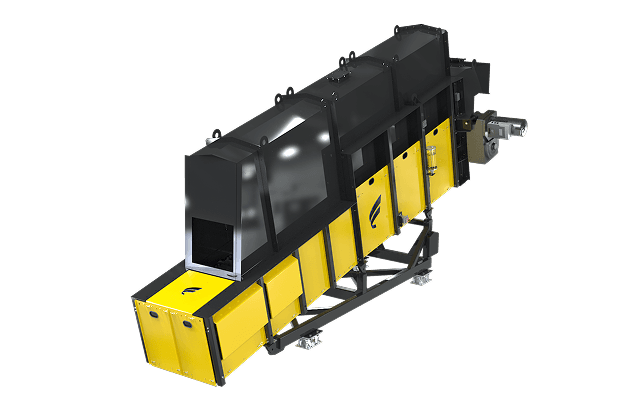
Weigh modules typically support equipment that holds material or a conveyor that pauses for weighing.
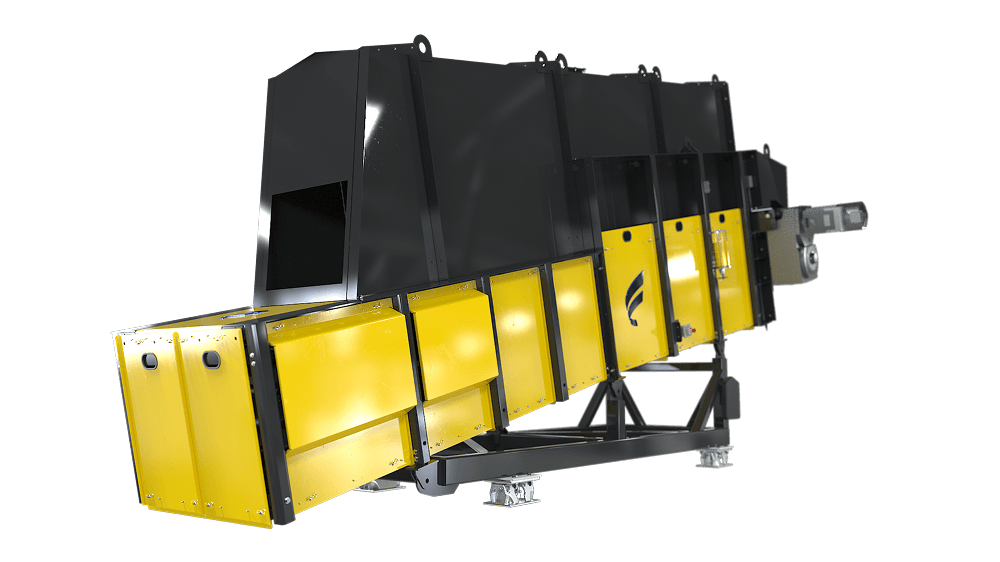
For a weighed conveyor, support the entire conveyor on the modules, including the drive. A belt crossing from an unweighed section to a weighed section transfers tension across the boundary, which shows up as apparent weight. The error changes when the belt is retensioned or spliced.
Rigid attachments can also bypass the load cells. Transfer chutes, skirtboards, conduit, and piping require flexible connections wherever they cross from the weighed structure to the building. For example, one manufacturer's installation manual specifies 20–30 pipe diameters between a vessel and its first rigid pipe support.
Compression modules are the usual choice because bins and conveyors generally stand on legs. Tension modules suit hoppers suspended from overhead steel when the space below is reserved for a conveyor.
Module capacity is specified per module, not for the complete scale. Calculate the load carried by each support before choosing a rating.
The 200 lb live load is about 5% of total installed capacity. Applying a more conservative 2× margin, as some guides suggest, would call for 1,300 lb modules and reduce the live-load share to less than 4%.
Because conveyors often weigh much more than the material carried on them, keep the weighed frame as light as practical. Another option is to weigh material in a hopper, where live load makes up a larger fraction of total capacity.
Three supports distribute weight predictably because three points establish a plane. Four supports are common on rectangular bins and conveyor frames, but the fourth corner requires shimming during commissioning to balance the load. Adjust the shims; don’t oversize the four modules to compensate for an uneven structure that sits on three.
Rice Lake's handbook advises a maximum of eight supports because balancing the load becomes harder as support count rises.
Vertical capacity is only part of module selection. Conveyors and bins also experience horizontal force, uplift, and thermal movement. Request these ratings:
Allow enough top-plate movement for thermal expansion. Carbon steel expands about 0.0000065 inch per inch per °F. A 40-foot frame experiencing a 60°F temperature change moves about 3/16 inch. Long outdoor frames may require one fixed module with floating modules at the remaining supports.
Restraints protect the assembly when they retain the specified clearance. A restraint bolt tightened against its stop, or a check rod with no gap, can bypass the load cells and distort readings. Check and record clearances after installation and after nearby structural work.
A load cell's accuracy class describes its performance under test conditions. Installed accuracy also depends on the supporting structure, connections, temperature, and calibration. A C3 or NTEP Class III load cell is required for many legal-for-trade applications, but its rating does not establish the accuracy class of the completed scale.
Creep is especially important for bins and hoppers that hold material for extended periods. OIML R 60-1 tests creep by holding 90–100% of rated load for 30 minutes and limiting the permitted drift.
For a leverless multi-cell scale, Handbook 44 Section 2.20 requires each cell's minimum verification interval (vmin) to be no greater than the scale interval (e) divided by the square root of the number of cells. For example, a four-cell scale displaying 1 lb divisions requires cells with vmin of 0.5 lb or less.
If weight determines what you charge or pay, the complete installation must comply with state weights and measures rules. That includes scrap and aggregate yards and transfer stations charging tipping fees. The local authority determines whether the installed scale passes inspection.
Choose materials and approvals for the conditions at the installation site.
Exposure varies by application:
Recycling: Dust, impact from dumped material, and moisture from wet fiber or glass.
Waste management: Impact, leachate, and repeated hose-downs.
Aggregates and mining: Wind and uplift on outdoor surge bins, temperature swings, and abrasive fines. See typical layouts in our aggregate conveyors guide.
Chemical and food processing: Corrosion, washdown chemicals, and classified areas.
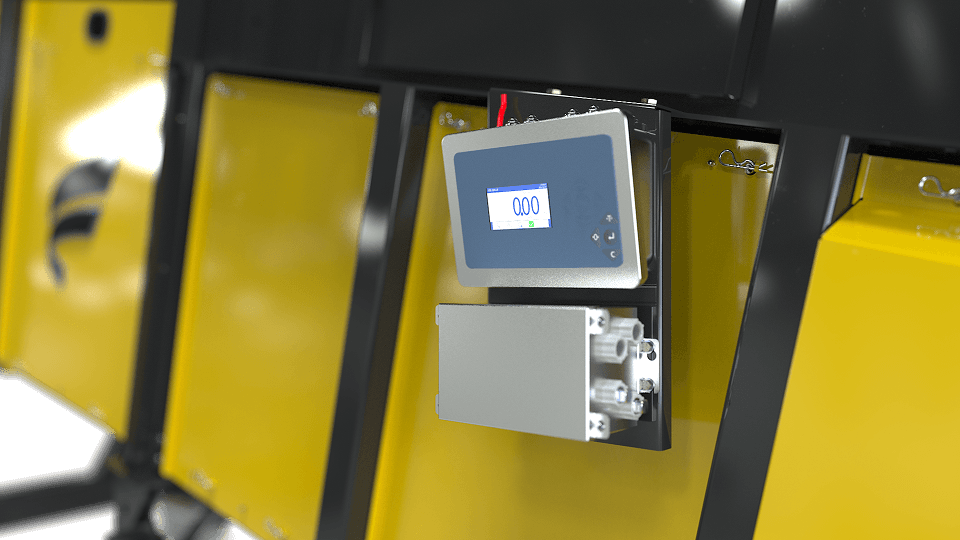
Analog cells send a millivolt signal through a summing junction box to an indicator. Digital cells connect through a network to a compatible terminal without analog summing. Digital systems can report on each cell separately for troubleshooting, but they require a terminal that supports the cell's protocol.
Load-cell cables are compensated to match their sensors. Coil excess cable inside the junction box rather than cutting it. For example, one weigh module manual specifies remote-sense leads when the junction box is more than 25 feet from the indicator and requires cables to be kept away from heat sources above 150°F.
Conveyor loads often change rapidly. Check the completed system's update rate and filtering, and make sure the weighing indicator settles within your batch or cycle time.
When weighing is part of a conveyor system we build, the indicator can communicate with the PLC in our conveyor control systems for batching, interlocks, and production records.
Include these acceptance checks in the purchase order so installation and commissioning have clear pass criteria:
We help size modules for your application and can connect you with a local dealer for installation, calibration, and maintenance.
The following published prices from a major scale manufacturer provide market examples, not Fluent prices.
Module hardware is only part of the installed cost. Budget for:
Approvals: NTEP, OIML, and hazardous-location certification can increase cell prices.
Cell and electronics type: Digital cells and compatible terminals typically cost more than analog cells with a junction box.
Support count: Additional supports add modules, mounts, and wiring.
Indicators and controls: A basic display costs less than a batching terminal or PLC integration.
Installation and calibration: Dealer labor, test weights, and certification visits.
Structural modifications: Retrofits may require new base plates, frame stiffening, or flexible connections.
Replacing one failed cell or module is generally the least expensive option when the rest of the scale remains sound. A full retrofit may be more practical when cells are obsolete, mounts are corroded, or the structure requires major work.
Send these ten details to help your supplier quote the correct equipment without repeated follow-up. Our RFQ writing guide covers the broader conveyor specification.

Send us your load information and layout. We'll help identify the appropriate module capacity and construction.
We build custom conveyors, live bottom bins, and complete conveyor systems, so we understand how to size modules for the frame, drive, and load zone they'll support. We source complete weigh module assemblies, load cells, belt scales, and indicators for replacements, retrofits, and new conveyor systems. We can also connect you with a dealer for installation and calibration.
