




Copyright © 2026 Fluent Conveyors, LLC. All rights reserved.

The Fluent Conveyors logo is a registered trademark of Fluent Conveyors, LLC. Serial Number 97664258 Registered on Dec. 12, 2023


Copyright © 2026 Fluent Conveyors, LLC. All rights reserved.
The Fluent Conveyors logo is a registered trademark of Fluent Conveyors, LLC. Serial Number 97664258 Registered on Dec. 12, 2023
ANSI/CEMA 402-2003 (R-2020) recommends design and application engineering practices for unit handling belt conveyors (machines that carry discrete loads such as packages, cartons, totes, and parts). Fluent applies the standard to slider bed, flat idler, and package handling conveyors.

CEMA 402 is the second document in CEMA's unit handling series, and it carries uniform nomenclature and certain dimensional standards alongside design and application practices. Several other CEMA documents govern specific conveyor types. See our CEMA standards overview for more information.
The standard covers regular and irregular discrete loads, from light and fragile items to heavy and rugged ones, on horizontal, inclined, and declined paths, with specifications related to load stability and component strength. Load stability determines how steep an incline conveyor can run before a package tips.
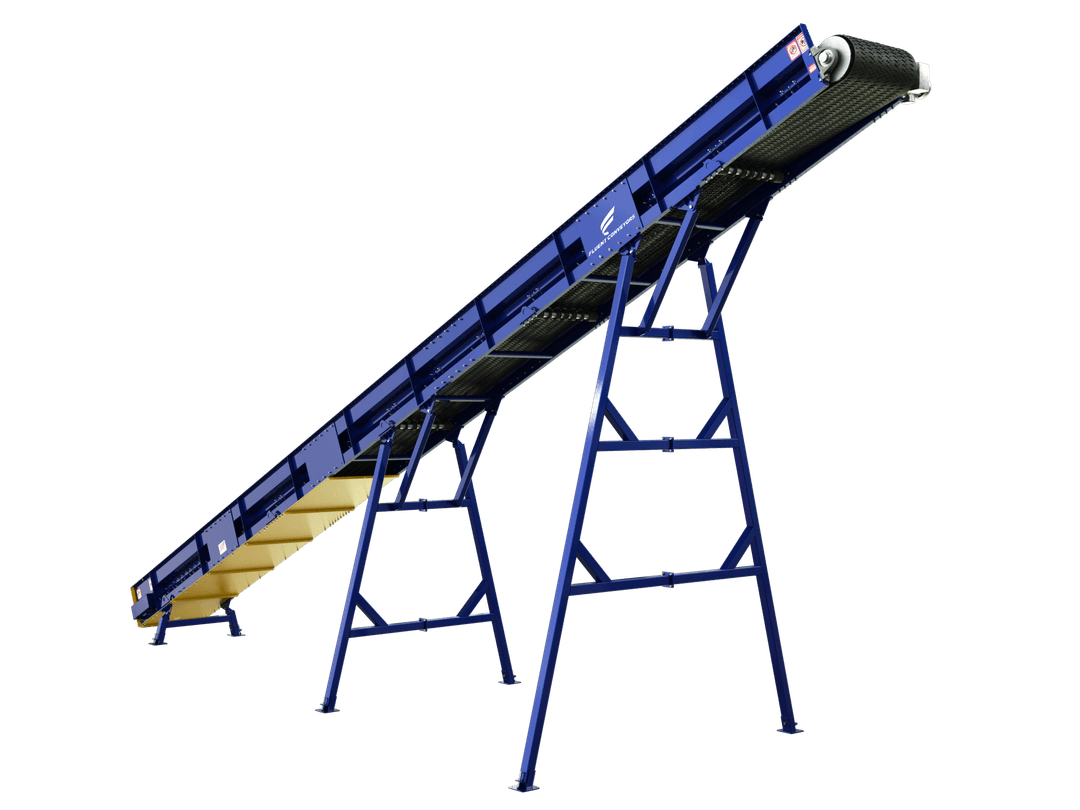
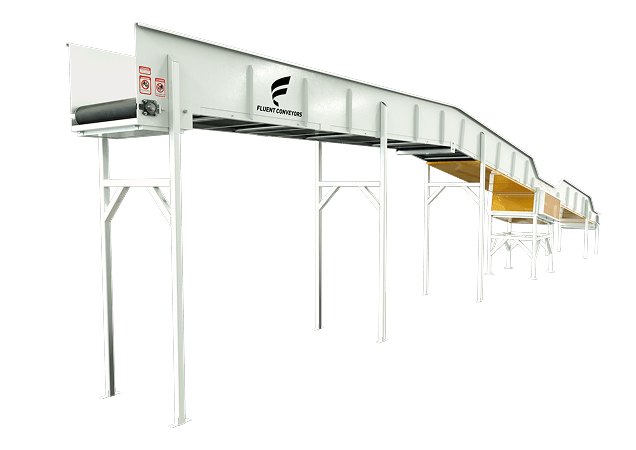
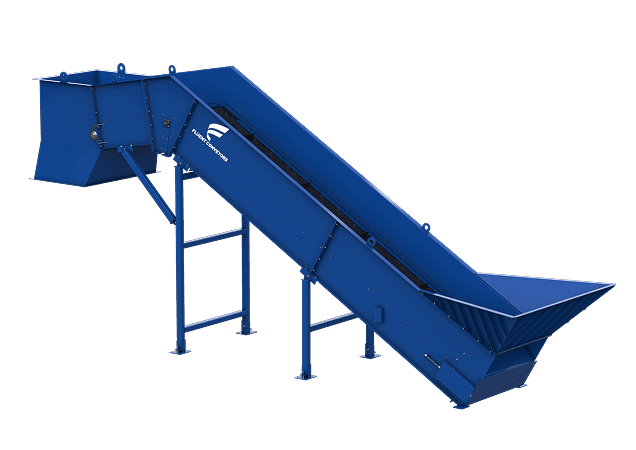
Three Fluent conveyor models fall within that scope.
A stationary bed supporting the belt, and the friction case 402 treats in the most detail
Scope exclusions decide whether 402 is the right document to cite. Our standards and compliance hub explains how consensus standards, regulations, and third-party certifications differ. Exclusions include:
Trough idler conveyors are the clearest case of a machine outside this scope. See the bulk materials belt conveyor reference in the CEMA 7th Edition for more information.
The standard runs in three sections. Its definitions conform to ANSI/CEMA 102, so the vocabulary in a 402 drawing matches the vocabulary in every other CEMA document.
The 2003 edition rewrote the technical data section. Acceleration and friction factors entered the slider bed and roller bed formulas, the previous 15 formulas became 11, and new worked examples were added.
We start with bed selection. A stationary bed suits lighter unit loads and shorter runs, while a roller bed reduces belt pull as load and length increase, the tradeoff the standard's two formula sets describe. Belt construction follows the bed. Our slider bed belts page lists what we supply.
Drive and take-up arrangement follow the belt pull calculation. Drive position changes the tension profile, and take-up type governs how that tension performs in service.
Incline geometry is the other way the standard reaches a Fluent build. We calculate slope and nose-over radius to ensure conveyed objects maintain orientation. Descending conveyors require braking and holdback decisions that 402 treats as separate operational modes.
Transfers, deflectors, and push-offs govern the ends of the run, and those elements turn a unit handling line into a sortation system.
Every machine ships with as-built drawings and an owner's manual naming components in the standard's terms, which is the document your maintenance planner reorders from.
ANSI/CEMA 402-2003 (R-2020) is a reaffirmation rather than a revision, approved in May 2020. The 2009 and 2015 reaffirmations carry text substantively identical to the 2003 edition, so the year in a citation matters less here than on a document under active revision.
Name the current edition, or name one and add "or current edition at time of order," to keep a specification accurate through the procurement cycle. See our conveyor RFQ writing guide for phrasing.
The standard ships as a copyrighted single-user PDF. Buy it from CEMA or an authorized reseller and confirm the year on the product page.


Send your load type and dimensions, unit weight, throughput, incline, and operating environment, and our engineers will identify which CEMA documents apply. Fluent manufactures pulley-driven and sprocket-driven conveyors in the United States, and a specification naming the right standard for the right machine gets quoted faster.