







Copyright © 2026 Fluent Conveyors, LLC. All rights reserved.
The Fluent Conveyors logo is a registered trademark of Fluent Conveyors, LLC. Serial Number 97664258 Registered on Dec. 12, 2023


Copyright © 2026 Fluent Conveyors, LLC. All rights reserved.
The Fluent Conveyors logo is a registered trademark of Fluent Conveyors, LLC. Serial Number 97664258 Registered on Dec. 12, 2023
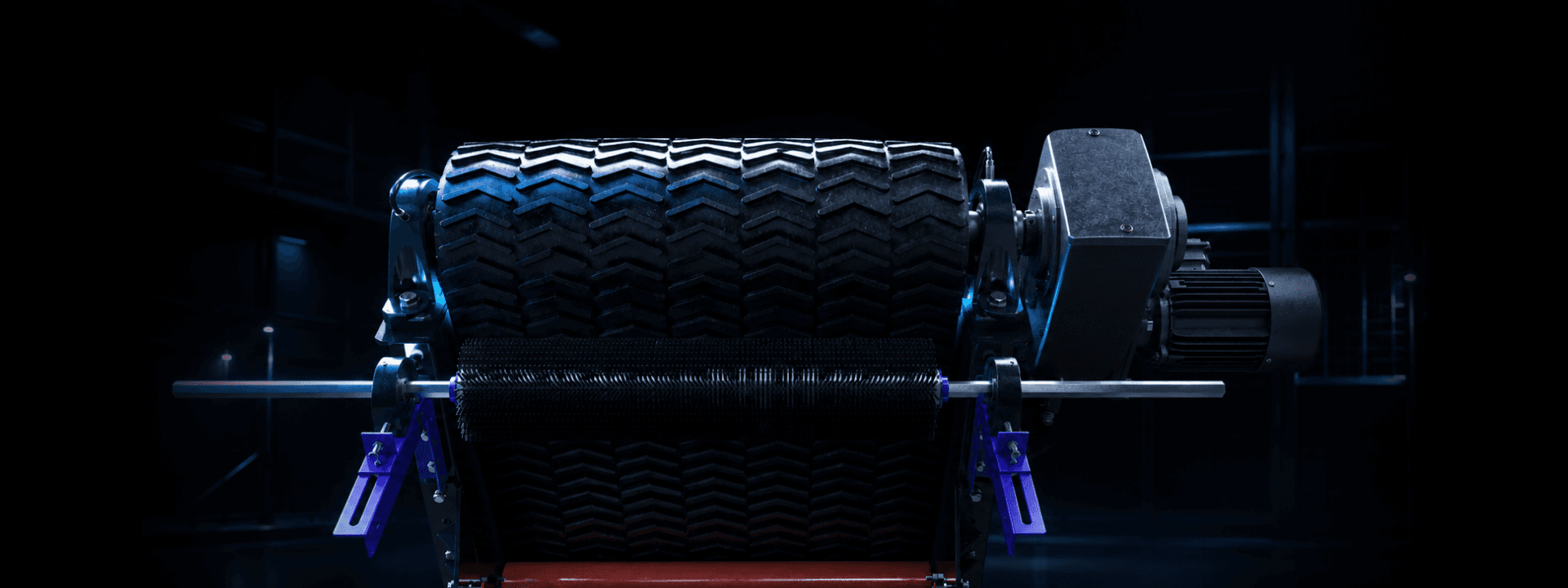
CEMA 576 is the industry standard method for classifying how difficult a bulk material conveyor belt is to clean. It rates five operating conditions and returns a single application class, so a specification calling for a Class 4 belt cleaner is citing this document. Our engineers calculate that class from your operating data and match cleaners rated to the result.

CEMA 576 splits the operating environment into two halves, the belt and the material it carries, and rates five factors across them.
Belt width: nominal width of the carrying surface
Belt speed: running speed in feet per minute
Splices: quantity and type
Abrasiveness: how hard the material works against a blade edge
Stickiness and moisture: how tightly carryback bonds to the cover
The ratings are totalled and assigned an application score falling into one of five classes. The belt cleaner chosen for a conveyor should carry a declared class meeting or exceeding the application class.
CEMA issues 576 as advisory guidance that ranks application severity. A specification line reading "CEMA 576 compliant" only names the application score.
CEMA writes and publishes without operating a laboratory. We use a combination of standards to engineer conveyors and fit them with compliant components that have real-world success records.
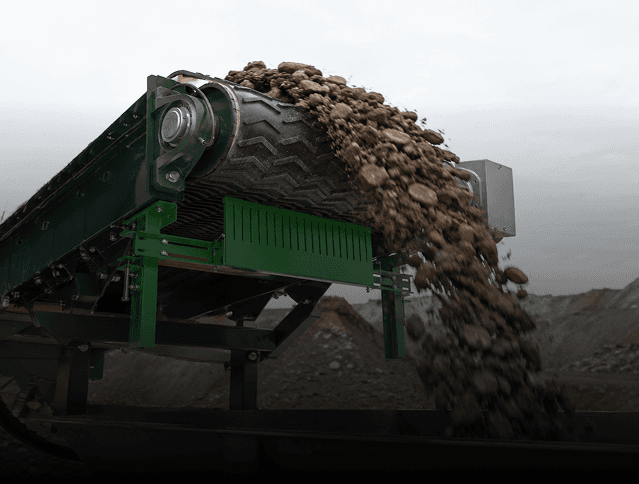
576 addresses bulk material belt conveyors, which on our side of the catalog means the pulley-driven machines: trough idler, trough slider bed, slider bed, and flat idler conveyors, along with radial stackers.
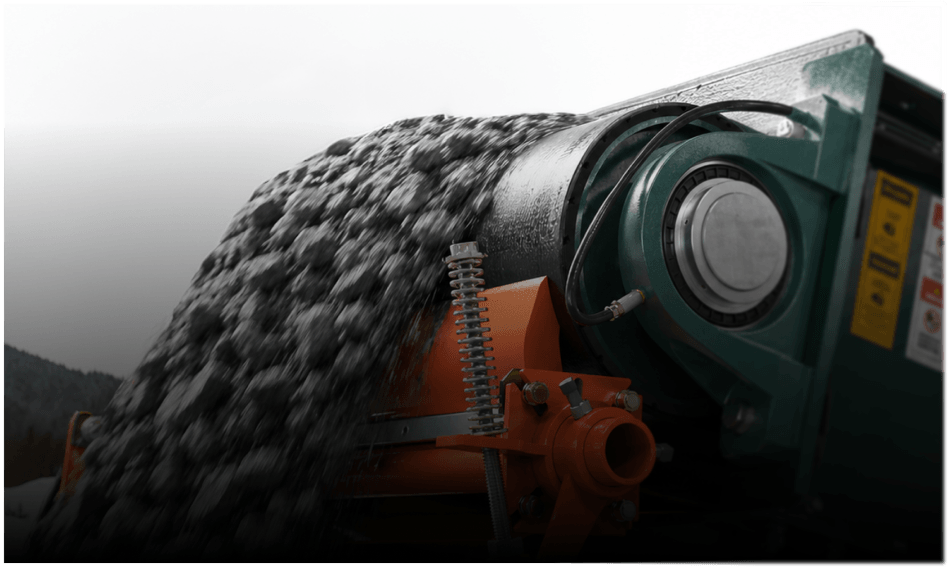
The document was designed to prevent carryback as a belt failure mode. Material surviving discharge rides the return run, packs into return idlers and take-up pulleys, and drops along the floor until somebody shovels it up.
Roller chain conveyors sit outside the classification. A cleaner in the 576 sense works against a rubber cover on the return side after discharge, and apron pan, Z-pan, hinged steel, and rubber combination belts do not run that arrangement.
Package handling and unit handling belt conveyors fall outside it as well, since 576 is a bulk material document.
Four of the five inputs sit on the belt tag, the drive nameplate, or the as-built drawing. Abrasiveness comes from the material, as coded in CEMA 550.
Three more inputs sit outside the classification and still decide the specification.
Belt condition: new, worn, gouged, cupped, or patched
Head pulley: diameter, lagging, and clearance available for mounting
Cleanliness target: the housekeeping standard the guide leaves to the end user
Operating data intake
Application class scored
Cleaner matched to the declared class
Mounting and service access confirmed at the head pulley
Cleaner manufacturers state which class their designs meet, voluntarily and without third-party audit. We score the application, then match it against the classes the manufacturers we supply publish for their cleaner lines.
Class describes how rugged a cleaner is, not how many stages a run needs. Staging follows the housekeeping standard the facility sets.
Primary cleaner: mounts at the head pulley and takes the bulk of the carryback
Secondary cleaner: sits past discharge and removes what the primary leaves behind
Belt brush: clears profiled and cleated surfaces a blade cannot reach
The current edition is CEMA Standard No. 576-2021, approved February 2021, revising the 2014 edition. Note the designation: this is a CEMA standard rather than an ANSI/CEMA standard, so a specification line reading "ANSI/CEMA 576" is a miscitation.
CEMA publishes the PDF as a free download, copyrighted and licensed to a single user, which keeps the scoring charts in the source document. Cite the edition by year, or name one and add "or current edition at time of order."
The classification also appears in the belt cleaning section of Belt Conveyors for Bulk Materials. At the loading end of the same machine, impact bed and cradle dimensions come from a sibling document.

Cleaner selection gets priced into the parts quote. Send belt width, speed, splice type, material, moisture range, head pulley diameter, and available mounting clearance, and our engineers will return an application class with appropriate cleaner options.