







Copyright © 2026 Fluent Conveyors, LLC. All rights reserved.
The Fluent Conveyors logo is a registered trademark of Fluent Conveyors, LLC. Serial Number 97664258 Registered on Dec. 12, 2023


Copyright © 2026 Fluent Conveyors, LLC. All rights reserved.
The Fluent Conveyors logo is a registered trademark of Fluent Conveyors, LLC. Serial Number 97664258 Registered on Dec. 12, 2023
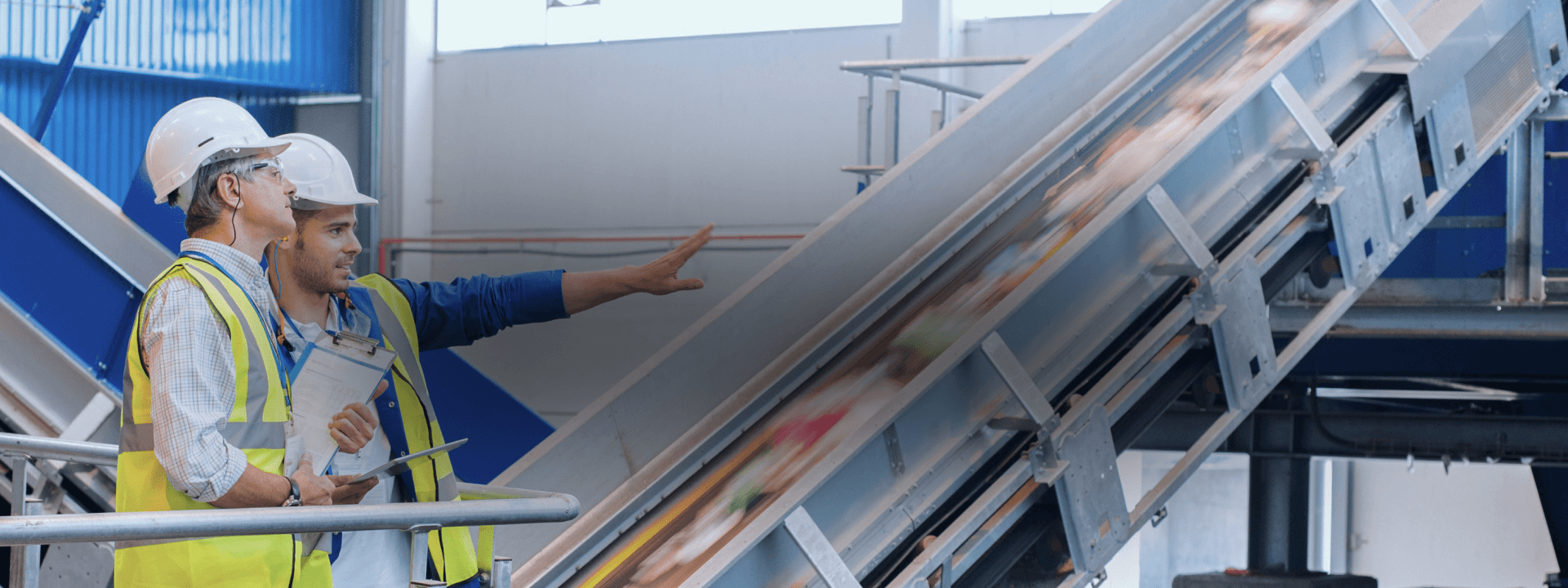
ISO 45001 is a voluntary occupational health and safety management system standard. Registrars certify an organization's management system. Product safety is generally outside the standard's scope. A conveyor cannot be ISO 45001 certified. The standard affects the safety requirements a buyer chooses to apply and the records expected at handoff. Fluent aligns with the principles of ISO 45001 and works with customers who hold the certificate. Our ISO compliance overview covers the other ISO documents that may apply to a conveyor.

An ISO 45001 certificate identifies the organization, the activities covered, and the sites included in the certification. It shows how a company manages occupational health and safety. It does not verify the safety of a specific machine. Machine-level risk assessment belongs to standards such as ISO 12100.
Fluent's processes align with the principles of ISO 45001, and we work with customers who hold the certificate. Fluent does not hold ISO 45001 registration. Registration is not a prerequisite for supplying equipment to a certified organization, although a buyer is free to make it one. Where a certificate is requested from any supplier, review both its scope and the sites it covers. See our standards and compliance overview for a full look at how Fluent works.
Nothing in ISO 45001 obliges a certificate holder to buy only from other certificate holders. Requiring a conveyor manufacturer to hold ISO 45001 before placing an order would be an unusual specification, and entirely the buyer's own decision.
Clause 8.1.4 states that health and safety should be accounted for when an organization purchases. How far that goes is set by the organization rather than by ISO. Some buyers add a few lines to the specification. Others run a full prequalification. Both satisfy the standard.
Fluent aligns with the principles of ISO 45001 and supplies certificate holders regularly. Whatever requirements you decide to apply, we can work to them at three points in the project, starting with the RFQ:
Since ISO 45001 covers operational safety, it has nothing to do with the safety of a delivered conveyor. Our conveyor procurement checklist covers the mechanical safety features that buyers should specify.
Fluent applies comparable discipline to its own purchasing. Our sourced parts come from approved suppliers that meet published vendor requirements covering documentation, materials, and quality before their components are used.
Conveyor safety is easy to understand when responsibilities are distinguished.
A compliant machine can still become part of an unsafe or noncompliant installation. Removing guarding for access, setting a stop boundary that halts one conveyor while the next keeps feeding it, or failing to assign inspection intervals all fall within the installed-workplace layer. Supplier documentation cannot control those conditions.
Fluent does not send installation crews to customer sites. Installation is handled by the customer or a regional installer, and Fluent can help match a project with an installer as desired. Contractor requirements are shared by parties working at the facility. Our guide to coordinating multi-vendor installation covers those handoffs.

Requirements from your safety management system typically reach engineering through an EHS specification attached to the RFQ. They are considered in 3D CAD alongside material, bulk density, throughput, incline, and other operating requirements. On a custom conveyor, we resolve these decisions during the drawing and modeling stage.

Who maintains the machine, and how they reach take-ups, lubrication points, and cleanout, drives door position, walkway width, and clearance under elevated runs. The goal is to allow wear parts to be reached without entering a hazard zone. On a recycling sort station with operators standing at the belt, that geometry is much of the design.
Which openings are guarded, what each guard controls, and whether removal takes a tool. Guards go on during assembly, and OSHA guarding requirements apply independently of any ISO document.
Placement of emergency stop devices and pull cords, and which equipment each one stops. On a multi-machine line, the stop boundary is settled before control systems are engineered.
Washdown, dust load, abrasive or corrosive content, indoor or outdoor service, and shift pattern. These determine material selection, sealing on idlers and bearings, and which replacement belt properties the application requires.
Hazard locations depend on the drive system, so guarding starts with the machine design rather than the management-system standard. A sprocket-driven roller chain conveyor concentrates pinch points around chain and sprocket engagement, the return run, and take-up areas.
A pulley-driven conveyor creates different hazard points at head and tail pulley nips, snub and bend pulleys, and belt-to-idler contact. Guarding written for one drive type cannot simply be transferred to the other.
The safety management principles that apply in an operating facility also apply in the shop where the conveyor is built. Conveyor manufacturing involves CNC machining and automated braking, welding, structural steel handling, overhead lifting, assembly, finishing, and an energized run-in. Each activity has its own recognized hazards. Our US manufacturing process describes the sequence.
A management system does not eliminate those hazards. It requires hazards to be identified, controls to be selected using the hierarchy of controls, workers to participate in hazard identification, and process or equipment changes to be reviewed. On engineered projects, those requirements can affect the reporting scope agreed under quality, safety, and regulatory compliance.
Each machine runs under power for over 10 hours before shipment, with safety devices exercised during the run. Because run-in testing puts a moving machine near personnel, OSHA addresses temporary reenergization for testing at 29 CFR 1910.147(f)(1): the area must be cleared of tools and personnel before energizing, and energy controls must be reapplied before work resumes. Conveyor quality assurance covers what gets recorded.
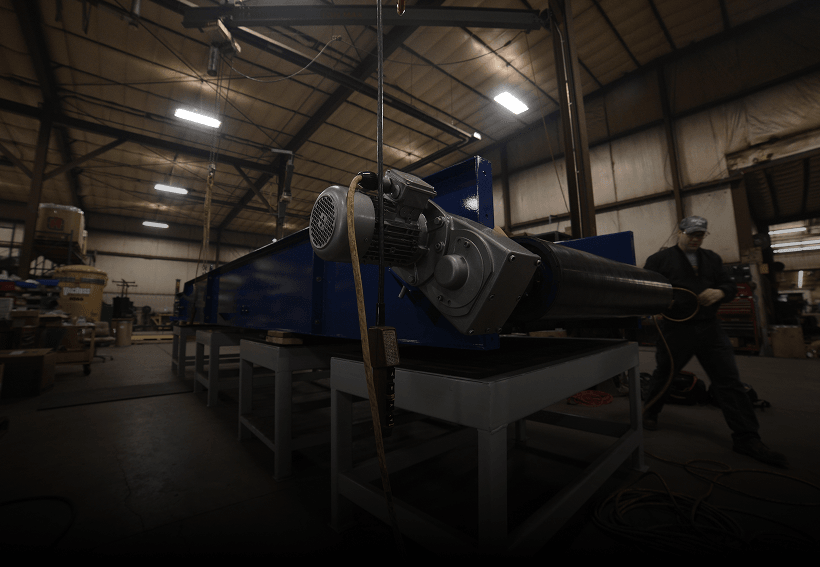
An ISO 45001 certificate describes the supplier's management system. The records below describe the machine being delivered, which is usually the evidence needed for the project file.
The hazard review is produced during engineering and retained with the build record. Request it before shipment if it needs to be part of your project file. Residual risks and maintenance intervals also carry into the owner's manual used for training.
Panel documentation ships where applicable. Panels are built to UL 508A specifications and individually certified, but that certification applies to the control panel, not to Fluent as a company or to the conveyor as a whole.
Operational responsibilities remain with the employer regardless of what the supplier provides. Training, lockout procedures, inspection intervals, and safe operating practices cannot be satisfied by a handoff package.
Clause 8.1.3 requires relevant changes to be assessed before they take effect, and conveyors often change during their service life. Three common triggers include:
Capacity or throughput change
Added discharge or transfer point
Change to control behavior or stop scope
A true like-for-like replacement preserves the original design basis. Changing a reducer ratio, tooth count, or control behavior can also change belt speed, stopping distance, or a safety function. That becomes a machine-level engineering question rather than a management-system question. For any non-identical replacement parts inquiry, send the machine serial number and the candidate component data sheet.
When equipment supplied by Fluent is modified, responsibility for the modification rests with the party making the change. Operating outside rated capacity or with required guarding removed also falls outside warranty coverage. Those boundaries are best resolved before a retrofit begins.
Scope changes during a build follow a separate process. A change order records the revision so drawings, test records, and the owner's manual all describe the same machine at shipment.

ISO 45001 leaves technical machine requirements to other standards and regulations:
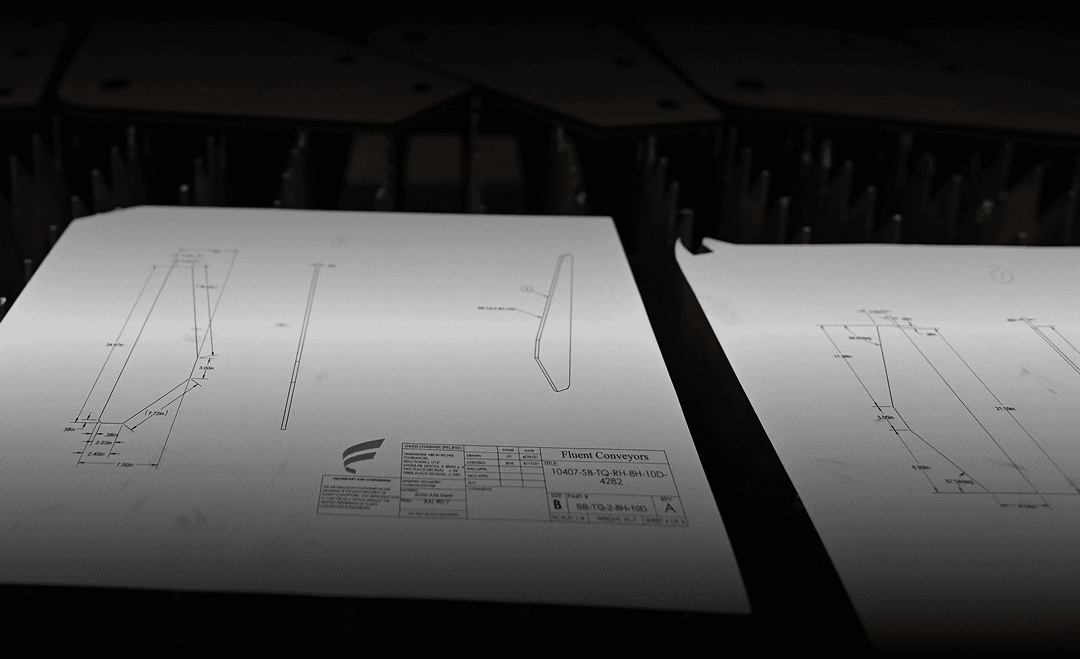
ISO 45001:2018 is the current published edition and includes Amendment 1:2024 on climate action changes. A second edition is in development. The Draft International Standard entered a 12-week ISO ballot on 16 June 2026, with publication expected in 2027. Reported changes include broader hazard identification, greater attention to work-related wellbeing, and revised language on externally provided processes, products, and services, which is the area most relevant to equipment suppliers. Draft language can still change, so specifications should cite the current published edition until the new edition is issued.

We define and price safety requirements during quoting. Send the conveyor type, material and bulk density, throughput, access and cleaning method, maintenance responsibility, controls and stop scope, and any safety requirements your management system applies to capital equipment.