







Copyright © 2026 Fluent Conveyors, LLC. All rights reserved.
The Fluent Conveyors logo is a registered trademark of Fluent Conveyors, LLC. Serial Number 97664258 Registered on Dec. 12, 2023


Copyright © 2026 Fluent Conveyors, LLC. All rights reserved.
The Fluent Conveyors logo is a registered trademark of Fluent Conveyors, LLC. Serial Number 97664258 Registered on Dec. 12, 2023
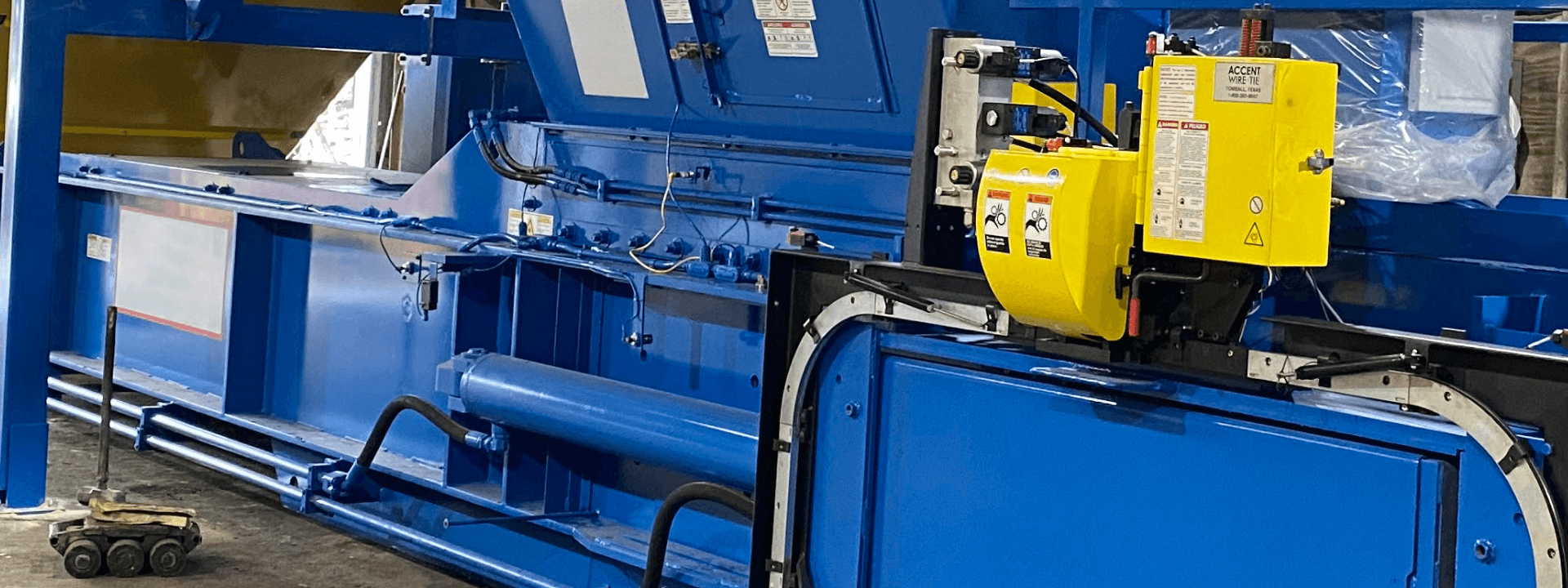
ISO 12100 provides machinery designers with a structured way to identify hazards, assess risk, and improve safety. On a conveyor, the process affects guarding, emergency stops, access, maintenance, and controls. The standard is voluntary in the United States unless a specification or contract requires it. It is also widely used in European machinery risk assessment and conformity work, but it does not replace other legal or technical requirements that may apply. Our ISO compliance overview covers the other ISO documents that can apply to a conveyor.

ISO 12100 is a type A machinery safety standard. It sets out the terminology and method for identifying hazards, estimating and evaluating risk, and reducing risk across a machine's life cycle. It does not prescribe conveyor dimensions, load ratings, or component values. More specific standards provide the detailed requirements.
For the conveyors Fluent builds, ISO 12100 provides a general risk-assessment method. In the United States, ASME B20.1 adds conveyor-specific safety requirements for design, construction, installation, maintenance, inspection, and operation.
ISO 12100 does not cover damage to property, domestic animals, or the environment, and it is not the main electrical standard for machinery. Electrical requirements are addressed separately, including by IEC 60204-1 internationally, NFPA 79 for industrial machinery in the United States, and UL 508A for industrial control panels.
ISO 12100 uses a three-step hierarchy for risk reduction.
Our guide to reducing conveyor hazards covers the operating side of this topic.
Before hazards can be assessed, the machine's boundaries have to be clear. ISO 12100 groups those boundaries into four types of limits.
This assessment builds potential misuse into the design of the conveyor. Our conveyor safety guides address the operating side of those risks.
Drive-related hazards are specified based on a conveyor’s movement system since both types have specific machinery.
OSHA guarding requirements apply independently of ISO 12100. In general industry, OSHA addresses machine hazards under 29 CFR 1910.212 and separately requires guarding for accessible power-transmission components such as pulleys, belts, chains, and sprockets under 29 CFR 1910.219.
A risk assessment feeds component dimensions, component selections, control logic, and fabrication details on the drawings.
Applicable standards and customer requirements
Application and hazard review
Mechanical and controls engineering
Guarding and safety device verification
Operational testing and QA records
Stage 1 records the standards named in the specification, the destination market, any required performance level for safety functions, and the buyer's EHS requirements. Engineering then models the machine in 3D CAD around the material, throughput, incline, guarding scope, and operating environment supplied with the RFQ. For a custom conveyor, that work settles the main design requirements before fabrication begins.
Stage 2 produces a written hazard review for the machine, available to the customer on request. Stages 3 and 4 turn that review into drawings and hardware, with guards, safety devices, and labels built into the machine during assembly. Stage 5 involves conveyor assembly and testing for more than 10 hours, including checks of speed, tracking, alignment, noise, safety stops, and electrical function. Our conveyor quality assurance page explains what is recorded.
Stage 3 is also reflected in the documentation supplied with the machine. Residual risks, guarding requirements, and maintenance intervals are carried into the owner's manual. The roller chain conveyor owner's manual shows the format used for a Fluent machine.
On engineered projects, quality, safety, and regulatory compliance requirements also define the records and audit documentation expected from the build.


ISO 12100 does not contain a spare-parts clause. But its risk-assessment method is useful when a component changes. We ask the question, “Does the machine still operate within the limits and hazard controls that were originally assessed?”

A true kind replacement matches the original function, capacity, rating, material, settings, and relevant safety characteristics. In most cases, that preserves the original design basis. Safety-critical parts should still be checked against the original specification, especially when the original component is obsolete, or the replacement comes from a different product family. Most routine wear parts are like-for-like replacements. See how often to replace conveyor parts for basic scheduling.
A replacement part gets engineering review when it can affect speed, torque, stopping behavior, control logic, guarding geometry, structural load, environmental suitability, or a safety function. A different manufacturer at the same nominal rating may be acceptable, but equivalence still has to be established. The same principle applies to obsolete components and upgraded electronics. That review is consistent with the ANSI and ASME standards used on Fluent projects.
Send the machine serial number or original order, the part being replaced, the candidate part's data sheet, and the current operating conditions. For a conveyor Fluent built, engineering can pull the build record and compare the replacement with the original design requirements. The review applies across all replacement parts, including components from supply partners. The component manufacturer provides the rating; Fluent checks how that rating applies to the specific machine.
These documents address different parts of conveyor safety. They often appear together in specifications and are not interchangeable.
The current edition is ASME B20.1-2024. It applies to conveyor design, construction, installation, maintenance, inspection, and operation in relation to hazards. ISO 12100 and B20.1 can be used together: one supplies the general risk-assessment method, while the other addresses conveyor-specific safety. CEMA 102 provides conveyor terminology used across the industry.
ISO 12100:2010 remains the current published edition and was last reviewed and confirmed by ISO in 2022. A second edition is under development as ISO/DIS 12100.3. As of August 2026, ISO showed the draft in another 12-week DIS ballot. ISO states that the new edition is intended to replace ISO 12100:2010, ISO/TR 22100-1:2021, and ISO/TR 22100-2:2013. Until the new edition is published, specifications should not cite it as though it were already in force.
Separately, Regulation (EU) 2023/1230 on machinery applies from 20 January 2027. Equipment placed on the EU market will need to meet the applicable legal requirements at that time; using ISO 12100 can support the machinery risk-assessment process, but the standard does not by itself establish conformity. Buyers whose projects require third-party review should also read our TÜV compliance page, since the review scope affects the documentation required with the machine.

Power and tension calculations fall outside ISO 12100. ISO 5048 covers power and tensile-force calculations for belt conveyors, which can be compared with the CEMA methods commonly used on U.S. projects.
Belt properties are covered by a separate set of standards. ISO conveyor belt standards address conductivity, flammability, and belt construction. Those values come from the belt manufacturer's testing and certification, not from the conveyor builder.
On U.S. projects, CEMA standards are commonly used for conveyor component classifications, load ratings, calculations, and terminology. They serve a different purpose from ISO 12100's machine-level risk-assessment method.
At the organization level, ISO 9001 addresses a manufacturer's quality management system. That is separate from the safety assessment of an individual machine.
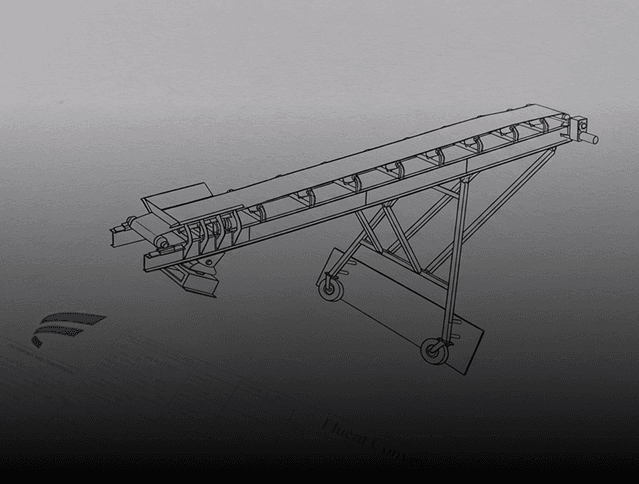

For an engineered conveyor, risk-assessment requirements should be defined before the order is placed. Send the conveyor type, material and throughput, access and cleaning method, controls scope, any required safety-function performance levels, and the internal EHS specification the project must meet. Our RFQ writing guide covers the rest of the information that belongs in the package.