









Copyright © 2026 Fluent Conveyors, LLC. All rights reserved.

The Fluent Conveyors logo is a registered trademark of Fluent Conveyors, LLC. Serial Number 97664258 Registered on Dec. 12, 2023


Copyright © 2026 Fluent Conveyors, LLC. All rights reserved.
The Fluent Conveyors logo is a registered trademark of Fluent Conveyors, LLC. Serial Number 97664258 Registered on Dec. 12, 2023
A NIST survey of U.S. manufacturers shows that plants reliant on run-to-failure (reactive) maintenance lost 6.7% of planned production time to maintenance-related downtime, compared with 0.9% for the least reliant.

Don’t gamble with your profit margins or worker safety. It is time to replace a conveyor when the problems are system-wide, such as a failing frame, recurring failures, or a job the conveyor has outgrown.
Below, we explain how to tell whether you need a repair, retrofit, or replacement and how to compare the costs, including a calculator to help you understand the payback period on a new conveyor.
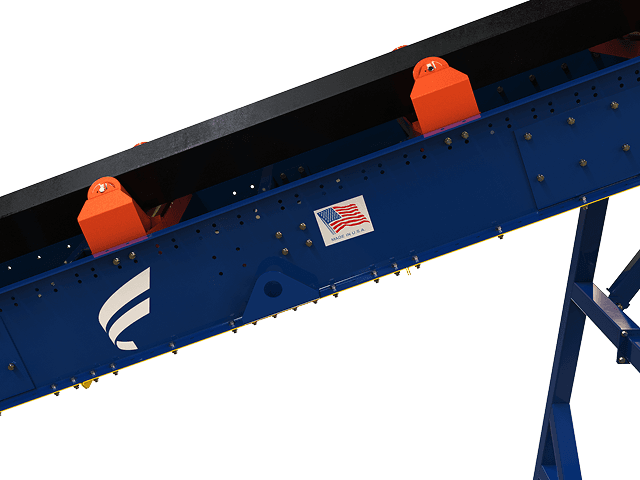
Start by identifying existing problems with your conveyor. An issue may be limited to a single conveyor component, affect one system such as the drive or controls, or involve the conveyor as a whole.
These options can also be staged. You might retrofit a new control panel now to reduce downtime, then replace the conveyor during a planned shutdown next year.
Belts, chain, bearings, and scraper blades wear out on a schedule. Our guide to how often to replace conveyor parts covers those intervals. The signs below go beyond routine wear and point to systemic problems that require equipment replacement.

The frame keeps the rest of the conveyor aligned. Once it cracks, bends, rusts through, or settles, new belts, chain, and bearings may no longer hold their alignment and can wear out early.
Look for cracked welds near the head, tail, and drive, as well as frame sides that bow or twist. Check for steel thinned or perforated by corrosion and supports that have moved or sunk. On a roller chain conveyor, confirm that the railroad rail sits straight and level on its supports.
One failure usually means a part reached the end of its service life. The same failure repeating on a short cycle means something else is wearing it out. Watch for bearings that repeatedly fail on the same shaft, a motor that trips or runs hot, a belt that tears or wanders, and sprocket teeth that wear on one side.
Each of those patterns can point to a cause outside the failed part, such as misalignment, overload, contamination, or a load the component was not sized to handle. The failed part often shows evidence of the cause, so inspect it before installing the replacement. For belts, compare the damage with our guide to types of conveyor belt damage.
When the cause is fixable (such as a misaligned coupling or a belt loaded past its rated capacity), correct it and keep the conveyor. If the conveyor itself is causing the failure (for example, a frame that will not hold alignment or a drive sized for a lighter load), the next part may fail the same way.
Short stops add up. In one conveyor monitoring study at a feed plant, a single belt conveyor stopped six times during a 2-hour observation and lost 15 minutes and 43 seconds to jams and misalignment.
Track two numbers for each conveyor: how often it stops and how long it takes to get running again. When both numbers worsen month after month, maintenance is probably not enough to correct the conveyor's underlying problems.
A functional conveyor can become difficult to support. When component brands go out of business, merge, or release new products, it can become impossible to find older replacement parts.
You can often find equivalent parts, but the prices might not justify continued investment. When several components require custom work and every order creates a long shutdown, it might be time to replace your conveyor.
A conveyor can be mechanically sound and still be the wrong conveyor for the job. Operational changes often necessitate a new conveyor system.

Production targets grow, and a conveyor sized for last decade's tonnage can only carry more by loading deeper or increasing the belt speed. Both can increase wear on the belt or chain, bearings, and drive, while overloading also adds spillage and jams.
Running harder does not guarantee the required tonnage. In a South African port study, the three berths with the most conveyor failures moved 26%, 45%, and 28% of their planned tonnage over 18 months, a period that also included planned shutdowns and COVID-19 lockdowns.
Some capacity gains can be made within the existing frame. A larger motor, a gearbox or reducer with a new ratio, or variable speed may add capacity when the belt, chain, bearings, and structure are rated for it. When the change requires a wider belt, stronger chain, or a longer or steeper run, a new conveyor is usually the better choice.
A conveyor designed for one material can struggle with a denser, sharper, wetter, or more abrasive one, even at the same tonnage. Bulk materials carry a CEMA 550 classification from the Conveyor Equipment Manufacturers Association for characteristics including flowability and abrasiveness. A different classification can affect belt selection, and sometimes the chain, drive, or frame as well.
The same port study shows how material changes affect an existing conveyor. Its systems were built in the 1970s and 1980s to carry woodchips and later coal, with a 25-year design life. After the port shifted to denser chrome and magnetite, failures increased, new belts and drives tended to fail early, and belts were loaded past their allowable fill to meet targets. The researchers' first recommendation was to determine whether the conveyor design could handle the heavier cargo.
Recycling lines face the same question when a new stream is introduced, such as scrap metal or construction and demolition (C&D) debris on a line designed for fiber. Before replacing belts or chain like-for-like, confirm that the conveyor has the specifications for the material you run today.

New equipment often changes what a conveyor needs to do. A new baler, for example, can change the baler infeed height, angle, and feed rate the conveyor must match. A new shredder, screen, or sort line can move transfer points in the same way.
Some layout changes are modifications, such as adding a section, shortening a run, or changing a discharge chute. Others change the conveyor configuration itself, such as turning a straight incline into a Z-shape or hockey stick to clear new equipment. Those changes usually require new conveyor sections or a new conveyor.

Controls can become obsolete without causing an immediate mechanical failure. You may have a controller nobody can reprogram, no interlock with the baler or shredder downstream, or no stop monitoring. Safety problems are easier to spot, such as missing guards, e-stops that do not reach every work area, or routine tasks that put hands near pinch points. ASME B20.1, the U.S. conveyor safety standard, addresses these hazards.
Frequent hands-on work also increases exposure to hazards. In a NIOSH study of severe mining accidents, conveyors were involved in 18% of machine-related accidents at surface mines, more than any other machine, and maintenance and repair was the most common activity taking place when those accidents occurred.
Guards, e-stops, and controls can usually be retrofitted. A conveyor design that repeatedly puts crews inside hazard zones for lubrication, cleanup, or chain adjustment is a stronger case for replacement. NIOSH lists remote and automatic lubrication among its conveyor maintenance research priorities.
A retrofit keeps the frame while upgrading the systems that might be holding the conveyor back. It makes sense when the structure is sound, and the layout still works, but one system limits reliability, speed, or safety. These systems can often be upgraded without replacing the conveyor:
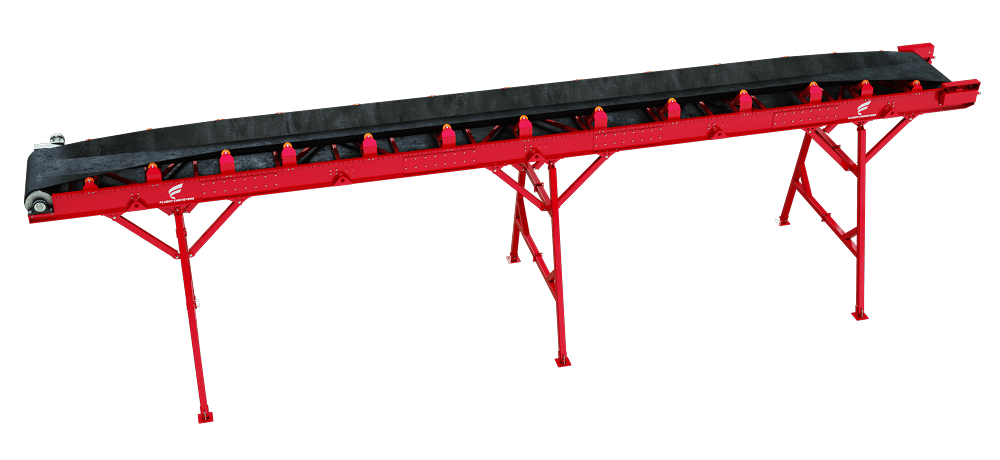
We retrofit existing conveyors, including machines built by other manufacturers. Each control panel we build carries its own UL 508A certification and complies with TÜV standards.