










Copyright © 2026 Fluent Conveyors, LLC. All rights reserved.
The Fluent Conveyors logo is a registered trademark of Fluent Conveyors, LLC. Serial Number 97664258 Registered on Dec. 12, 2023


Copyright © 2026 Fluent Conveyors, LLC. All rights reserved.
The Fluent Conveyors logo is a registered trademark of Fluent Conveyors, LLC. Serial Number 97664258 Registered on Dec. 12, 2023

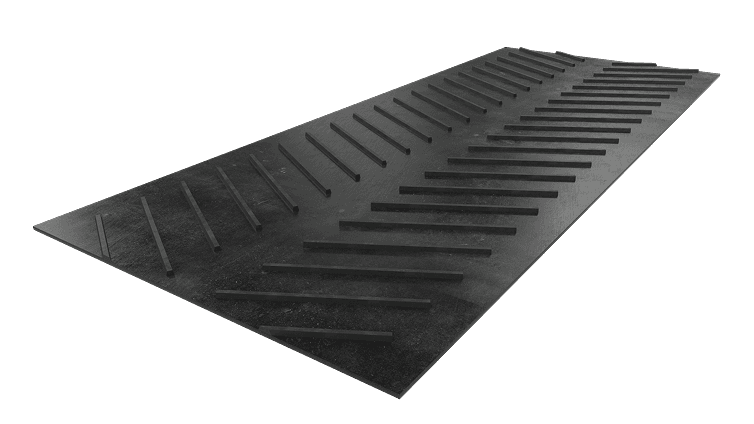
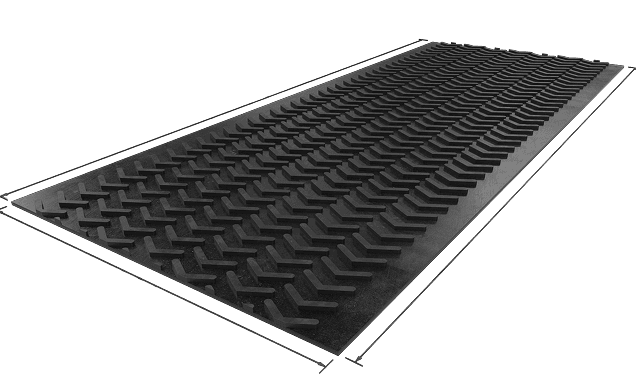
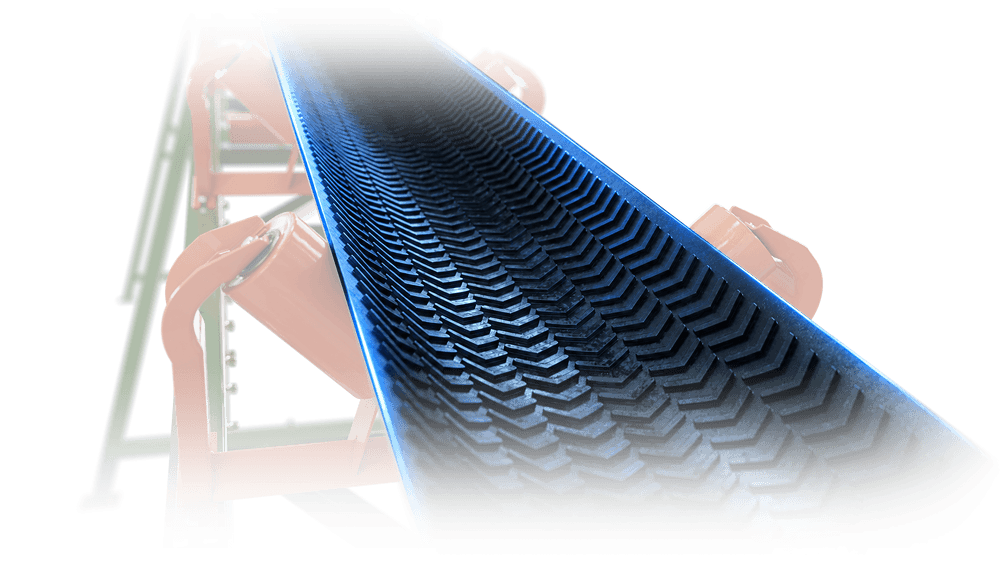
Fluent supplies multi-chevron cleated belts for Fluent conveyors and general replacement. Multiple V columns distribute carrying capacity across wide belts, scaling throughput on dry granular and aggregate at moderate inclines.

Not all options are available in every combination.
SBR rubber (high abrasion resistant), heat resistant (HR) rubber, moderately oil resistant (MOR) rubber, super oil resistant (SOR) rubber, white FDA rubber, flame retardant (FR) rubber, neoprene, nitrile (FDA/USDA), butyl, PVC, polyurethane
48, 60, 72, 84 inches standard; larger widths available with vertical splicing
Black standard rubber, oil-resistant rubber, high-heat-resistant rubber, flame-retardant rubber, nitrile, PVC, EPDM
2–6″ (50–150 mm)
6, 9, and 12 inches
2-, 3-, and 4-column configurations
Monofilament, fiberglass, steel breaker
Hot vulcanized (integrally molded), hot vulcanized (bonded on), tack-on (field-replaceable)
Alligator hinged, bolt plate, rivet plate, Superscrew, vulcanized (longitudinal, diagonal, finger, step), recessed
Corrugated sidewalls, C-channel reinforcement, center support ribs, food-grade compound
Store indoors; best if installed within 1 year of receipt
and carrying efficiency.
Multi-chevron is a cleat profile with two or more parallel V columns running down the belt face. Multi-column cleat distribution increases material contact across the belt width, which is what makes multi-chevron the correct choice for high-throughput applications on wide belts where a single-column closed V or open V would leave too much belt face uninvolved in carrying load.
The trade-off is added cleat surface area at discharge, which can increase carryback. Specify multi-chevron when belt width and throughput are the dominant constraints, not when discharge cleanliness is.
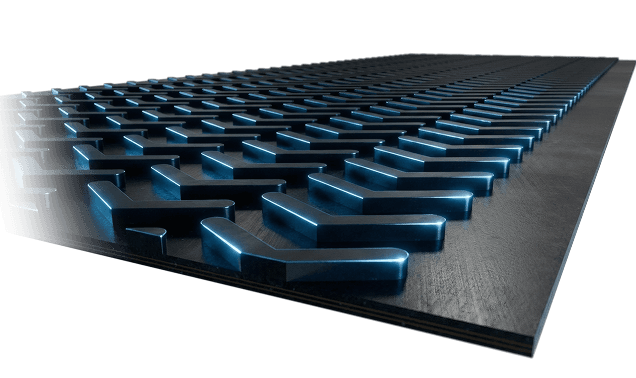
Multi-chevron is one of several chevron cleated belt options. Profile selection depends on belt width, what the belt carries, and where it tends to fail.
Maximum carrying capacity per pocket on dry granular and aggregate, typically on narrower belts.
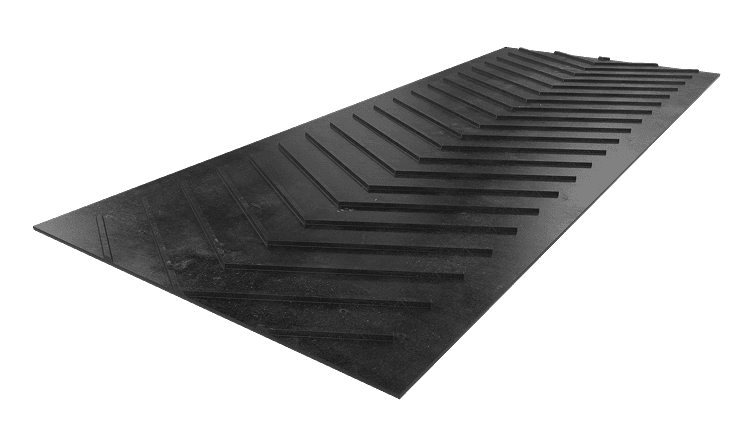
If a single-column chevron is leaving capacity on the table at 60″ or wider, multi-chevron is the next step up. If lateral spillage on a wide, steep-incline belt is the bigger problem, switch to bullhorn.
Column count scales with belt width and material flow rate. Two columns work for moderate widths and granular flow. Three- and four-column patterns engage more belt face on 72″ and 84″ belts moving high-volume bulk.
Pitch is driven by material size and flow rate. 6″ pitch maximizes pocket count and works well for fine to medium granular. 9″ pitch is the general-purpose default. 12″ pitch suits coarse aggregate, where larger pockets reduce cleat-face impact loading.
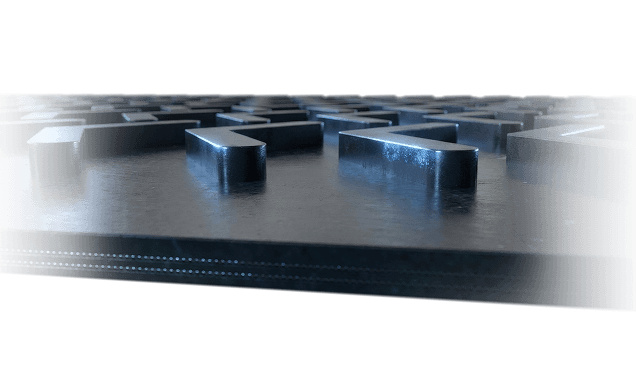
Cleat height should scale with incline angle and material size. For granular and light-bulk applications, 2–3″ cleats are typically sufficient. Steep inclines and large aggregate may call for 4–6″ cleats. Taller cleats require adequate return path clearance and larger pulley diameters for the ply count. Confirm conveyor return geometry before specifying heights above 3″.
Vulcanized into the belt carcass during manufacturing. With no mechanical joint at the base, this is the best choice for high-load, high-cycle applications, abrasive materials, and anywhere cleat detachment would cause downstream damage or process interruption. Standard for multi-chevron belts running heavy aggregate or scrap.
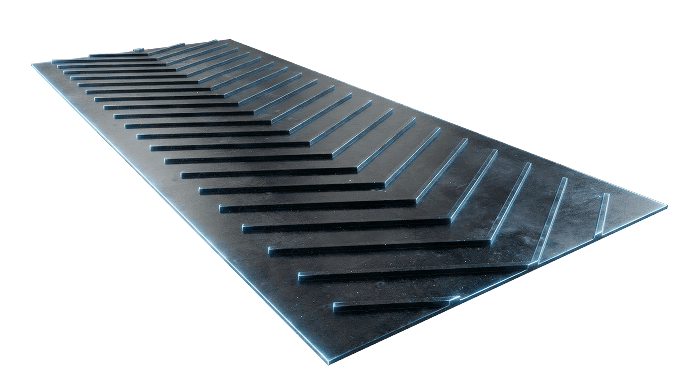
Bolted or bonded onto the belt after manufacturing. Worn or damaged cleats can be swapped in the field without pulling the belt. Tack-on and mechanically attached styles simplify maintenance for lower-intensity applications and field repairs.

Cleat base cracking and column separation on multi-chevron belts are usually a symptom of the wrong attachment method for the application, not a belt quality issue.
The right belt compound depends on what the belt contacts and the operating environment.
Specify the operating environment at inquiry (temperature range, exposure to oils or chemicals, and any food contact requirements), and we'll confirm compound compatibility across the full belt construction.
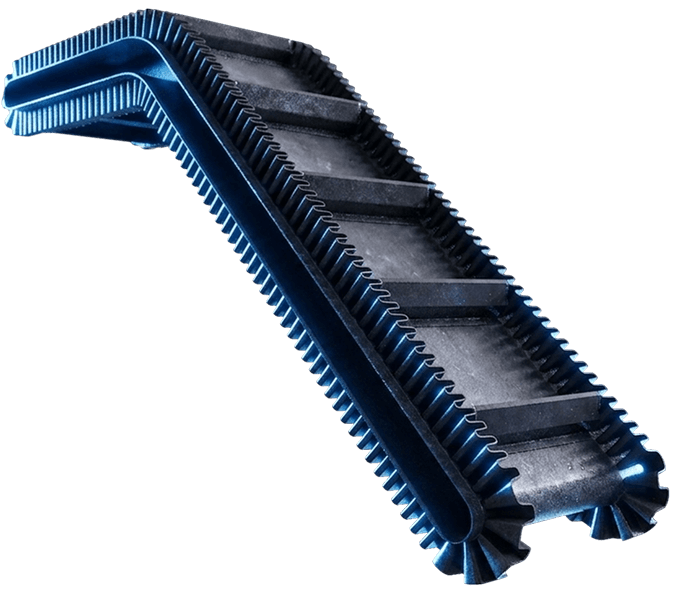
We can add corrugated sidewalls to multi-chevron cleated belts for applications where capacity needs to scale beyond what cleat pockets alone provide. Sidewalls turn the belt cross-section into a continuous trough, enabling near-vertical conveying angles. For long-span incline conveyors where belt sag between support points is a concern, center support ribs are available.
Use documentation from the original belt when reordering. Worn belts stretch over time and produce undersized replacements if measured directly. Contact our engineering team if you need help selecting the right belt or determining the correct size.

Fluent designs and manufactures custom conveyors for recycling, aggregate, and bulk handling operations. When you source a multi-chevron replacement from Fluent, you work with engineers who specify and run these belts on conveyors every day.
Two-, three-, and four-column patterns matched to belt width and throughput.
Cleat heights, pitches, and compounds matched to the operating environment.
Integrally molded and mechanically attached constructions to suit load intensity.
Compatible with slider bed, trough idler, flat idler, and trough slider bed conveyors.
Custom configurations ship in 3–6 weeks.
Ready to work with the experts?
Fluent Conveyors also stocks cleated replacement belts in these patterns.


