









Copyright © 2026 Fluent Conveyors, LLC. All rights reserved.

The Fluent Conveyors logo is a registered trademark of Fluent Conveyors, LLC. Serial Number 97664258 Registered on Dec. 12, 2023


Copyright © 2026 Fluent Conveyors, LLC. All rights reserved.
The Fluent Conveyors logo is a registered trademark of Fluent Conveyors, LLC. Serial Number 97664258 Registered on Dec. 12, 2023
A belt can meet the manufacturer's stated tolerances and still fit poorly in the frame it was ordered for. ISO 251 addresses one part of that problem by setting width and length conventions for conveyor belts with a textile carcass. In the United States, it only applies when a specification calls for it. Our ISO compliance overview covers the other ISO documents that may apply to a conveyor or component.

ISO 251 sets dimensional conventions for one class of belting. It is not an engineering specification for the belt as a whole, and it is not a conveyor standard.
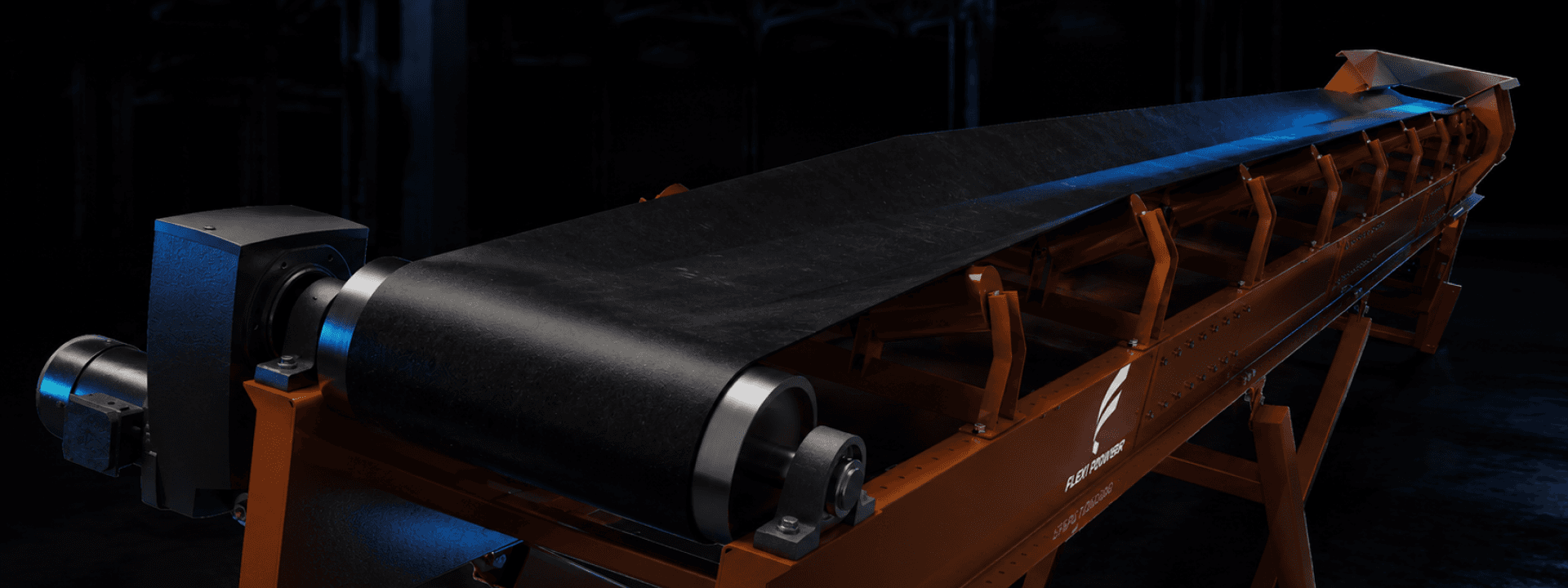
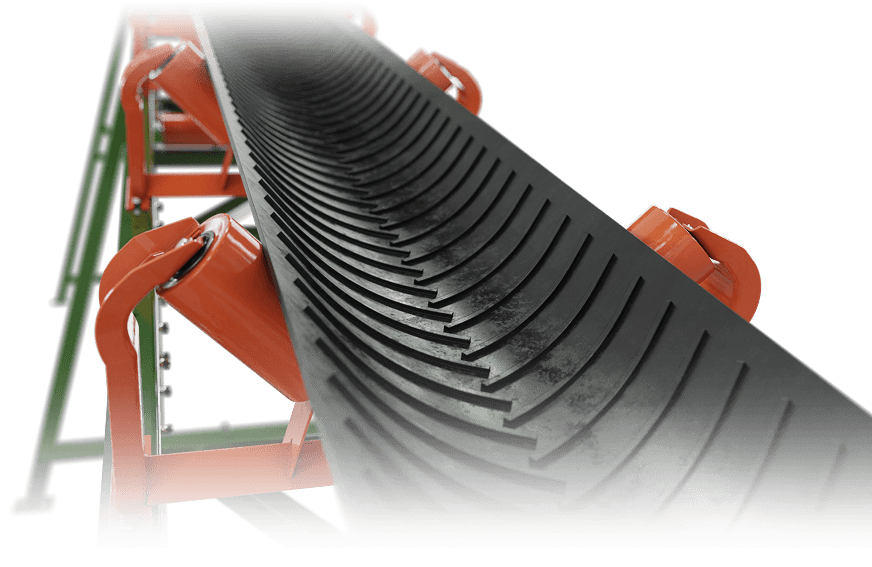
ISO 251 applies to fabric-reinforced belting used on pulley-driven machines, including the fabric belt constructions supplied for slider bed, flat idler, and trough idler conveyors.
It does not apply to belts on our roller chain conveyors. Steel belt, hinged steel, apron pan, and z-pan designs carry the load on chain and rail.
Other standards cover belt performance. ISO conveyor belt standards address properties such as conductivity, flammability, and carcass construction. Those values come from the belt manufacturer's testing.
Nominal width is the size used when the belt is ordered. Actual width is the width of the manufactured belt when delivered. ISO 251 allows a tolerance between the two, and the permitted range increases with belt width.
These dimensions determine width and tolerance measurements:
In US conveyor design, CEMA usually governs these dimensions rather than ISO. Pulley misalignment allowances are tied to the standard face widths in ANSI/CEMA B105.1, and a wider face can be specified when the expected belt travel requires it.
ISO 251 states that conveyor belt lengths are not standardized, even though it specifies tolerances for belt length. There is no conflict between the two.
The conveyor determines the required belt length. Center distance, pulley wrap, and available take-up travel affect the final measurement. The tolerance simply defines how closely the supplied belt must match the ordered length.
Take-up travel accommodates that difference as well as the initial elongation that occurs after the belt is loaded. Allowing for the dimensional tolerance and expected belt stretch helps prevent a correctly supplied belt from using up its adjustment range too soon.
Open-ended and endless belts also use different length measurements. An open-ended belt is cut to length and spliced in the field, so the ordered length is the cut length. An endless belt arrives already spliced, and its net length is determined under ISO 16851. Fluent supplies both, so measuring for a replacement begins with identifying which type is being quoted.
ISO 251 uses a metric dimensional system. Fluent designs and fabricates in the United States, where conveyor dimensions are commonly specified in inches. The metric and imperial width series do not line up exactly, which can create problems when both appear in the same project.
The capacity tables in the CEMA 7th Edition use standard imperial belt widths from 18 inches through 96 inches. Metric widths use round millimeter increments. A 1,200 mm nominal belt is 47.24 inches wide, so it is not the same as either a 42-inch or 48-inch CEMA belt.
Component manufacturers account for this difference. For example, Dodge and other pulley suppliers publish recommended interchanges between metric and inch face widths instead of treating them as exact conversions.
Fluent works in whichever measurement system the buyer specifies. If the specification is written in millimeters, the machine is dimensioned in millimeters. Problems arise when a metric belt designation is paired with an imperial frame, and each side is treated as equivalent. Define the governing system when selecting belt width to prevent a mismatch.

ISO 251 is not a named requirement in a Fluent purchase order, drawing note, or incoming inspection criterion. Our quality, safety, and regulatory compliance scope explains what a named requirement obligates. In practice, belt dimensional tolerances reach the conveyor through the belt manufacturer's published specifications. For textile-carcass belting, those published dimensions may follow the conventions established by ISO 251.
Applicable standards and customer requirements
Mechanical engineering and belt specification
Fabrication and assembly controls
Operational testing and QA records
Stage 1 records the measurement system, the standards named in the specification, and the belt construction required for the application. Engineering then models the machine in 3D CAD using material, bulk density, throughput, incline, and operating environment. Required capacity and lump size help determine belt width, and the frame is designed around that width and its permitted tolerance.
Stage 3 turns those dimensions into the fabricated conveyor. Pulley face, idler roll length, skirt opening, and frame width are built to the drawing. Belt suppliers are qualified under our vendor quality requirements.
Stage 4 tests the assembled conveyor. Each machine is run for more than 10 hours, with speed, tracking, alignment, noise, safety stops, and electrical function checked before shipment. A belt that is cut wide, narrow, or with camber may show a tracking or fit problem during that run even if it remains within its stated tolerance. Our conveyor quality assurance page covers what is recorded.

ISO 251 covers part of the dimensional picture. ISO 14890 provides the broader specification for rubber- or plastics-covered belting of textile construction, including construction and dimensional requirements beyond width and length. ISO 15147 and ISO 21183-1 cover the light-belt category excluded from ISO 251, while ISO 16851 governs net length for an endless spliced belt.
After delivery, ISO 5285 covers storage and handling, which can affect belt condition and dimensions before installation. ISO 5048 addresses power and tensile-force calculations. US projects commonly use the corresponding CEMA methods.


Include belt dimensional requirements in your RFQ. Send the conveyor type or machine serial number, frame and pulley face dimensions, material and bulk density, belt construction if known, whether the belt is open-ended or endless, the measurement system used in the specification, and every standard it names. Our RFQ writing guide covers the rest of the package.