





Copyright © 2026 Fluent Conveyors, LLC. All rights reserved.

The Fluent Conveyors logo is a registered trademark of Fluent Conveyors, LLC. Serial Number 97664258 Registered on Dec. 12, 2023


Copyright © 2026 Fluent Conveyors, LLC. All rights reserved.
The Fluent Conveyors logo is a registered trademark of Fluent Conveyors, LLC. Serial Number 97664258 Registered on Dec. 12, 2023
Conveyor belts are typically categorized by the material they’re made of. The four types of conveyor belts are as follows:

Metal
Thermoplastic
Fabric
Rubber
Additional features—such as cleats, perforations, sidewalls, and specialty compounds—are also categorization criteria for grouping conveyor belt types.
Let’s look at the four main types of conveyor belts, classified by the material used in their construction.
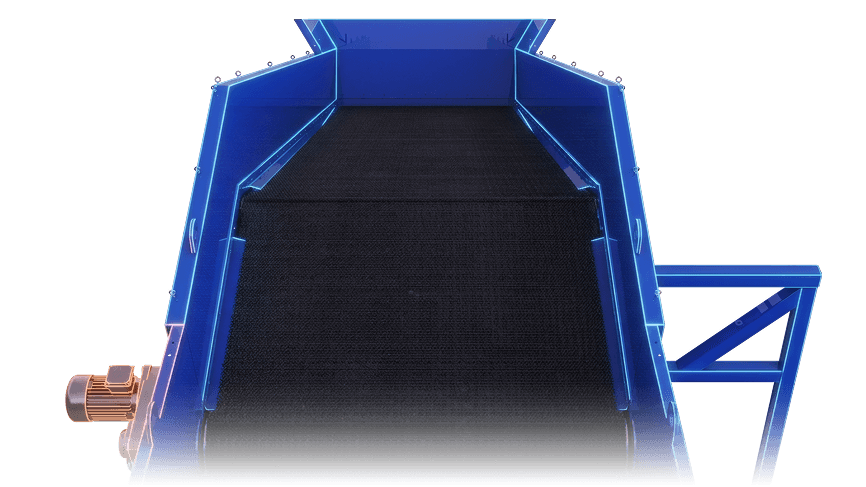
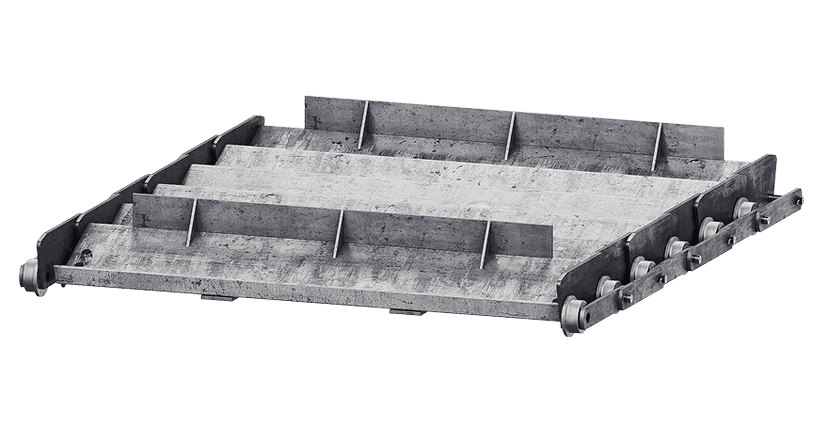
Metal conveyor belts are constructed from stainless steel, carbon steel, or other alloys. They are strong, durable, and highly resistant to chemicals, abrasion, and extreme temperatures.
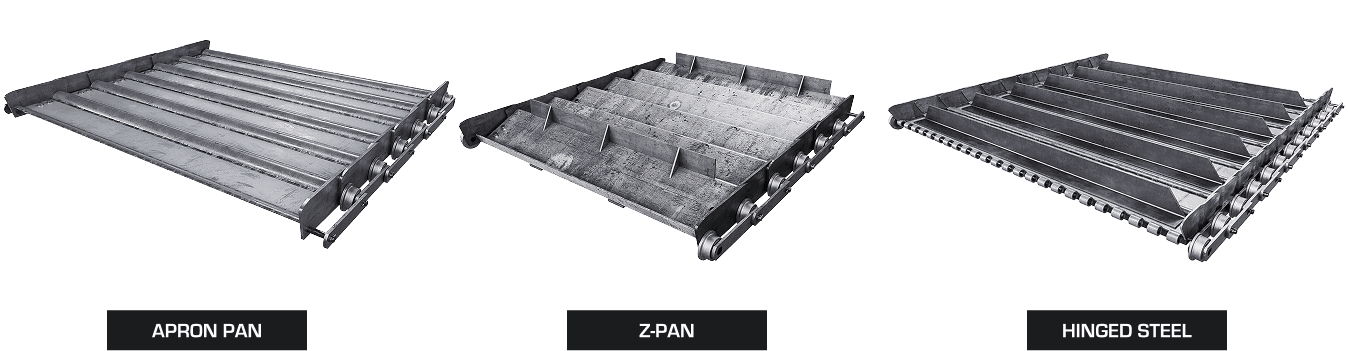
Conveyors with metal belts handle heavy, hot, abrasive, and otherwise harsh materials, including the following:
Heavy automotive components
Recyclables and trash
Bulk food products
Hot aggregates in foundries and power plants
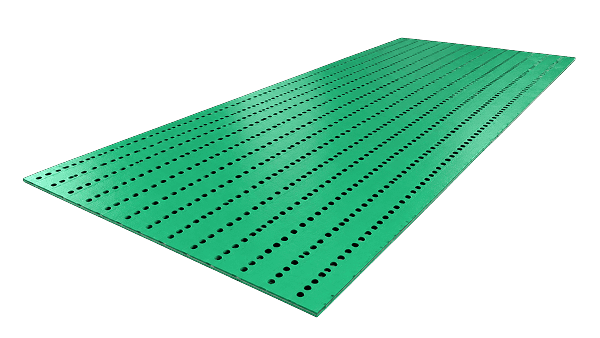
Metal belts go on roller chain conveyors. Modular belt panels attach to heavy-duty roller chains that run the length of the conveyor.
We carry the following steel belts for roller chain conveyors:
Our steel belt conveyors withstand the rigors of the most demanding environments and materials.
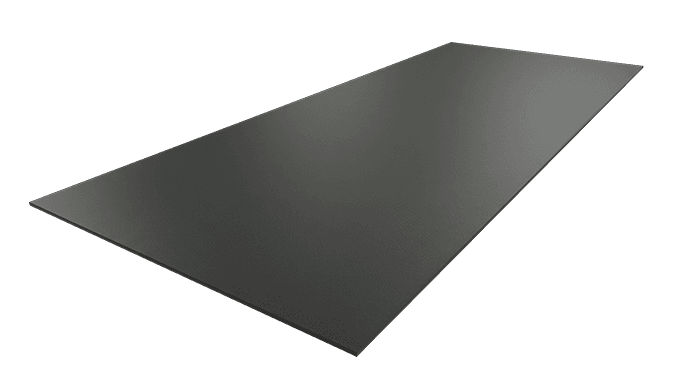
Thermoplastic conveyor belts are made from plastic compounds, such as polyethylene, polypropylene, and polyvinyl chloride (PVC). Many plastic compounds resist chemicals, abrasion, and impact. Plastic belts are lightweight, easy to clean, and have a low coefficient of friction.
Conveyors with thermoplastic belts transport any of the following:
Smaller products throughout the packaging process
Hygiene-sensitive food products
Products at grocery store distribution centers
Delicate materials in pharmaceutical facilities
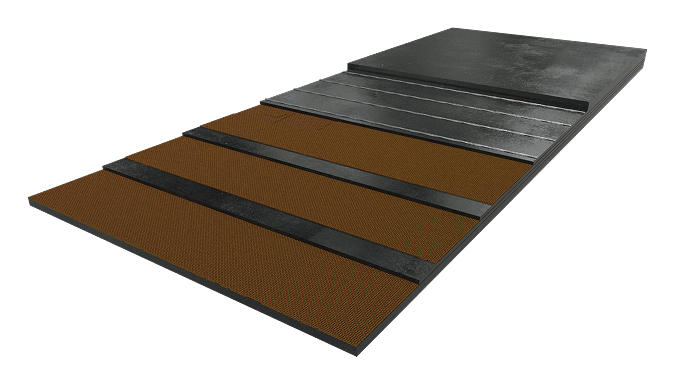
Fabric conveyor belts are made from synthetic or natural fabrics such as cotton, polyester, nylon, or aramid. These belts often include rubber or PVC coatings for added strength and durability. Fabric belts are lightweight, flexible, and resistant to oil, grease, and chemicals.
Conveyors with fabric belts are commonly used for the following:
Light-weight products for the food industry
Baggage at airports
Packages and mail at post offices
Rubber conveyor belts are made of natural and synthetic compounds and can be reinforced with fabric or steel cables. They are strong, durable, and flexible. Basic rubber belts have a low tolerance to extreme temperatures, but specialty compounds improve heat, fire, abrasion, chemical, and oil resistance.
Rubber belts are the most common type of conveyor belt. Conveyors with rubber belts carry:
Bulk materials such as ore, coal, and aggregates
Boxed goods, packages, and luggage
Raw materials and components during manufacturing
Trash and recyclables
Rubber belts can be further categorized by ply count, and also by specific construction criteria, such as the addition of specialty compounds or reinforcement.
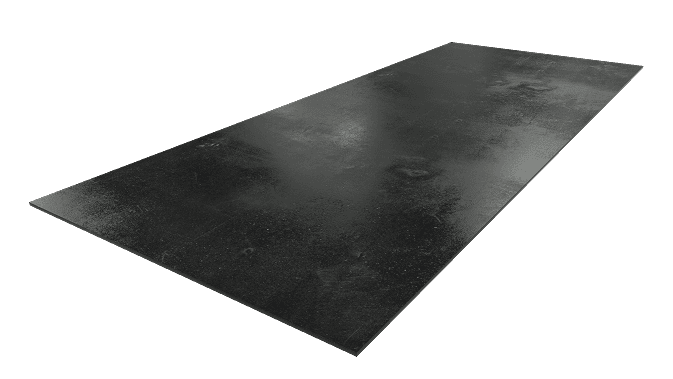
Rubber belts have an internal carcass made of fabric plies. The plies are made of natural or synthetic fibers and sometimes contain steel reinforcement. The number of fabric plies in a belt affects its tensile strength, load capacity, durability, and thickness. We carry belts with the following ply counts:

The rubber cover can be applied in different thicknesses to resist impact and abrasions, and it can be comprised of specialty compounds for resisting oil, chemicals, heat, fire, and static.

Some industrial conveyor belts are made from special compounds and reinforcing materials to withstand challenging environments and materials.

Heat-resistant conveyor belts include materials such as chlorobutyl, Hypalon®, and ethylene-propylene-diene monomer (EPDM). They offer heat resistance up to 400°F or more. These belts are reinforced with heat-resistant fabrics such as fiberglass or aramid for added strength and durability.
Heat-resistant belts transport:
Ore, coke, pellets, and tailings in steel mills
Hot castings and sand in foundries
Clinker, raw materials, and clay in cement production
Fire-resistant conveyor belts include flame-retardant additives such as chlorinated compounds and alumina trihydrate. They are often reinforced with fire-resistant fabrics such as fiberglass or aramid. These belts can self-extinguish and prevent the spread of flames in during a fire.
Fire-resistant belts process:
Coal in mining and power generation
Metal in an out of blast furnaces
Unstable materials in chemical production
Antistatic conveyor belts incorporate conductive materials such as carbon black or metal fibers. These materials dissipate static electricity, preventing the buildup of static charges that cause fires, explosions, or damage to sensitive electronics.
Antistatic belts handle:
Sensitive electronics in the manufacturing sector
Incendiary materials in the energy industry
Chemically unstable materials in the pharmaceutical industry
Chemical-resistant conveyor belts are made of nitrile, EPDM, butyl, and other compounds that resist chemical corrosion and degradation.
Chemical-resistant belts transport:
Acidic and alkaline substances in chemical production
Raw and finished products in fertilizer production
Chemicals used in paper production
Used batteries at recycling facilities
Oil-resistant conveyor belts are made nitrile, styrene, and chloroprene. They are resistant to oil, grease, and petroleum-based products.
Oil-resistant belts handle:
Scrap metal at material recovery facilities
Biomass organic waste at waste management centers
Oily and resin-filled wood in lumber processing
Greased components in automotive manufacturing
Abrasion-resistant conveyor belts are constructed from tough styrene, butadiene, and chloroprene. They can contain steel cords and additional fiber plies for additional protection.
Abrasion-resistant belts withstand the constant wear and tear caused by heavy or sharp materials. They often feature textured surfaces or cleat patterns to improve grip and prevent material slippage.
Abrasion-resistant belts process:
Recyclables and trash in waste management
Rocks and ore in mines and quarries
Clinker and limestone in cement production
Slag and ore in steel mills
Ripstop belts (also known as tear-resistant belts) prevent small tears or punctures from propagating across the belt surface. They feature a reinforced belt construction, often with a crisscross pattern of woven fabric or embedded steel cables. The reinforcement distributes stress and contains damage to a small area.
Ripstop belts are used for heavy-duty applications involving sharp objects, abrasive materials, or high-impact loads. By reducing the risk of belt failure, ripstop belts increase uptime, reduce maintenance costs, and improve operational efficiency in demanding industrial sectors.
Beyond the materials they’re made from, conveyor belts are also categorized by extra features.
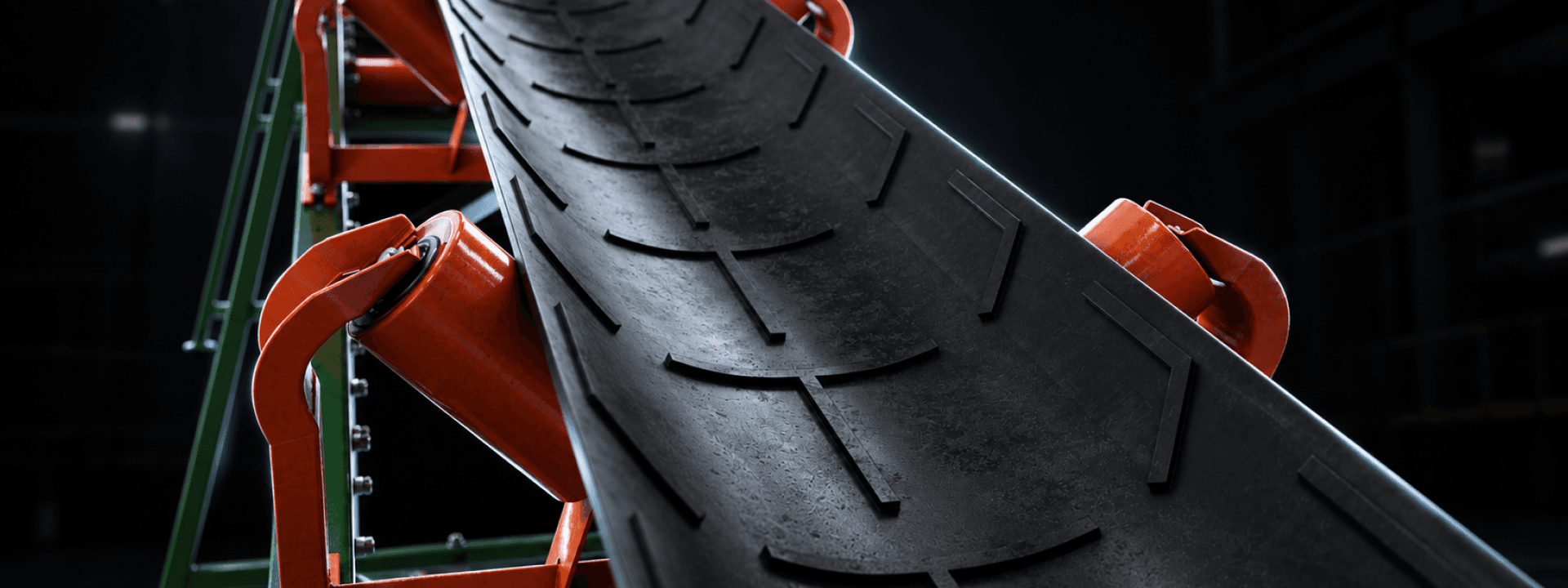
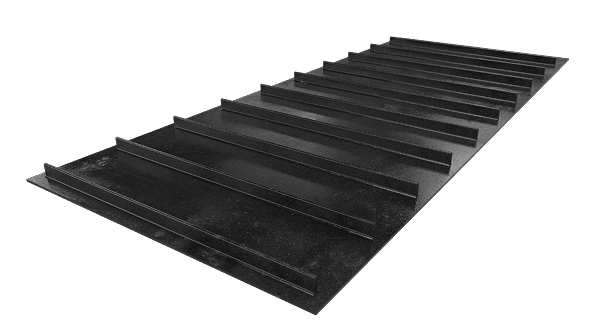
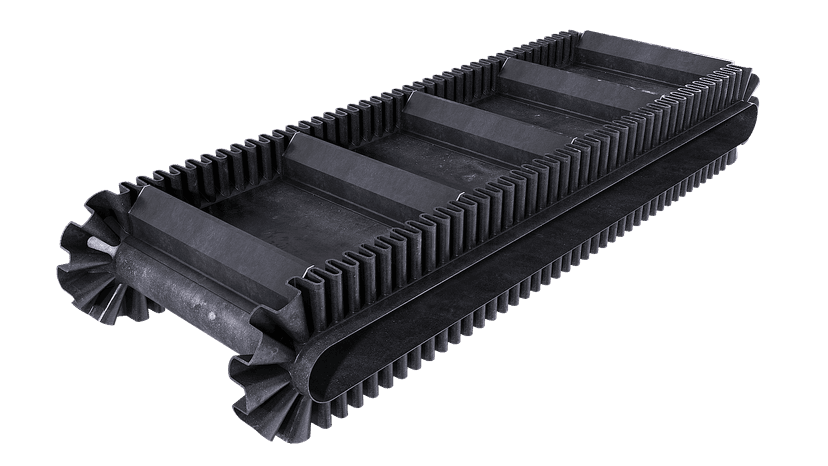
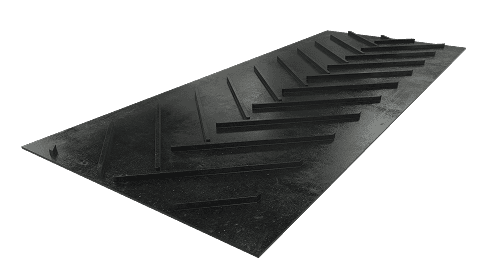
Cleated conveyor belts have protrusions (cleats) that improve grip, meter materials, and prevent rollback on steep inclines. Cleat patterns can be mounted to the belt or molded directly to the belt carcass.
Cleats come in different patterns, such as open V and bullhorn; they also come in different widths and pitches. Shallow cleats enhance general material handling, while tall perpendicular cleats perform tumble-back metering functions.
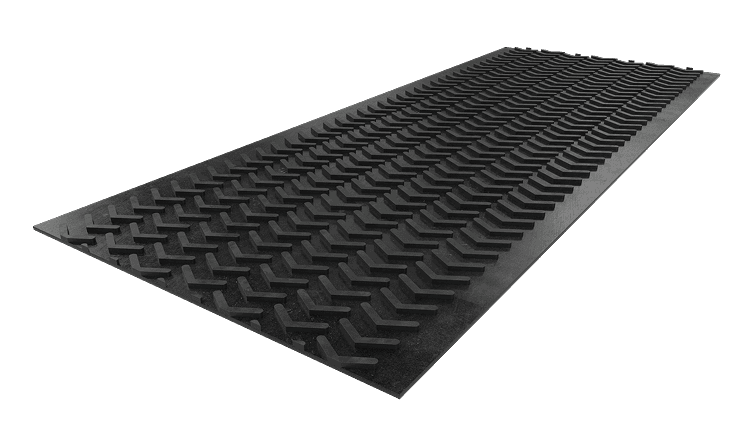
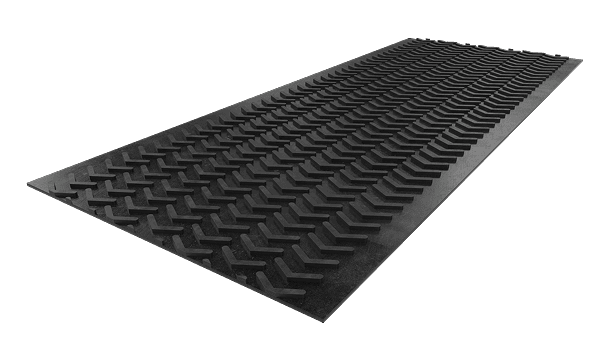
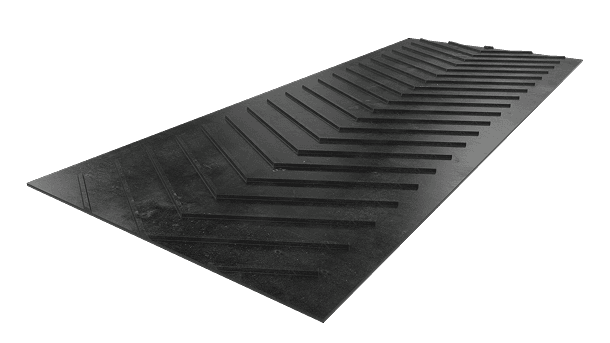



Integrally molded belts for mobile shredding units.

Integrally molded belts for mobile screens.
Integrally molded belts for asphalt millers.
We design and build conveyors for all industries and applications.
Are you looking for a custom conveyor solution? We can help you design a conveyor to suit your needs. All Fluent conveyors are engineered and made in the USA to meet the most stringent tolerances.

rmed using heavy-duty steel plate, rectangular tubing, and structural channel

25–35 lb rail track to withstand heavy loads

Dodge, Nord, and SEW drives matched to application torque

ASTM A36 steel for fabrication per structural code

Premium bearings sized for L10 life ratings, made in the USA

Designed for simple maintenance access and component serviceability

Extensively tested and inspected before shipment

3/16 and 1/4 inch thick structural steel frames to prevent flexing

Goodyear and Flexco belt options for rip, tear, and impact resistance

Baldor, Leeson, Toshiba TEFC motors selected for 24/7 operation

All systems fabricated by certified welders for structural integrity.

Precision components such as cold-rolled steel shafts and flame-hardened sprockets

All hardware is grade 8 for maximum strength

Painted with industrial-grade powder coating for durability
Made from premium components, our conveyors deliver exceptional strength and longevity. Whether you need a slider bed conveyor, a flat idler, or any other conveyor system, contact Fluent and tell us what you need. We will build you a custom conveyor—and you can even pick your own color.